
For people who depend on electrically powered medical equipment, an outage can be an emergency. Any backup-power plan must start with the device manufacturer's compatibility, waveform, restart, transfer, and duration requirements. Maintain device-specific backup and a separate emergency plan because no battery, transfer system, or generator promises uninterrupted medical power.
Key Takeaways
- Confirm device-manufacturer compatibility, required waveform, restart behavior, transfer tolerance, and supported duration before selecting backup equipment.
- Size both output (including surge) and stored capacity, then document the exact supported loads.
- Battery equipment has no combustion exhaust, but placement, clearance, operating conditions, transfer behavior, and supported loads follow its exact listing and approved design.
- Maintain device-specific backup and a separate emergency plan; utility priority programs and home backup equipment do not guarantee uninterrupted power.
Document the Exact Medical Equipment
Do not size backup power from a generic wattage chart. CPAP or BiPAP equipment, oxygen concentrators, ventilators, mobility equipment, home dialysis, pumps, beds, lifts, and medication refrigeration can differ by exact model, accessories, settings, duty cycle, startup behavior, and temperature requirements. Record each nameplate and manual, then obtain device-manufacturer guidance for compatible power sources, waveform, transfer tolerance, restart behavior, output, and duration.
Planning Backup Power for Your Home?
Plan for the next outage with a listed portable-generator hookup or a compatible battery-backup installation. We evaluate the panel, selected loads, equipment, and transfer method before quoting the electrical scope. Call (571) 444-6886 to request an in-home assessment.
Capacity Planning: Output and kWh examples are starting points only. Confirm the exact device's nameplate, startup behavior, accessories, duty cycle, and compatibility with its manufacturer, then include conversion losses and reserve capacity. Expansion or recharging can extend duration only when the exact listed equipment and approved design support it.
When a Battery May Fit a Layered Medical-Power Plan
Equipment-Specific Transfer, Placement, and Operation
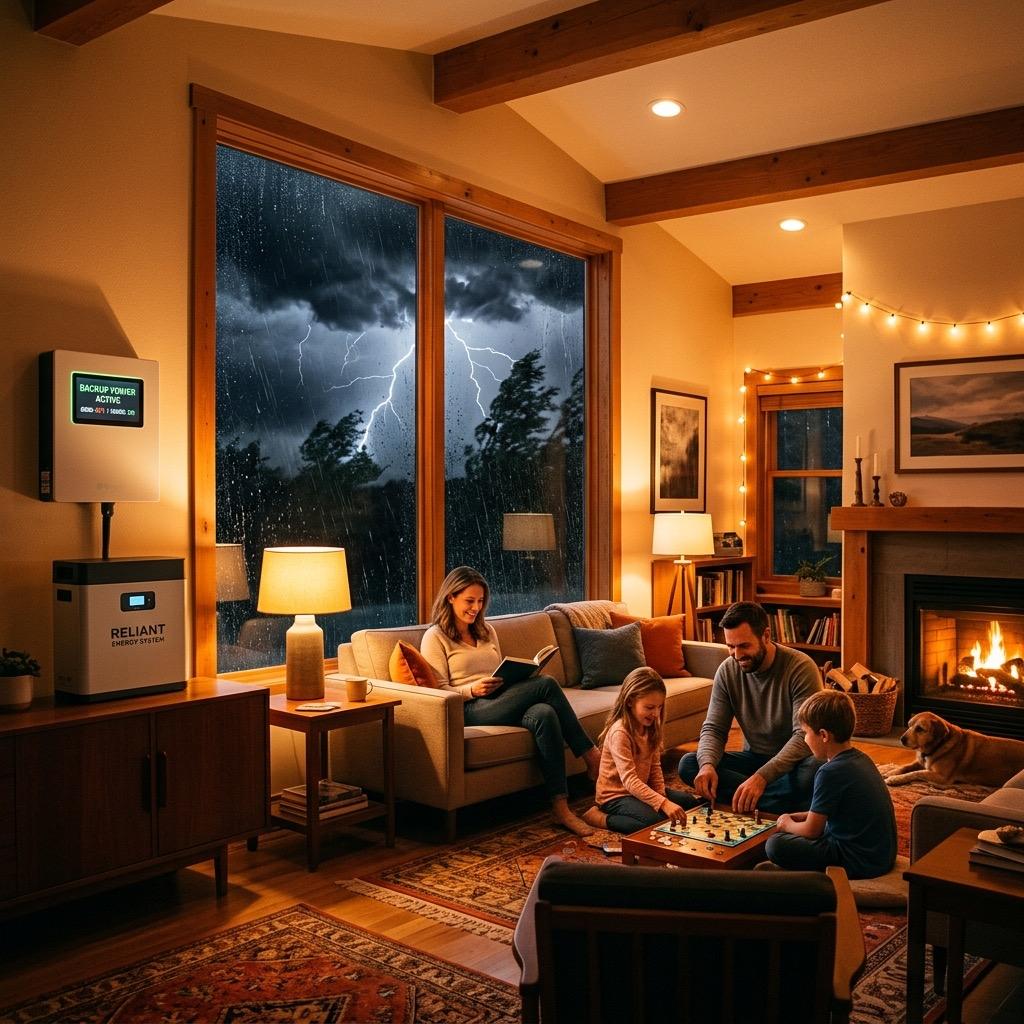
Battery equipment has no combustion engine or exhaust. Transfer timing, restart behavior, fan or inverter noise, permitted placement, clearance, ventilation, temperature range, and supported loads vary by the exact listed equipment and approved design.
- Verify unattended and automatic operation from the exact equipment specifications
- Use only a placement allowed by the listing and manufacturer instructions
- Verify waveform, voltage, frequency, transfer, and restart compatibility with the medical-device manufacturer
Extended Coverage
- Add only the expansion batteries permitted by the exact listing and approved design
- Use solar recharge only when supported by the exact equipment and available generation
- Use a customer-provided portable generator for recharge only when the manufacturer instructions and approved design permit it; operate the generator outdoors
- Compatible load management may reserve capacity for documented selected loads, but it does not replace device-specific backup or an emergency plan
Whole-House or Critical-Circuit Coverage
Educational product examples include EcoFlow Smart Home Panel and Bluetti EP900. Exact supported circuits, loads, transfer behavior, and duration depend on the listed equipment, settings, and approved design; brand examples do not imply certification or a product relationship. A design may include:
- Climate control (critical for some conditions)
- Lighting for safe movement and care
- Communication devices for emergencies
- Refrigeration for medications
- Charging for device batteries and phones
Sizing Backup Power for Medical Use
Two Numbers to Get Right
For a battery, size both:
- Output (watts): enough continuous and surge watts for the device (e.g., an oxygen concentrator's startup)
- Capacity (kWh): the device's watts multiplied by the hours you need, with margin
- Do not rely on load-management settings as the sole protection for a medical circuit
- Leave headroom for future equipment
Power Quality
Verify waveform, voltage, frequency, grounding, transfer behavior, and restart compatibility with the medical-device manufacturer. A general “pure sine wave” label alone does not establish device compatibility.
Layered Emergency Planning
Home backup equipment can be one layer, but it does not replace device-specific backup, clinical guidance, or a separate emergency plan:
Layer 1: Battery Power Station
- Provides stored energy within documented output and duration
- Transfers only as specified by compatible listed equipment and the approved design
- Supports only documented compatible loads; it does not promise uninterrupted medical power
Layer 2: Portable Generator (for long outages)
- May recharge compatible battery equipment when the exact manufacturer instructions and approved design permit it
- Run outdoors only - never indoors, in a garage, or near windows (carbon-monoxide risk)
- Runtime depends on fuel supply, duty limits, maintenance, load, and operating conditions
Layer 3: Device-Specific Backup
- Ask the device manufacturer whether an internal or external battery is supported
- Follow the exact charging, storage, replacement, testing, and runtime instructions
- Include device-specific backup and relocation or emergency actions in the household plan
Utility Priority Programs
Ask the utility serving the address whether it currently offers a medical-notification or priority program and confirm eligibility, documentation, renewal, notification, and restoration terms directly. Enrollment does not guarantee notice, restoration timing, or continuous power. Maintain device-specific backup and a separate emergency plan.
Virginia-Specific Considerations
Northern Virginia properties are served by different utilities. Confirm the utility from the address and review that utility's current program documents; do not assume one provider, benefit, application, or renewal process applies region-wide.
Insurance and Tax Considerations
When medical equipment is involved:
- Document your power protection measures
- Ask the insurer directly how equipment, installation, maintenance, and outage-related claims are treated
- Section 25D does not apply to systems installed after December 31, 2025. See IRS guidance; AJ Long Electric does not provide tax advice.
- Verify coverage for equipment damage during outages
Emergency Planning
Even with backup power, have a plan:
- Know your device's runtime on its own battery and on the power station's kWh
- Have emergency contacts readily available
- Know the nearest emergency facilities
- Keep the battery charged and a portable generator ready with fresh fuel
- Have your electrician's number handy
Professional Installation for Medical Needs
At AJ Long Electric, we understand the critical nature of backup power for medical equipment. We provide:
- Careful assessment of medical power requirements
- Battery capacity sizing (watts and kWh) with appropriate margin
- Compatible load-management configuration for documented selected loads, without an interruption guarantee
- Compatible listed battery equipment included in an approved scope or connection of customer-selected listed equipment, with exact responsibilities documented in writing
- Transfer switch and smart home panel installation
- Guidance on pairing a portable generator for extended runtime
Contact us to discuss the electrical scope for a layered medical-power plan. The medical-device manufacturer must confirm compatibility, and the household should maintain device-specific backup and an emergency plan.