
Grizzl-E is a family of charging products, so a useful review begins with the exact model. A basic unit, a connected unit, and a dual-cable unit solve different problems. This guide evaluates published requirements and installation fit; it does not claim a comparative durability test, a measured failure rate, or a universal best charger.
Start with the product name and manual
The manufacturer's manual library separates Classic, Classic Connect, Duo, Duo Connect, Mini, and Ultimate documentation. Some names also have older revisions. Match the manual to the actual unit and retain it with the estimate. A marketplace listing or photograph of a similar enclosure is insufficient to design the circuit.
The distinction matters when buying used equipment. Ask for the model label, connector, plug arrangement, included mounting parts, and warranty information. A low purchase price can be offset by missing parts, unsupported modifications, or a connection style unsuitable for the intended location.
Choose output your vehicle and home can use
The lineup includes 40-amp products and higher-output Ultimate versions. The manufacturer's FAQ also distinguishes permitted hardwire arrangements: Ultimate units are hardwire only, while some other models are plug-in only. Confirm these details against the exact manual rather than assuming every Grizzl-E can be converted.
Ready to Install a Home EV Charger?
Our licensed electricians evaluate panel capacity, circuit routing, equipment requirements, and permit needs for home EV charging. Call (571) 444-6886 or request an estimate online.
Next compare the vehicle's AC limit, typical energy replacement, and hours parked. A higher equipment rating is only useful if the vehicle can accept the output and the installation can supply it. The load assessment should include planned appliances and other charging equipment. Empty breaker spaces do not settle that question.
Decide whether connected features solve a real problem
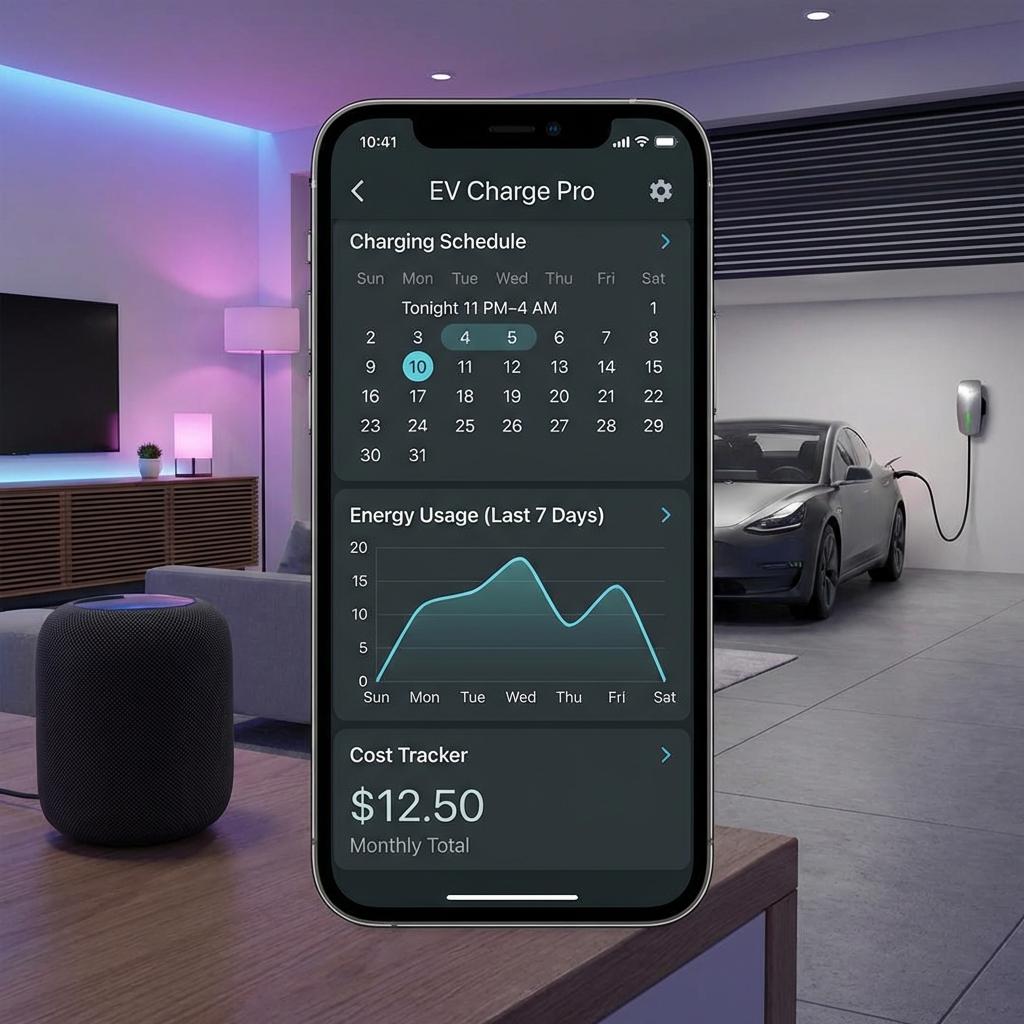
Write down the feature you need: an overnight schedule, session history, remote status, shared access, or coordinated charging. Then check which part is performed by the charger, the vehicle, or a separate control system. Two independent schedules can cause missed charging when their permitted hours do not overlap.
Ask how the exact model behaves without internet, after a power interruption, and after changing the household Wi-Fi network. Review any account requirements and ongoing charges before comparing purchase prices. If a utility program is the reason for buying connected equipment, verify eligibility with that program before ordering. Brand membership alone does not establish approval.
Evaluate a dual-cable unit around two actual vehicles
A dual-cable product can make shared parking more convenient, but two connectors do not imply twice the available power. Review how the selected model allocates output when both vehicles are connected and whether that meets each driver's departure time. Include different vehicle inlets and any approved adapters in the assessment.
Draw both parking positions and cable paths. A unit centered between vehicles may be convenient, while a cheaper location beside the panel may leave one port out of reach. Reserve a place to hang each cable so neither vehicle needs to drive over it or trap it behind a door.
Review the complete outdoor installation
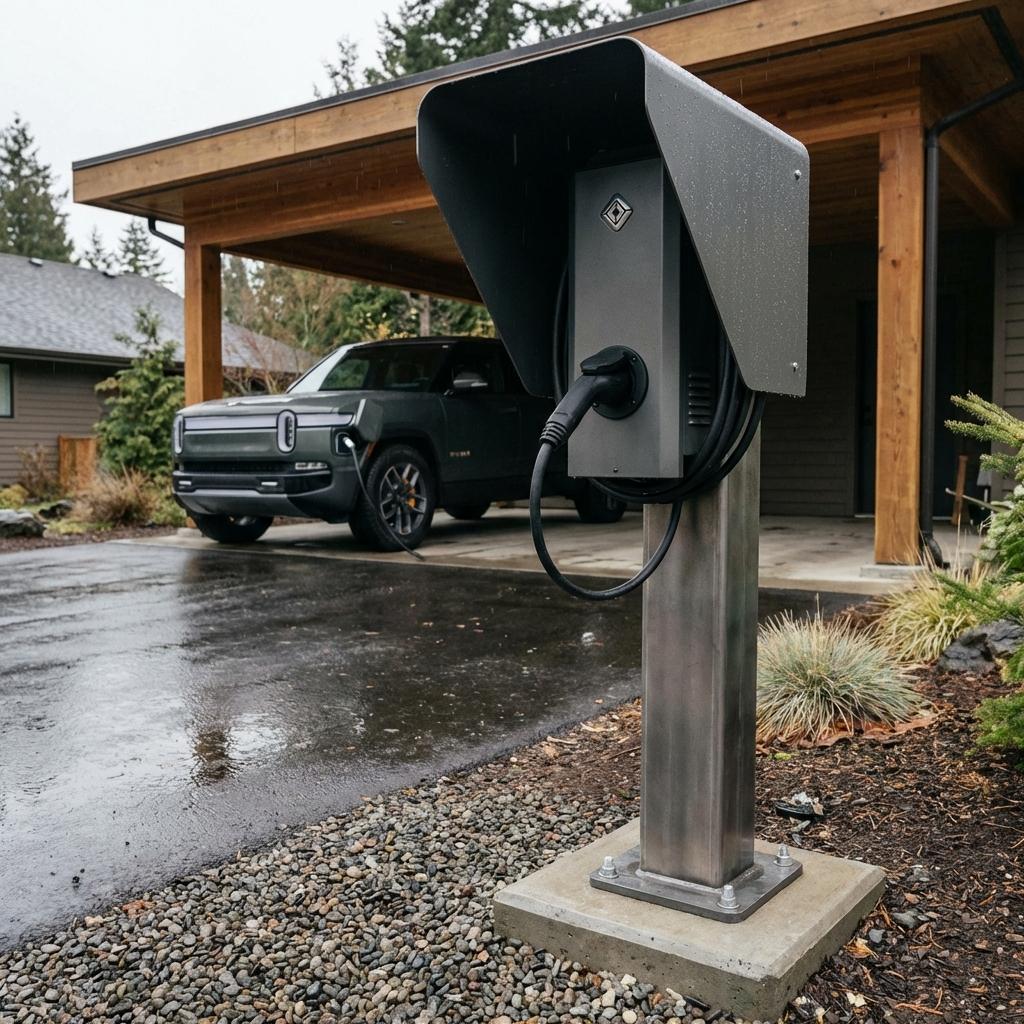
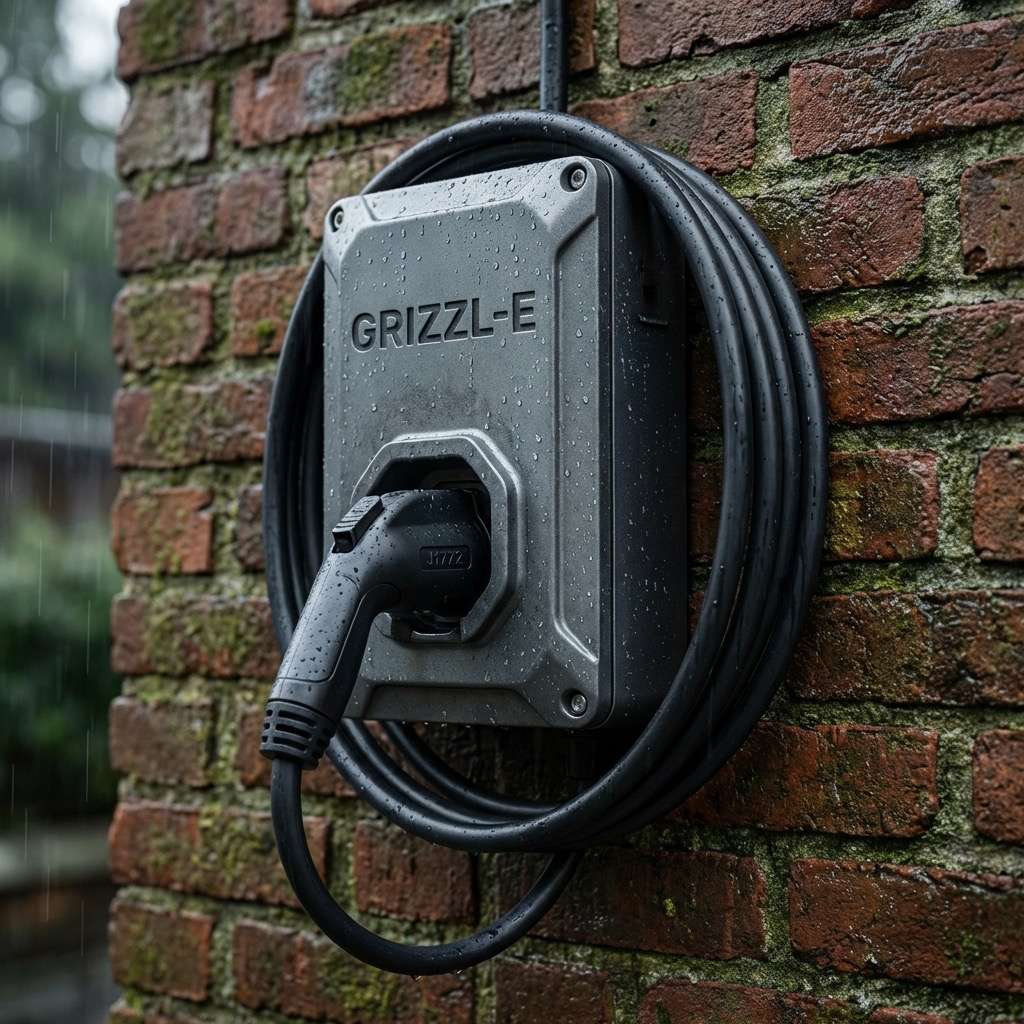
Check the enclosure and environmental ratings in the specific manual, together with permitted mounting and connection methods. The enclosure rating does not approve every pedestal, receptacle arrangement, wall penetration, or flood-prone location. Physical protection and cable storage remain part of the installation.
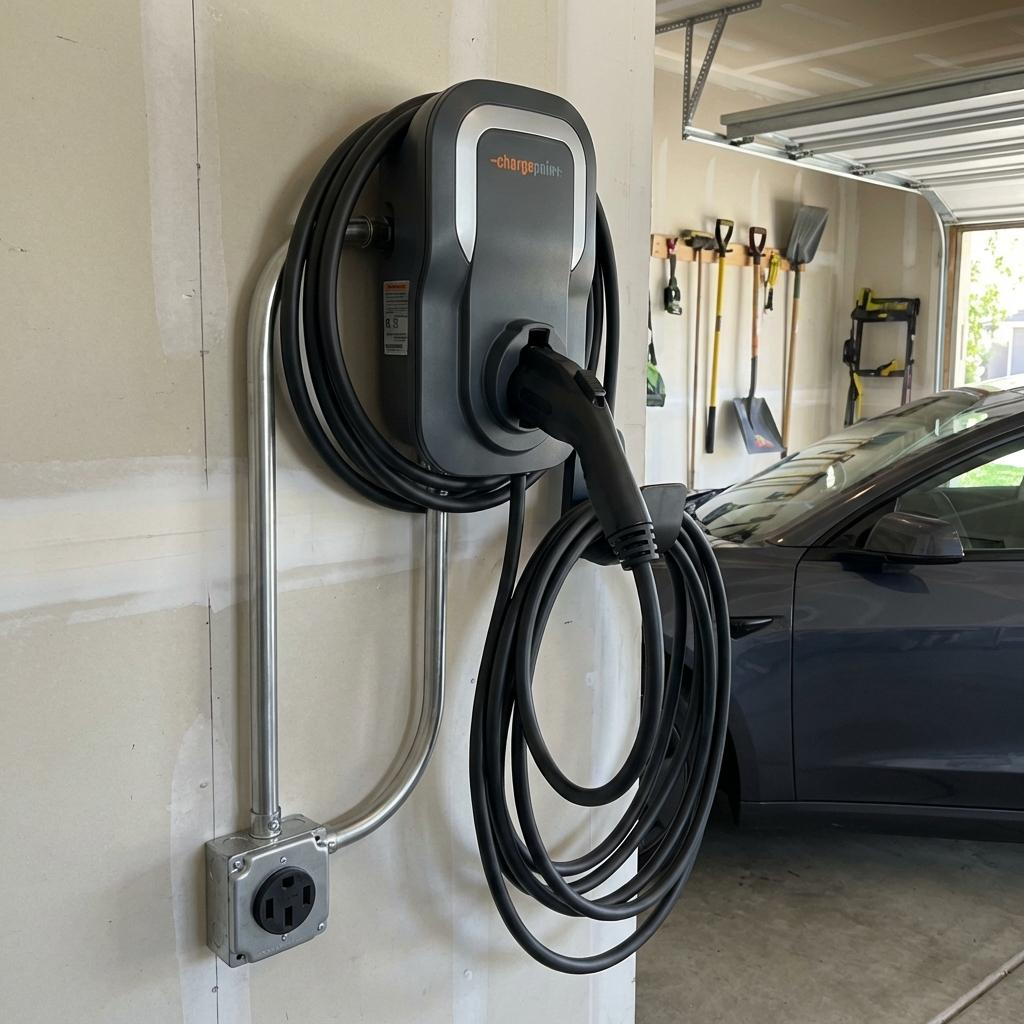
For a plug-in model, the receptacle and circuit need assessment for sustained charging. For hardwired equipment, follow the approved entry, termination, and commissioning method. Do not alter a plug-in-only unit to avoid installing a suitable receptacle. Avoid a generic wire-size recipe; the electrician selects wiring for the actual method, route, ratings, and conditions.
Compare total value and request a scope
Compare current equipment cost, required accessories, the complete electrical scope, useful features, and any ongoing charges. Keep the manufacturer's equipment warranty separate from the five-year workmanship warranty on quoted AJ Long Electric installations. Neither warranty should be assumed to cover the other's responsibilities.
Typical Level 2 circuit-and-hookup work is $1,200–$3,500, with EVSE hardware separate. The $1,200–$4,500 total installation band applies to long, detached, outdoor, trenched, or otherwise complex routes after assessment. Send the exact model or shortlist, vehicle details, closed-panel photos, and parking layout for a free project estimate. That information lets us compare equipment that fits the project instead of recommending a brand in isolation.