
A smart charger is worth evaluating by the problem it solves. One household needs reliable overnight scheduling; another needs two drivers to share limited capacity; another wants records of charging energy. A long feature list is less helpful than understanding which functions are available now and what equipment they require.
Start with the controls your vehicle already has
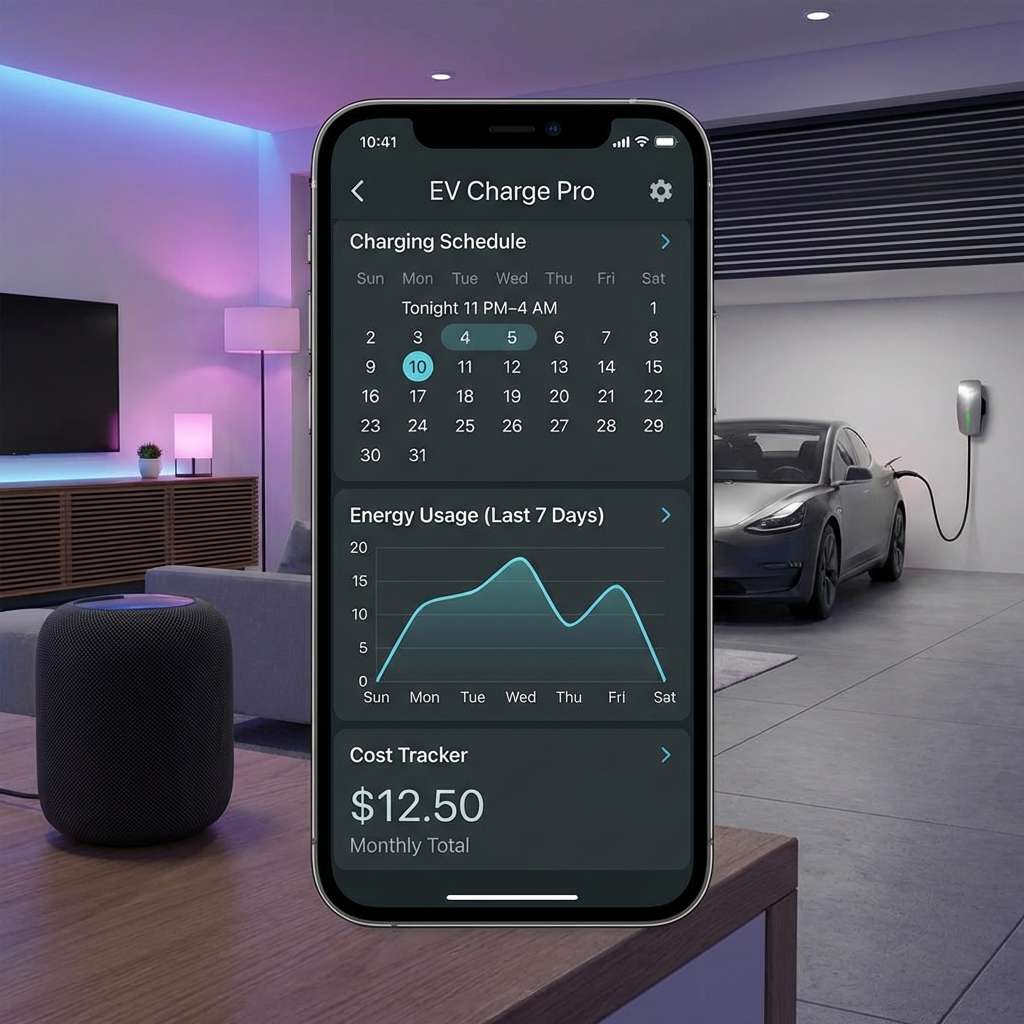
Check whether the car already supports a departure time, a charging window, or a target battery level. If those controls cover your routine, a second scheduling app may add little. A charger-based schedule can still be useful for shared vehicles or when you want the installation's behavior to stay consistent after changing cars.
Choose one primary scheduling method where practical. If both the vehicle and charger impose a window, charging can occur only when both allow it. Add a utility control program and the behavior becomes more complex. At handoff, document where the schedule lives and how an authorized user can handle an unusually early departure.
Separate remote control from electrical load management
Wi-Fi does not measure the home's available capacity by itself. A load-management design may need a compatible meter, sensors, communication wiring, and specific commissioning settings. It must also satisfy the electrical requirements for the project. A manual app slider is not a substitute for that design.
Ready to Install a Home EV Charger?
Our licensed electricians evaluate panel capacity, circuit routing, equipment requirements, and permit needs for home EV charging. Call (571) 444-6886 or request an estimate online.
For example, Tesla distinguishes static, dynamic, and group power management. The useful buying question is which supported arrangement the proposal includes, with what hardware and limitations. If avoiding a service upgrade is part of the goal, compare the complete options after a load assessment rather than treating the word smart as a capacity solution.
Ask whether energy records are usable
Session history can help you understand charging patterns and compare costs. Check whether the product reports energy per session, permits export, and allows a rate schedule that matches your tariff. A single entered price per kWh can give a misleading estimate when actual rates vary by time.
Also identify what the reading represents. Charger input, energy delivered to the vehicle, and energy stored in the battery are not identical measurements. For reimbursement or shared-property billing, confirm what records the employer or property manager accepts; an app chart is not automatically an approved billing meter.
Check the utility program before buying for savings
A time-of-use rate and a managed-charging incentive are different arrangements. Eligibility may depend on the service account, meter, charger or vehicle model, enrollment, and other programs. Dominion's Virginia Off-Peak Plan publishes current eligibility and time windows. Review the effect on other household electricity use as well as charging.
Do not price equipment using an assumed incentive or a guaranteed annual saving. Instead, compare your ordinary charging hours, total household usage, subscription costs, and the program's current terms. A schedule can be convenient even when the financial difference is small.
Test the failure cases on paper
Before purchase, ask what happens when home internet is unavailable, Wi-Fi credentials change, power returns after an outage, or the manufacturer changes an app. Check normal charging separately from remote access, saved schedules, access restrictions, and load-management behavior. Obtain answers for the exact model and configuration.
Account ownership matters too. The homeowner should know which account controls the unit and how access transfers if the house is sold. If more than one person manages charging, confirm the supported permissions rather than sharing a password unnecessarily.
Make the feature list part of the installation scope
Write a short acceptance list: vehicle compatibility, commissioned output, working schedule, needed energy records, and any approved load-management function. Verify practical cable reach and network coverage at the mounting location. Voice control or a decorative display should not displace those basics.
For a free project estimate, send the proposed model and the feature you need, along with closed-panel and parking photos. Typical Level 2 circuit-and-hookup work is $1,200–$3,500, with EVSE and additional control hardware identified separately. The written proposal should show what is included and what the homeowner or utility must configure.