
Choose home charging for the exact IONIQ 5 model year and charge port, then match the commissioned output to the home and driving routine. The vehicle’s 800-volt battery architecture does not mean you need an 800-volt home supply.
Start with the vehicle you actually own
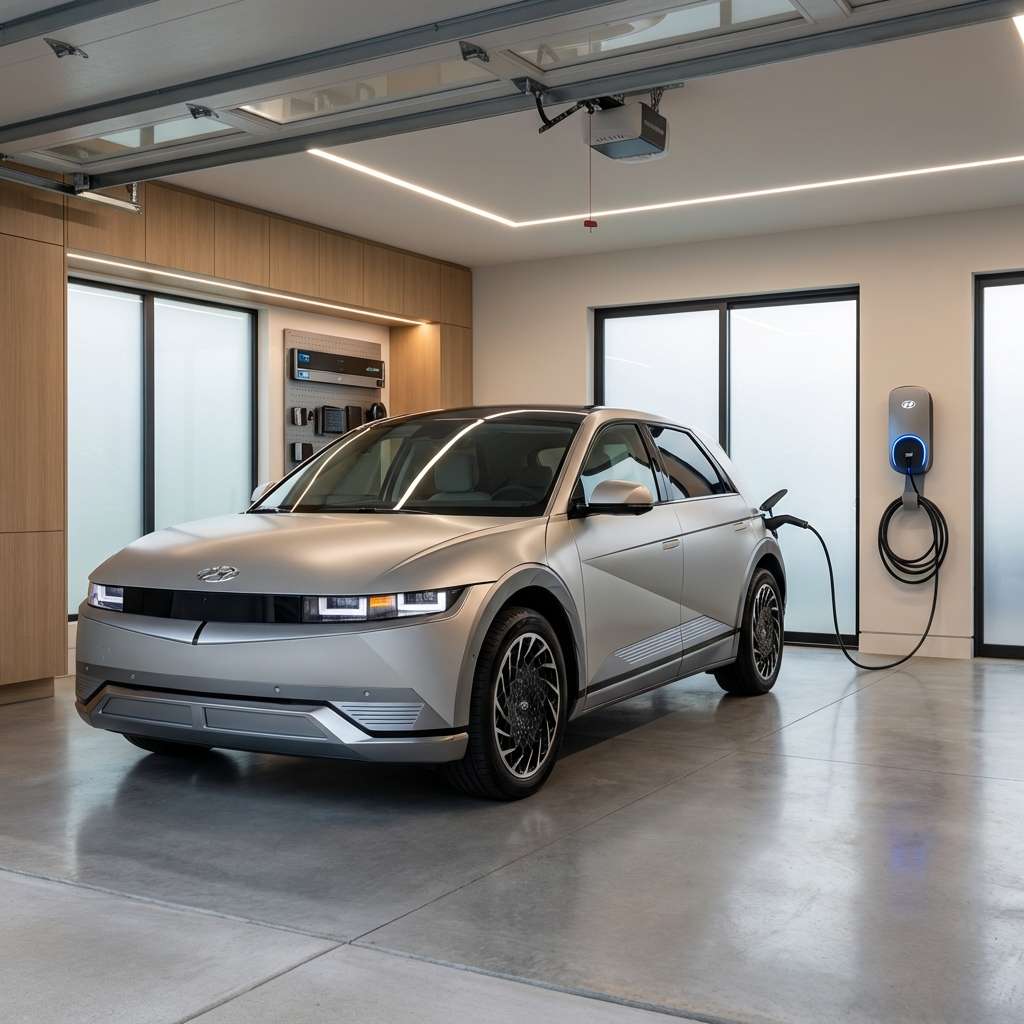
Hyundai’s 2025 U.S. IONIQ 5 page describes a native NACS port and gives a 240-volt AC charging example using a 10.9-kW source. Those specifications should not be applied to every earlier IONIQ 5 or to a different trim such as the IONIQ 5 N. Record the model year, trim and connector before selecting a wall unit. A photograph of the open charge-port door can help identify the configuration without touching the contacts.
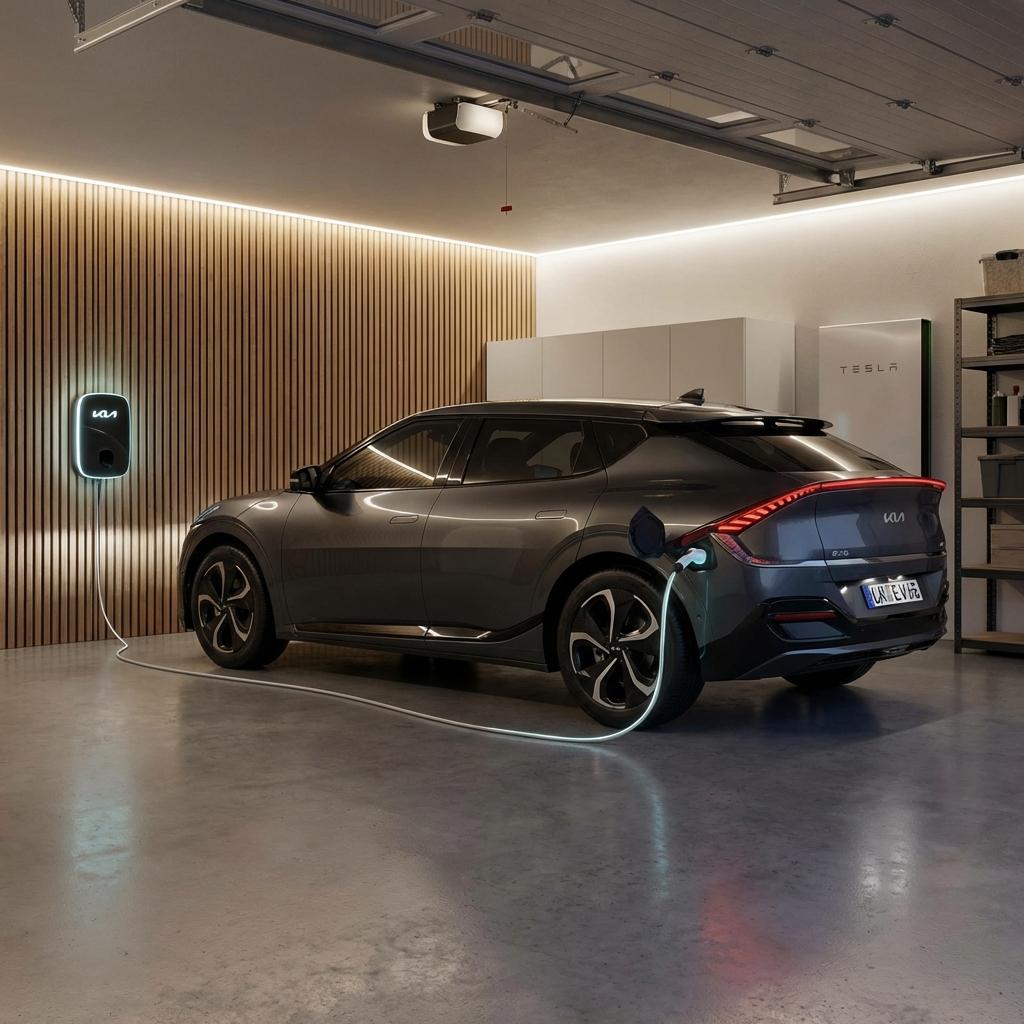
The connector question has two parts: what fits the car, and what kind of charging the adapter supports. Hyundai’s NACS adapter FAQ distinguishes DC fast-charging adapters from AC home-charging equipment. A DC adapter supplied for public stations is not automatically the adapter you need for an AC wall charger. Use only an arrangement approved for the vehicle and charging equipment.
Separate road-trip speed from home charging
At home, an AC charging unit supplies the vehicle’s onboard charger. Public DC charging bypasses that AC conversion path. A station advertised at 350 kW does not mean the vehicle accepts 350 kW, and neither figure specifies the household circuit. For home planning, compare the vehicle’s AC limit, the unit’s installed setting and the electrical capacity available at the property.
Ready to Install a Home EV Charger?
Our licensed electricians evaluate panel capacity, circuit routing, equipment requirements, and permit needs for home EV charging. Call (571) 444-6886 or request an estimate online.
A larger charger label does not guarantee faster charging. If the vehicle accepts less than the unit can supply, the vehicle remains the limit. If the circuit is deliberately commissioned at a lower output, that setting is the limit even when the wall unit is capable of more.
Size the installation around the parking window
Estimate the energy to replace after an ordinary day of driving, then compare it with the hours normally available at home. For an illustrative 24-kWh replenishment, a 6-kW average delivered to the battery would take about four hours; this is arithmetic, not an IONIQ 5 performance promise. Charging losses, temperature, battery settings and time spent conditioning can change the actual session.
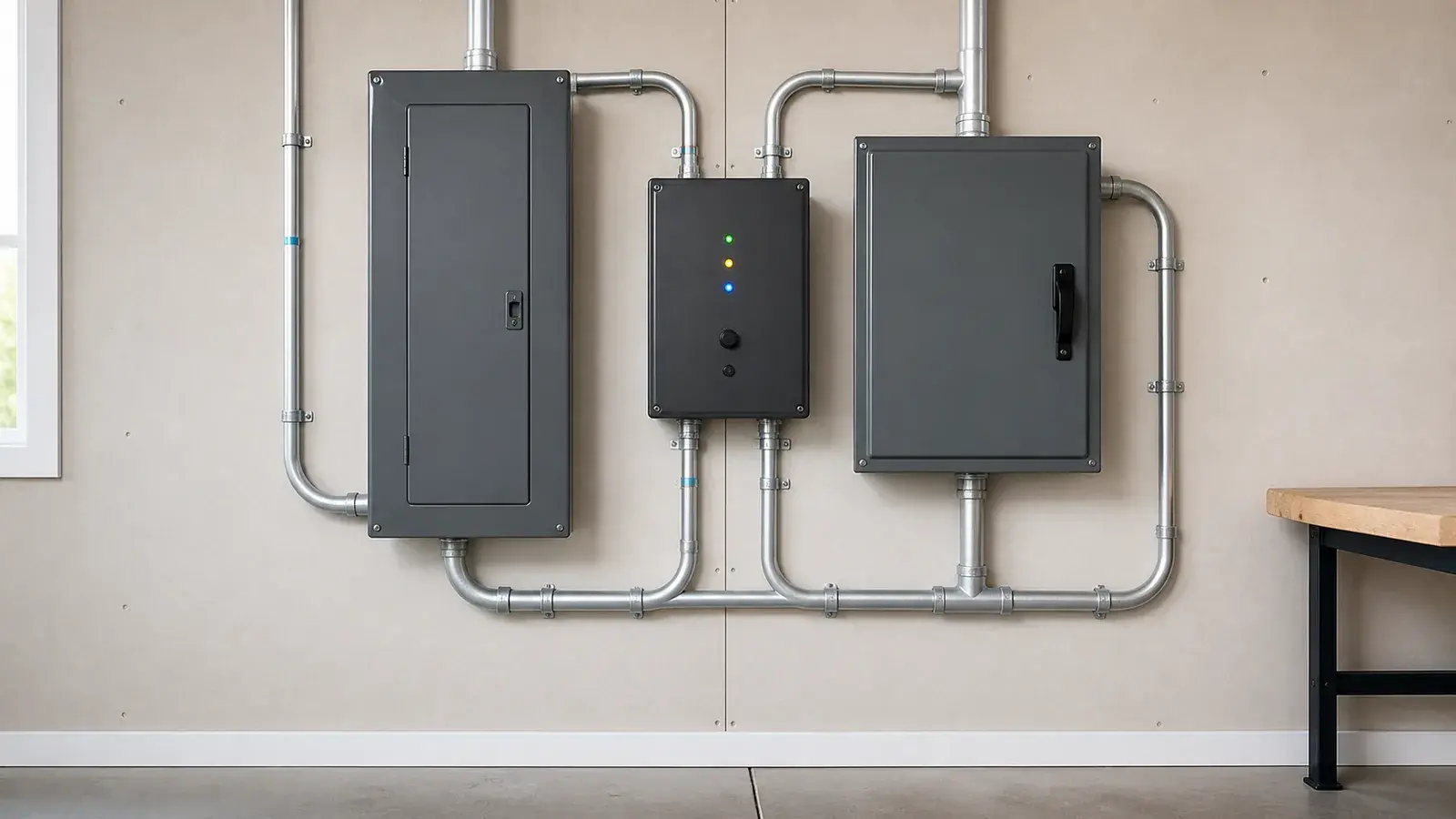
For one specific equipment example, ChargePoint’s Home Flex circuit table pairs 40-amp output with a 50-amp circuit and 48-amp output with a 60-amp hardwired circuit. That is not a universal wire-size prescription. The electrician must assess wiring method, terminals, route, service load and the exact EVSE instructions. A 200-amp panel does not by itself establish spare capacity.
Choose equipment for the connection and daily routine
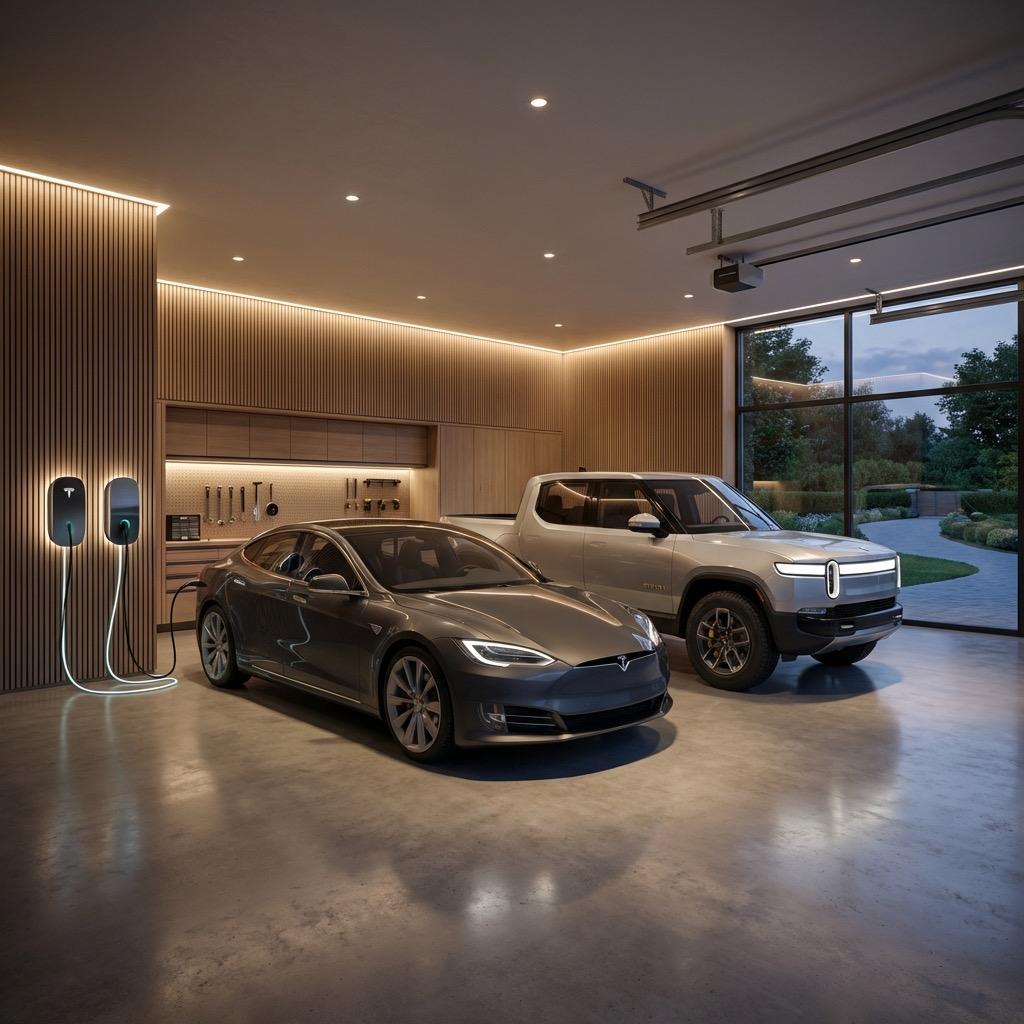
Compare the correct connector, listed output options, cable reach, outdoor rating if needed, local support and the functions that remain available if Wi-Fi or an app is unavailable. Do not select a charger just because an old comparison promises a particular subscription or cloud feature. For two vehicles, compare actual daily demand and compatible load management before assuming two maximum-output circuits are necessary.
Keep scheduling simple: if both the car and charger have timers, conflicting windows can prevent a session. Start with one scheduling system, confirm charging begins as expected and review the current utility tariff before assuming off-peak savings.
V2L is a separate decision
Hyundai describes available U.S. V2L outlets at 120 volts and places limits on appliances and battery discharge. Do not copy a 3.6-kW figure from another market onto a U.S. vehicle. Check the exact manual, approved adapter and appliance requirements. A V2L outlet is not permission to energize house wiring through a receptacle; home integration requires equipment and isolation specifically approved for that use. Do not rely on it for a device requiring uninterrupted power.
Prepare a useful installation request
Send the model year and trim, proposed charger, normal parking position, daily mileage, charging window and photos of the closed panel and accessible labels. Include the route to the driveway or garage and any HOA or shared-parking restrictions. Leave electrical covers in place. AJ Long Electric reviews the capacity, route and permit requirements before confirming a scope and schedule. See our EV installation service or capacity and load-management comparison.