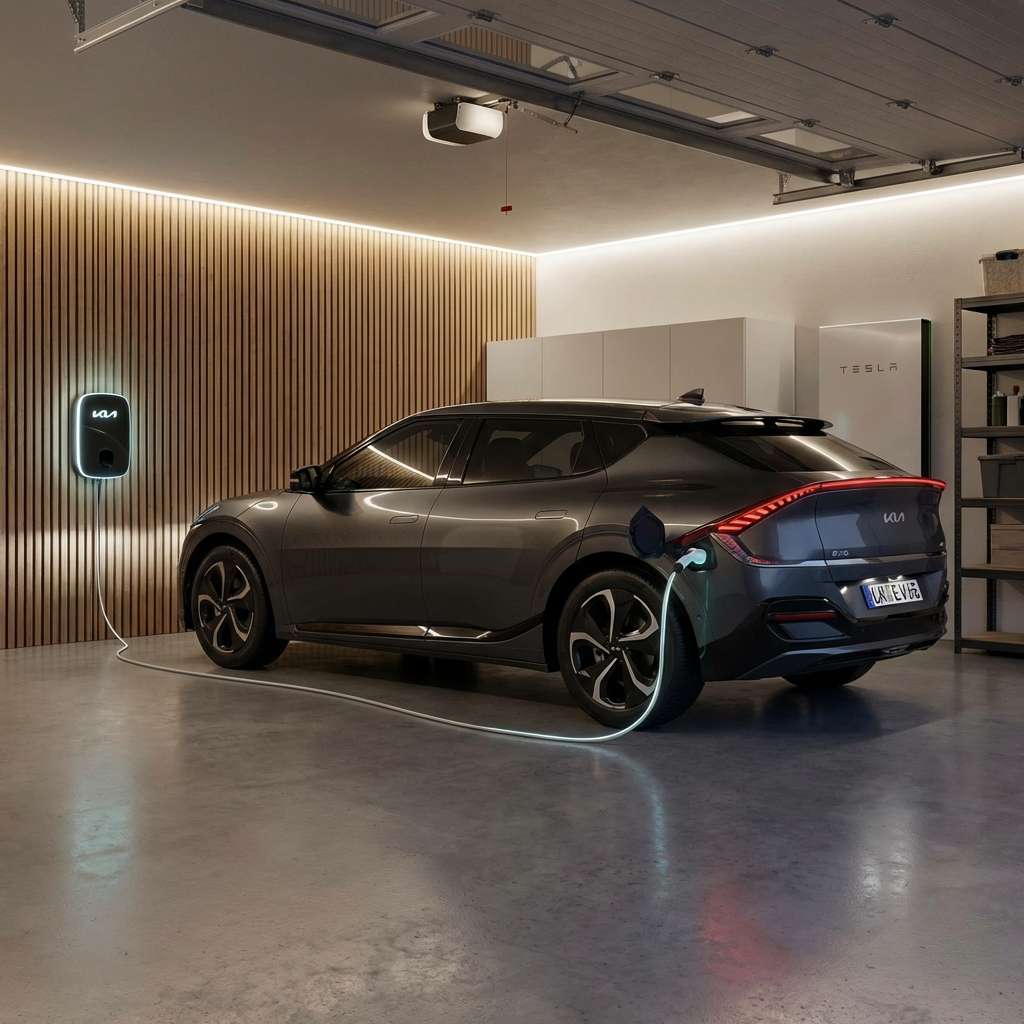

An EV6 home installation should match the exact vehicle, charge port, AC charging limit and parking routine. The 800-volt platform is relevant to DC fast charging; it does not remove the need to assess the home’s electrical capacity and cable route.
Identify the EV6 configuration first
EV6 specifications changed across model years and markets. Kia’s U.S. 2025 full-line brochure describes NACS charging on the updated EV6. An older article that says every EV6 uses J1772 is therefore not a reliable purchasing guide. Special trims and earlier vehicles should be checked against their own documentation, not a photo of another EV6.
Send the model year, trim, charge-port photo and intended charging unit before purchase. Confirm whether any adapter is approved for AC home charging. An adapter intended for a public DC network does not establish home AC compatibility.
What the 800-volt platform changes—and what it does not
Public DC stations and home AC charging use different power paths. A fast-charge time quoted at a high-output public station does not describe an overnight home session. At home, the available AC supply, EVSE setting and onboard charger constrain power. Battery temperature and vehicle settings can reduce the accepted rate further.
Ready to Install a Home EV Charger?
Our licensed electricians evaluate panel capacity, circuit routing, equipment requirements, and permit needs for home EV charging. Call (571) 444-6886 or request an estimate online.
Do not read “350-kW station” as “350-kW vehicle acceptance,” or assume an EV6 needs a special 800-volt household supply. Ask for a proposal based on the AC specifications of the vehicle you own and the loads already present at the house.
Find a practical output instead of defaulting to the largest circuit
List ordinary daily travel and the hours the car is parked at home. A lower output may be sufficient for that routine. An illustrative 30-kWh replenishment at an average 6 kW reaching the battery takes about five hours; losses, conditioning and actual battery demand change real results. Longer journeys and short charging windows can justify a different design.
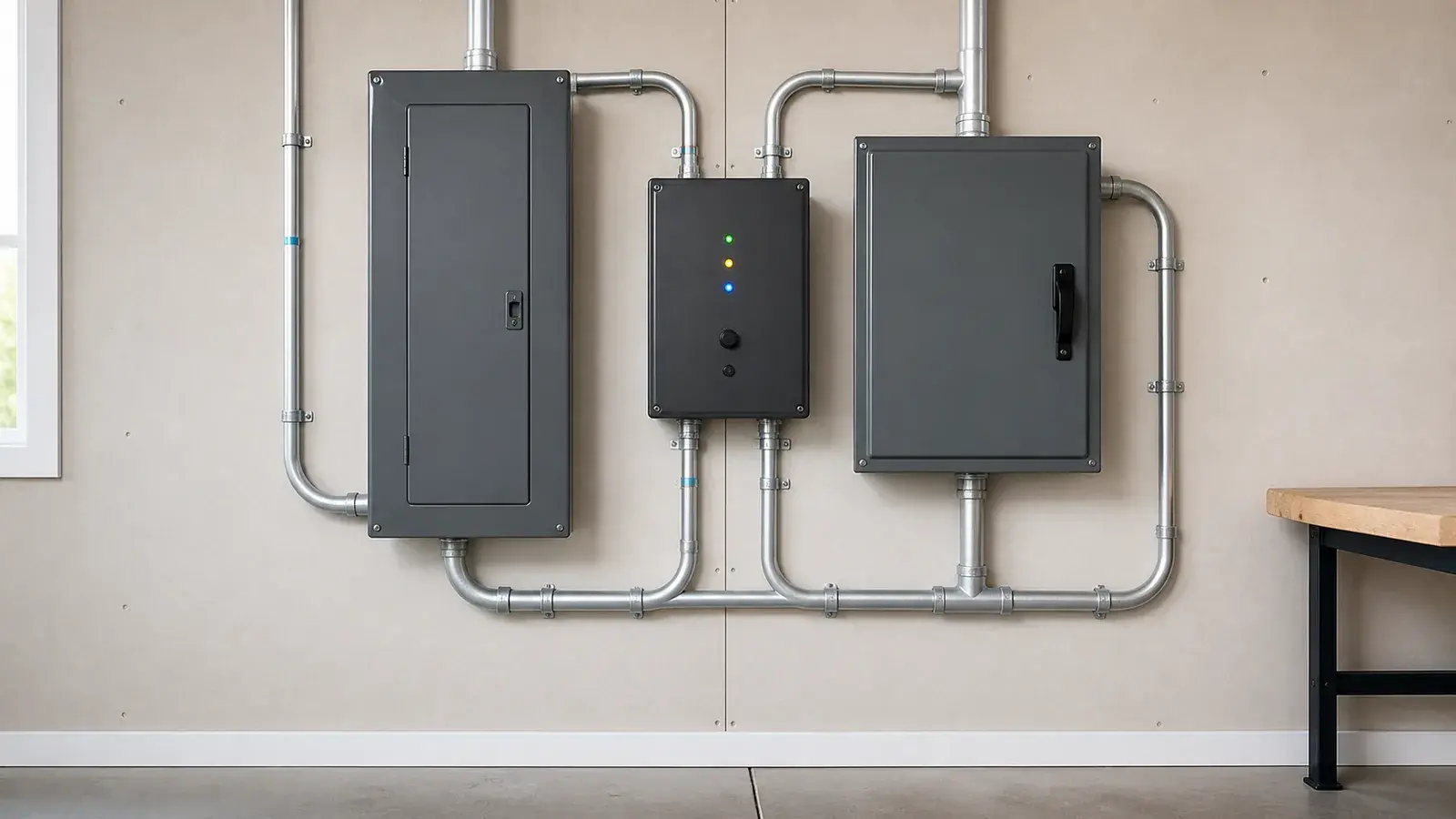
A manufacturer circuit table illustrates why output and breaker size differ: Home Flex pairs 40-amp output with a 50-amp circuit and 48-amp output with a 60-amp hardwired circuit. Wire size cannot be prescribed from those numbers alone. Wiring method, terminals, route and the property’s available capacity must be assessed. A newer home or 200-amp service is not an automatic capacity approval.
Compare the equipment that matters at home
Check the connector, permitted installation method, cable reach in the actual parking orientation and outdoor rating where applicable. Look at product support and what still works without a network connection. Smart features and subscription terms change; an old ranked product list is not a guarantee that an app remains available.
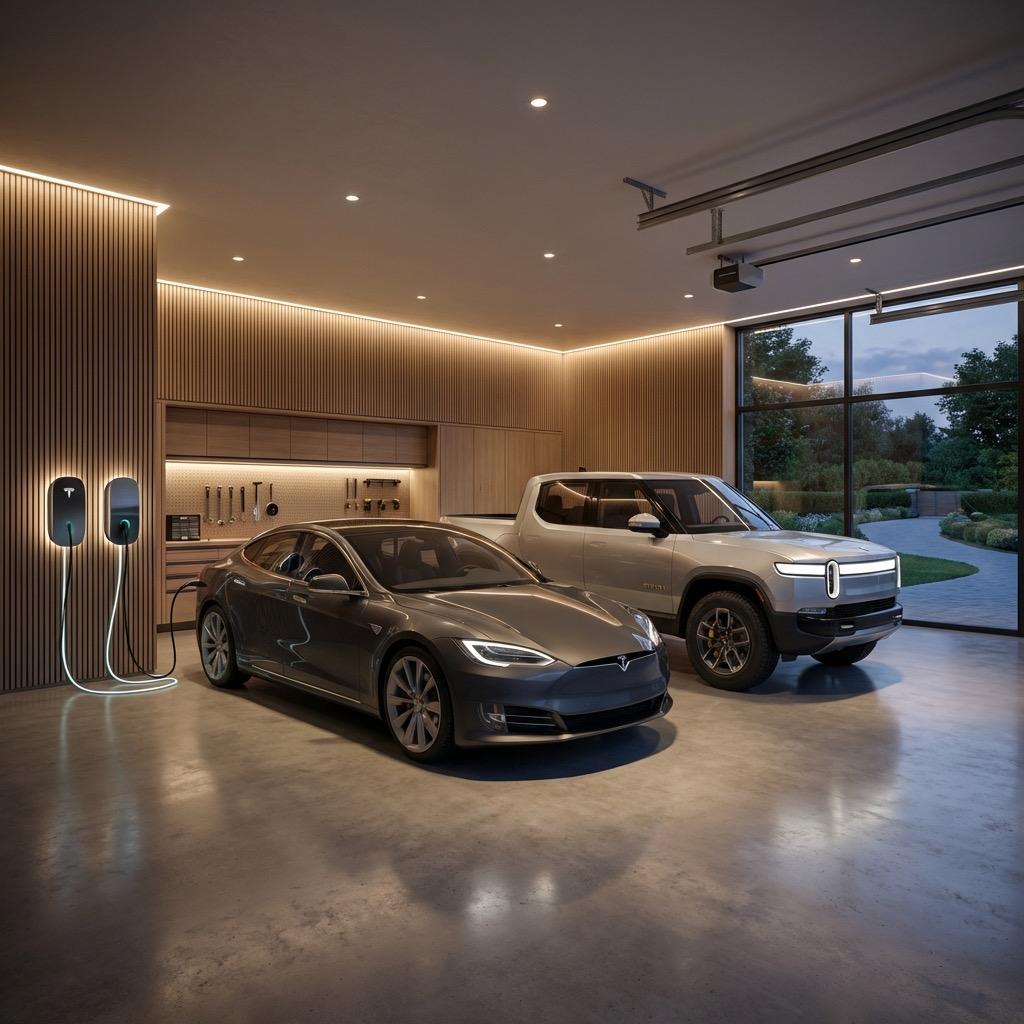
For a second EV, consider which cars need energy on the same night and whether a compatible managed arrangement makes sense. See charging two EVs at home before assuming both vehicles need independent maximum-output circuits.
Scheduling and V2L need their own checks
Kia Connect functions depend on the car, account, software and service availability. Use one scheduling system initially and confirm a normal session before layering in timers. Check the current utility plan before estimating savings. Cabin conditioning and battery conditioning are different functions; neither justifies a universal range claim.
Kia’s 2026 U.S. EV6 feature guide identifies a maximum V2L wattage of 1,900 watts. That is different from a 3.6-kW figure associated with other markets. Verify the exact vehicle and adapter, battery reserve and appliance startup demand. V2L appliance power is not automatically an approved whole-home backup connection; never backfeed house wiring through a receptacle.
Prepare the installation scope
Share the vehicle and EVSE details, usual parking position, closed-panel photos, accessible labels, route and any HOA restrictions. Keep covers in place. Ask the estimate to distinguish charger hardware, circuit work, mounting, permits, load management and finish repairs. Our EV charging service covers those planning decisions. Staff review the request before a work date is confirmed; the 800-volt badge does not determine the installation price.