
Every EVSE plan starts with the exact model, its listing and manufacturer instructions, configured output, connection method, circuit topology, location, and available panel capacity.
Key Takeaways
- Connection method follows the exact listed EVSE, circuit, location, and manufacturer instructions.
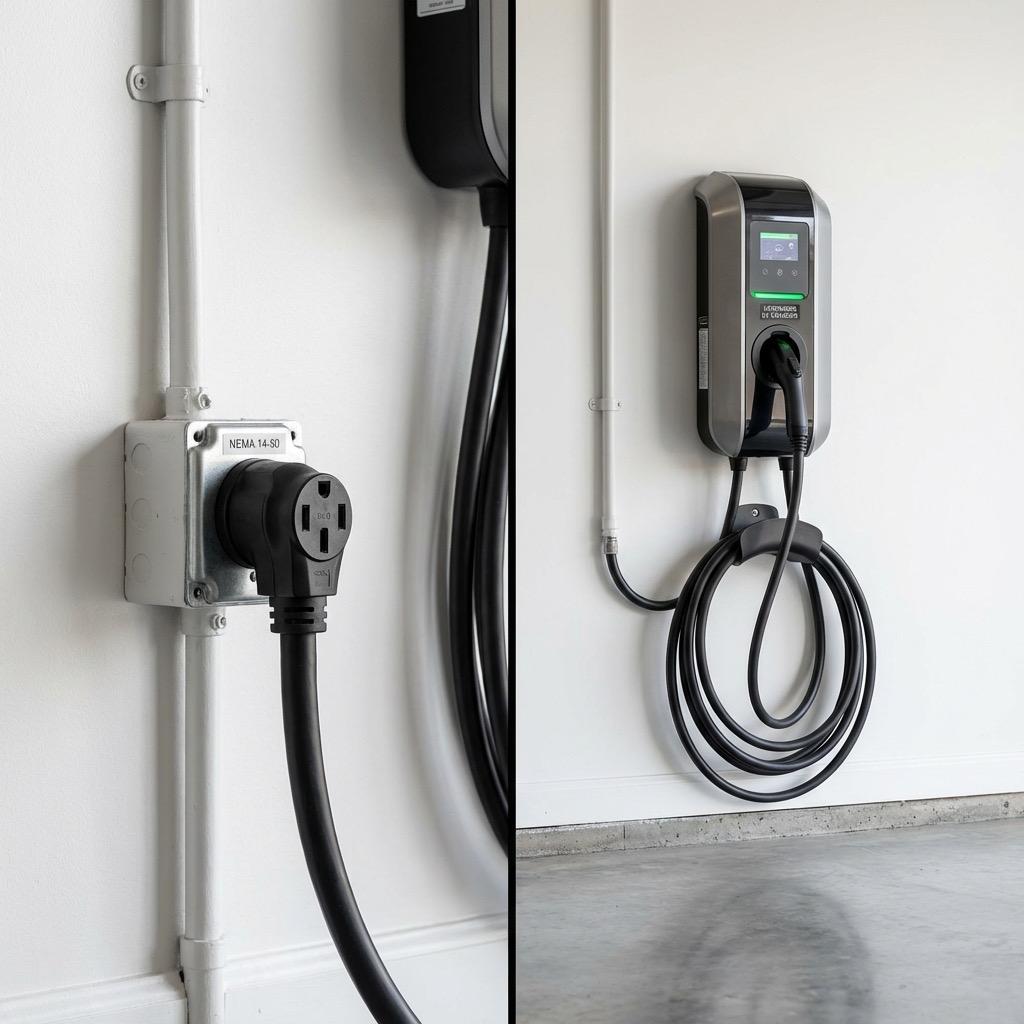
- A NEMA 14-50 design requires a listed use, compliant circuit, GFCI and location review, and compatible equipment.
- Listed load sharing may coordinate compatible units when the load calculation and authority allow it.
- The typical circuit-and-hookup range is $1,200–$3,500; only documented complex routes extend to the $1,200–$4,500 total band, and EVSE hardware is separate.
Hardwired
The EVSE is terminated on a dedicated circuit sized to the configured output and the 80% continuous-load rule. Fewer contact points, fewer overheated receptacle calls.
Ready to Install a Home EV Charger?
Our licensed electricians evaluate panel capacity, circuit routing, equipment requirements, and permit needs for home EV charging. Call (571) 444-6886 or request an estimate online.
Listed receptacle
A NEMA 14-50 is still a dedicated 240-volt circuit. Continuous EV charging is hard on receptacle contacts, so we confirm the equipment is listed for that method before quoting it as the primary connection.
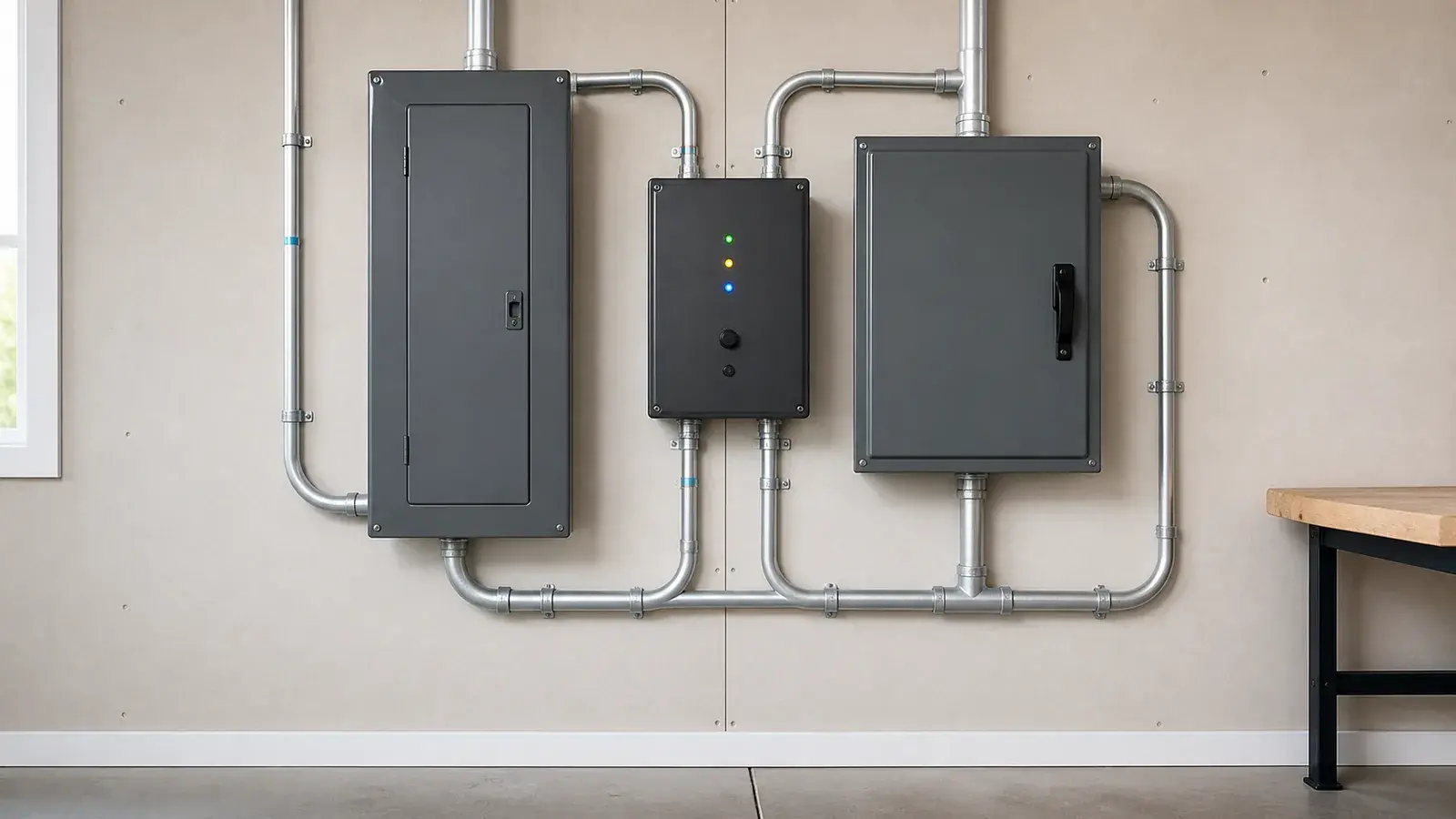
Load-sharing
Some compatible listed EVSE systems support coordinated charging, but feeder or branch-circuit topology, overcurrent protection, conductors, maximum aggregate load, communications, and configuration must follow the exact models, manufacturer instructions, load calculation, and approved design. Do not infer a one-feeder arrangement or charging rate from the feature name alone.
Start at Level 2 EV charging.