
Reston, Burke, Alexandria, Arlington, and Loudoun townhouse streets are full of EV and backup-power questions that depend as much on property boundaries and association rules as on the National Electrical Code. We still calculate the load and size the circuit, and we also document who controls the wall, the meter bank, the pathway, and the parking space.
Key Takeaways
- Electrical scope: dedicated circuit, panel capacity calculation, fire-rated assembly protection, and address-specific permit requirements.
- Site and governance scope: ganged meter banks, deeded vs assigned parking, common-element raceways, and HOA architectural review guidelines.
- Compare exact battery placement, clearance, and temperature requirements with the outdoor-only separation rules that often rule out portable generators on narrow townhouse lots.
- We do not grant HOA approval or give legal opinions, but we provide the exact electrical scope, routing description, and equipment cut-sheet package your association board requests.
Separate electrician decisions from association and property decisions
In attached housing across communities such as Reston Association or local townhouse condominiums and HOAs, electrical feasibility and community approval run on parallel tracks:
Ready to Install a Home EV Charger?
Our licensed electricians evaluate panel capacity, circuit routing, equipment requirements, and permit needs for home EV charging. Call (571) 444-6886 or request an estimate online.
| Project Element | What the Electrician Evaluates | What the Homeowner & HOA / Condo Board Confirm |
|---|---|---|
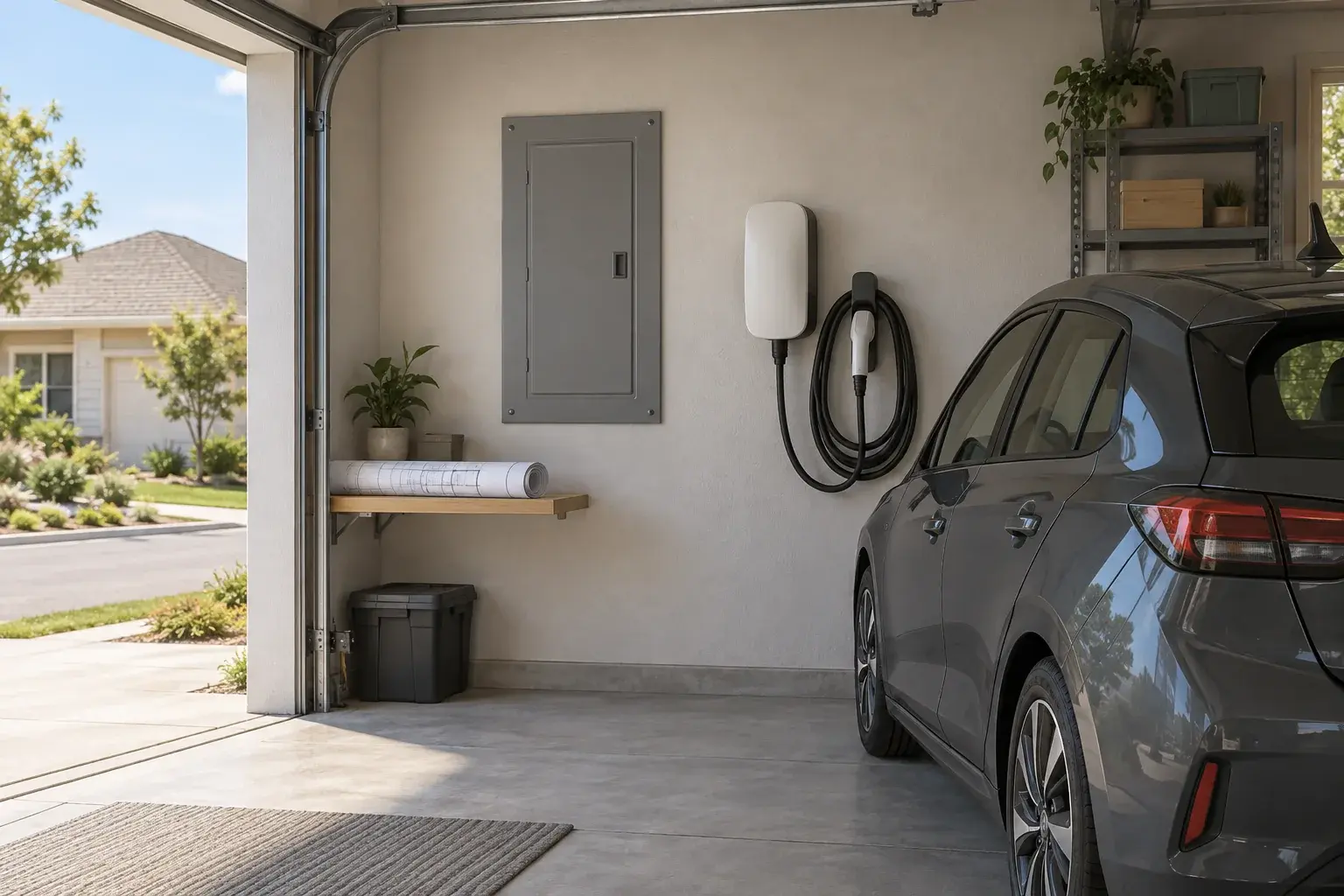
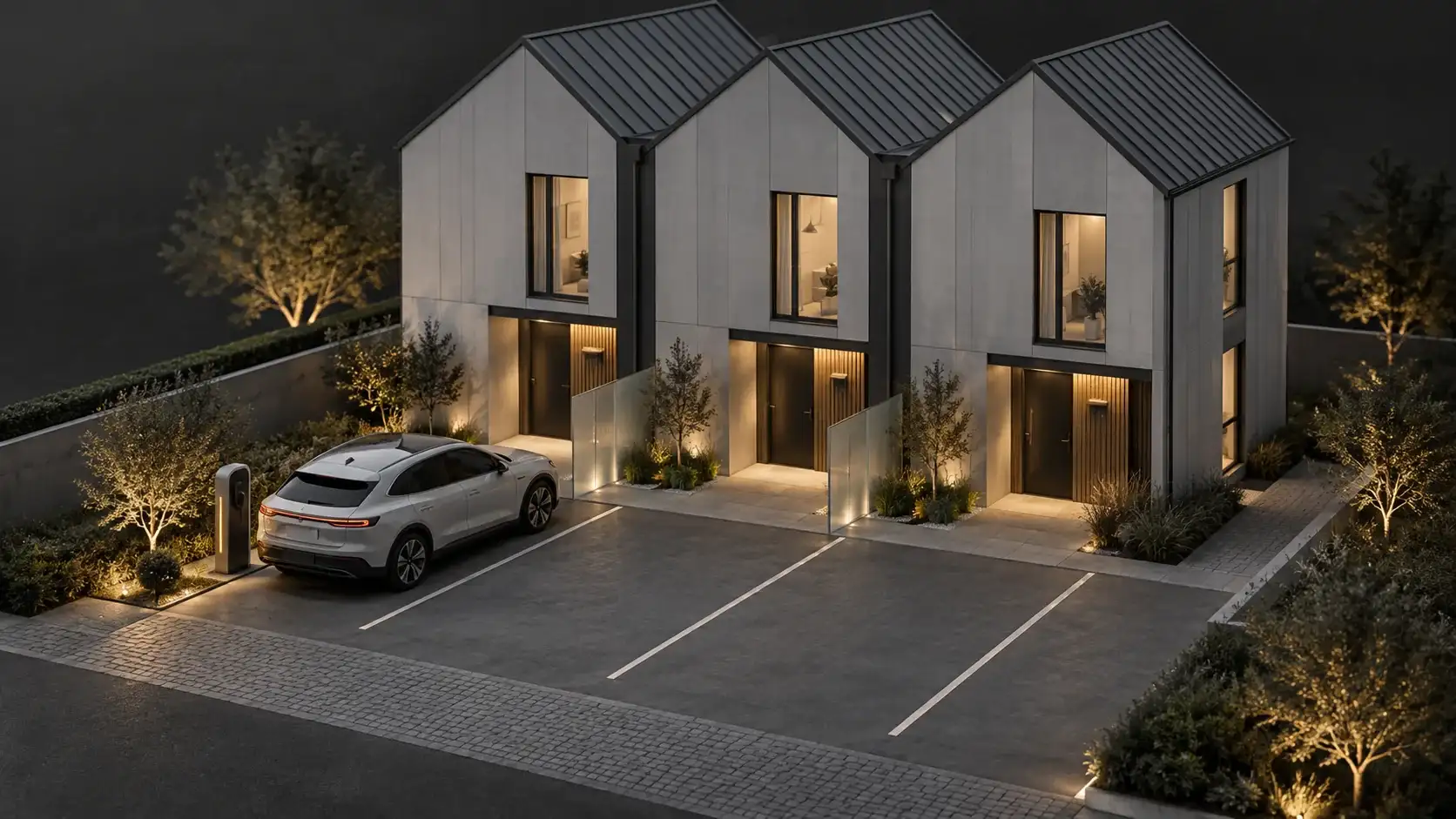
| Parking & Mounting Point | Indoor vs outdoor EVSE enclosure rating, pedestal or wall structural backing, cord reach without crossing public sidewalks | Whether the space is an attached garage, private driveway, deeded space, or common-area lot requiring board agreement |
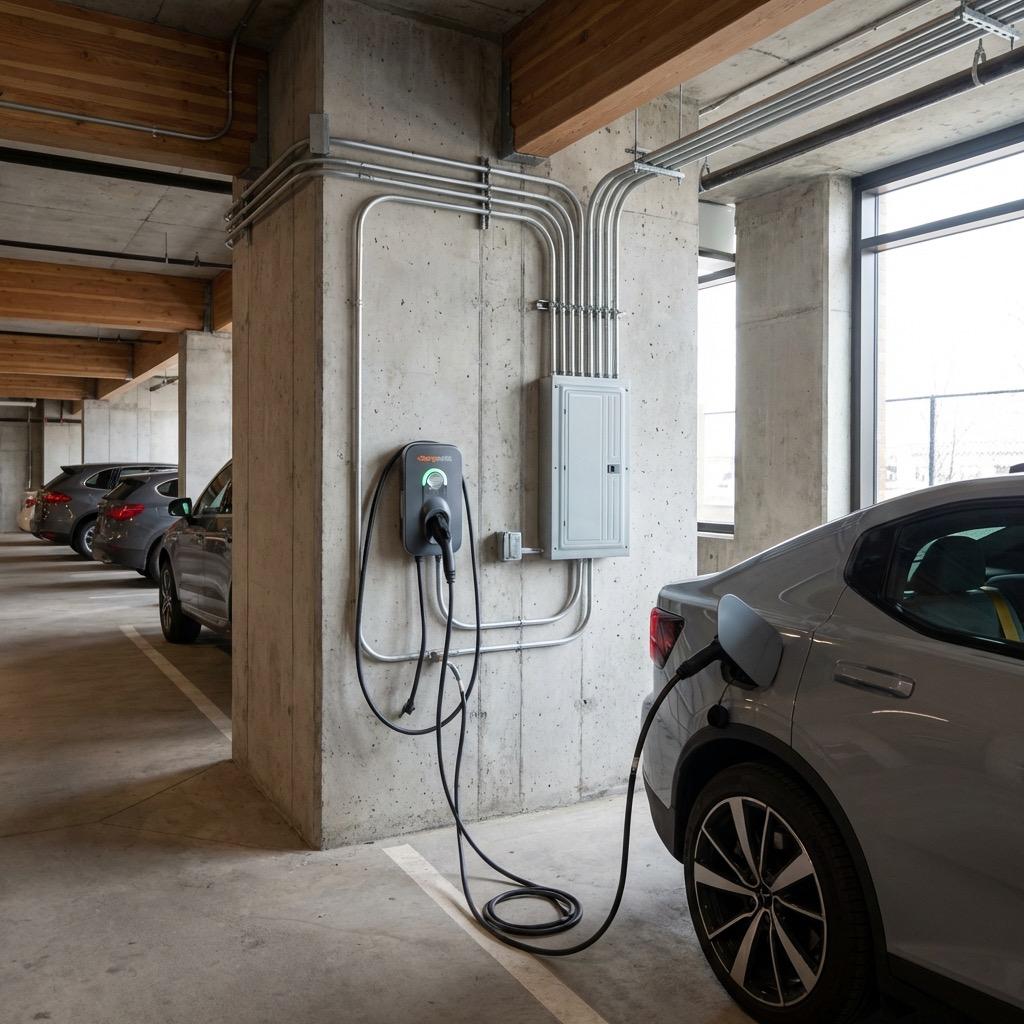
| Cable Route & Penetrations | Path from the unit's main panel through floor joists, basement ceilings, or exterior conduit; listed firestopping at rated assemblies | Whether the route crosses any common element, exterior facade, or shared garage ceiling that requires architectural approval |
| Service & Meter Bank | Existing 100A, 150A, or 200A unit load calculation, available breaker spaces, and whether EV load management avoids a service change | Utility and association rules for multi-meter banks on the end of a townhouse row if a service upgrade is ever proposed |
| Battery Wall Pack Placement | Listed mounting clearances from doors, windows, appliances, and vehicle impact paths, plus ambient temperature and structural load | Exterior visibility restrictions, shared-wall attachment rules, and utility/local fire code placement approvals |
Why Level 2 EV charging in a townhouse often uses load management
Many Northern Virginia townhouses are served by an underground lateral feeding a multi-meter bank mounted on one end unit of the building row. Upgrading an individual townhouse from 100 or 150 amps to 200 amps is frequently much more complex than a single-family heavy-up because the ganged meter enclosure and shared underground feeder are fixed. When a townhouse panel is near capacity, configuring an EV charger at a suitable lower output (such as 24A or 32A continuous) or installing a listed EV load-management controller often allows Level 2 charging on the existing service without touching the exterior meter bank.
Backup power on a townhouse lot: Wall packs vs portable generators
Narrow lot lines, zero-lot-line party walls, and elevated rear decks make safe portable generator placement difficult or impossible at many townhouses, because combustion exhaust must stay well clear of doors, windows, soffit vents, and neighboring intakes. A listed battery wall pack or portable power station wired to a transfer switch produces no combustion exhaust during discharge, making it a frequent topic for townhouse owners. Even so, stationary battery storage must still satisfy the exact equipment listing, manufacturer installation instructions, and local building and fire code clearances for attached dwellings.
What to prepare for your HOA submission and electrical estimate
- Architectural guidelines and application form: Download your association's exterior modification or EV charging policy before the site visit so the electrician knows where exterior conduit or pedestals are restricted.
- Closed-panel and parking photos: Photograph your unit's main breaker panel (with the cover closed), the breaker directory, and the path from the panel to the garage or driveway.
- Equipment cut sheets: Keep the manufacturer specification sheet for the proposed EVSE or battery system ready to attach to our written scope of work.
- Permit documentation: Jurisdictions including Fairfax County require an electrical permit for EV charging circuits and battery transfer equipment regardless of whether the work is inside a townhouse garage.
Our quoted electrical installations include a five-year workmanship warranty from completion. Parts and equipment carry their manufacturer warranties.
See EV charging and home batteries, or request a free project estimate.