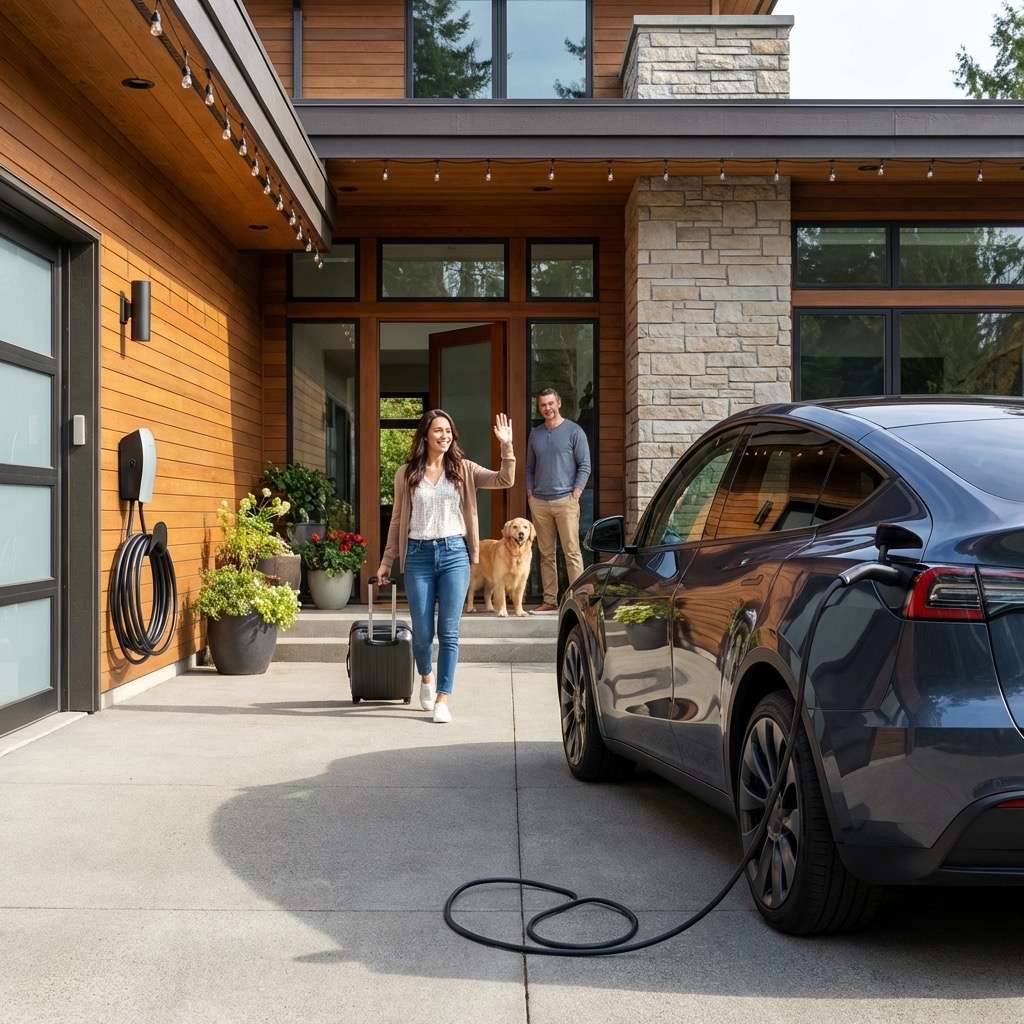

As EV adoption accelerates across Northern Virginia and the Washington DC metro area, the likelihood of hosting guests who drive electric vehicles grows with each passing month. Whether it is family visiting for the holidays from out of state, friends stopping by for a weekend dinner party in Fairfax, or colleagues carpooling to an event in Arlington, being prepared to offer EV charging makes you a thoughtful and forward-thinking host. This guide covers charger compatibility, hosting best practices, electricity cost management, and the etiquette that keeps everyone comfortable when sharing your home charger.
Key Takeaways
- Confirm the guest vehicle's connector, adapter requirements, charge limit, and the EVSE manufacturer's compatibility instructions.
- Tell guests the available connector, parking position, commissioned output, access rules, and charging window before arrival.
- Guest-charging cost depends on utility-billed kWh, the current all-in tariff, charging losses, and any agreed cost allocation.
- Adapter and accessory hardware are separate and should be verified for the exact vehicle and EVSE.
- App guest-access features depend on current manufacturer software and account terms.
Understanding Charger Compatibility
The first question guests ask is whether your charger works with their vehicle. Here is the quick guide to connector compatibility that covers virtually every EV on Northern Virginia roads.
Ready to Install a Home EV Charger?
Our licensed electricians evaluate panel capacity, circuit routing, equipment requirements, and permit needs for home EV charging. Call (571) 444-6886 or request an estimate online.
J1772 Connector
The J1772 is the original Level 2 AC charging standard used by nearly every non-Tesla EV in North America. If your charger has a J1772 connector (ChargePoint Home Flex, JuiceBox, Grizzl-E, and most other home chargers), it works directly with every non-Tesla EV including Hyundai Ioniq 5, Kia EV6, Ford Mustang Mach-E, Chevrolet Bolt, Rivian R1T/R1S, BMW iX, Volkswagen ID.4, and Mercedes EQS. Tesla owners can use a J1772-to-NACS adapter, which most Tesla owners carry in their vehicle.
Tesla NACS Connector
A NACS Wall Connector may require a listed, vehicle-compatible adapter for a vehicle with another inlet. Confirm the exact vehicle, EVSE generation, adapter rating, manufacturer support, and current instructions before connecting. Adapter hardware is separate.
Practical Compatibility Tips
For maximum guest compatibility, a J1772 charger is the most universal option since it works directly with the widest range of vehicles. If you have a Tesla Wall Connector, consider keeping a NACS-to-J1772 adapter in your garage for non-Tesla guests. If you and your guests both drive Teslas, the Wall Connector provides the simplest plug-and-charge experience.
Good to know: The EV industry is transitioning toward the NACS connector as the universal standard. Over the next few years, most new EVs from all manufacturers will include NACS ports. In the meantime, the adapter situation can be confusing, so proactively communicating with guests about compatibility prevents awkward moments in the driveway.
Being a Great EV Host
Offering EV charging to guests is a genuinely thoughtful gesture that removes one of the biggest concerns for EV drivers traveling away from home. Here is how to provide a great guest charging experience.
Before They Arrive
When you know EV-driving guests are coming, mention your home charger in advance. A simple text like "We have a Level 2 EV charger in the garage, so feel free to charge while you are here" removes range anxiety from their trip planning. If the guest is driving from a distance (such as visiting from Richmond, Baltimore, or further), knowing they can charge at your home affects their route planning and fast-charging stop decisions.
Preparing the Charging Area
Before guests arrive, clear the area around your charger to allow easy access. Ensure the cable is coiled on its hook or holster, the connector is clean and dry, and the path from the parking spot to the charger is unobstructed. If the charger is in the garage, park your own vehicle to leave room for the guest's car near the charger. If the charger is on the driveway, ensure the guest knows which spot to park in for optimal cable reach.
Providing Instructions
Not every EV driver is familiar with every charger brand. When your guest arrives, walk them through the basics of your charger. Show them where to find the connector, demonstrate how to plug in (most J1772 connectors require pressing a button on the handle to release), explain any quirks of your charger (such as an LED pattern that indicates charging), and mention whether your charger has any access code or app requirement. Most guests need only a 30-second orientation before they are comfortable charging independently.
Handling Multiple EVs
At larger gatherings, particularly during holidays in Northern Virginia's social communities, you might have two or more EV-driving guests competing for one charger. In this situation, prioritize the guest who traveled the farthest or has the least remaining range. Suggest a charging rotation, with each vehicle getting a 3-4 hour window. Remember that most guests only need a partial charge, not a full battery, to comfortably reach home or their next destination.
Managing Electricity Costs
A legitimate question for hosts is how much guest charging costs and how to handle the expense.
What Guest Charging Costs
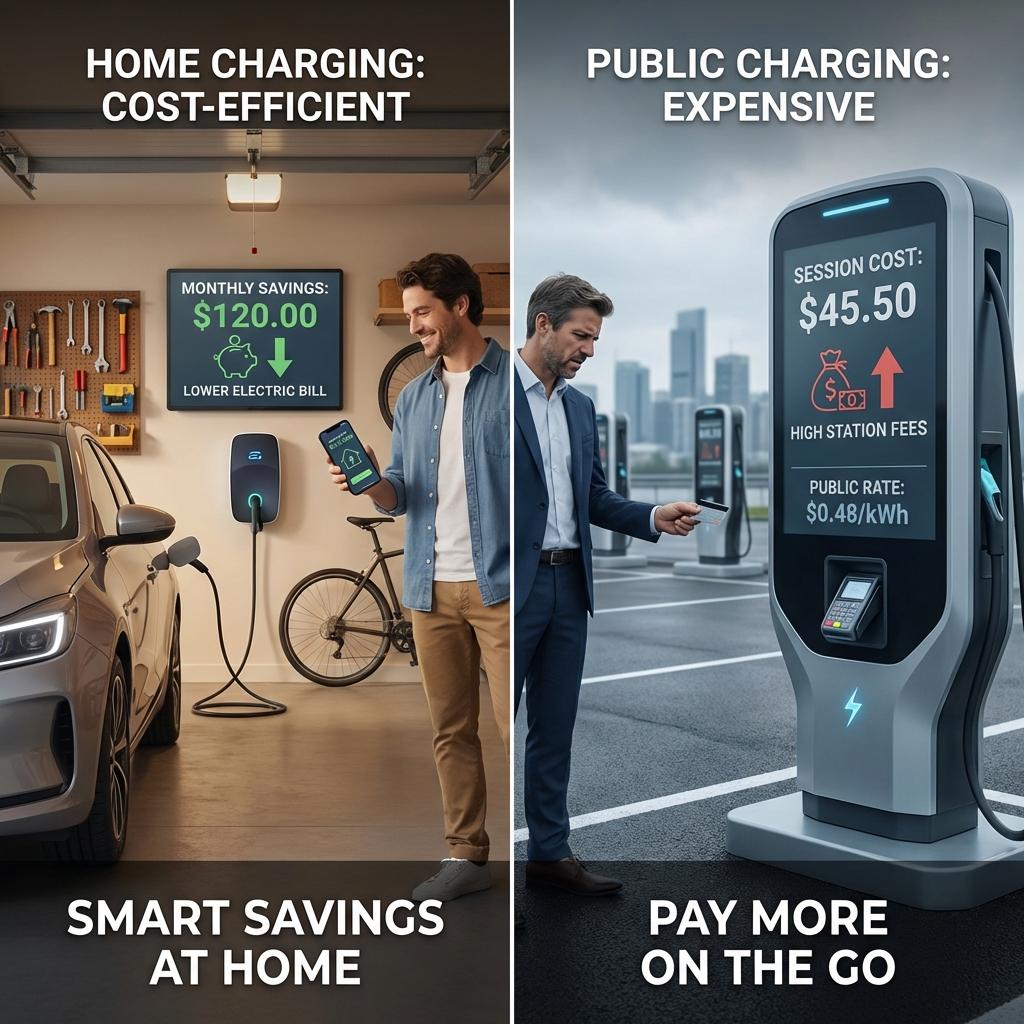
Calculate a guest session from utility-billed kWh multiplied by the applicable all-in tariff. Starting and target state of charge, battery size, vehicle efficiency, charging losses, temperature, and EVSE output change the result. Do not assume a universal charge cost.
Short Visits and Dinner Parties
For a short visit, agree on the target charge or departure range and use the vehicle or EVSE session report where available. The host decides whether and how to allocate cost; app estimates may differ from utility-billed energy.
Extended Stays
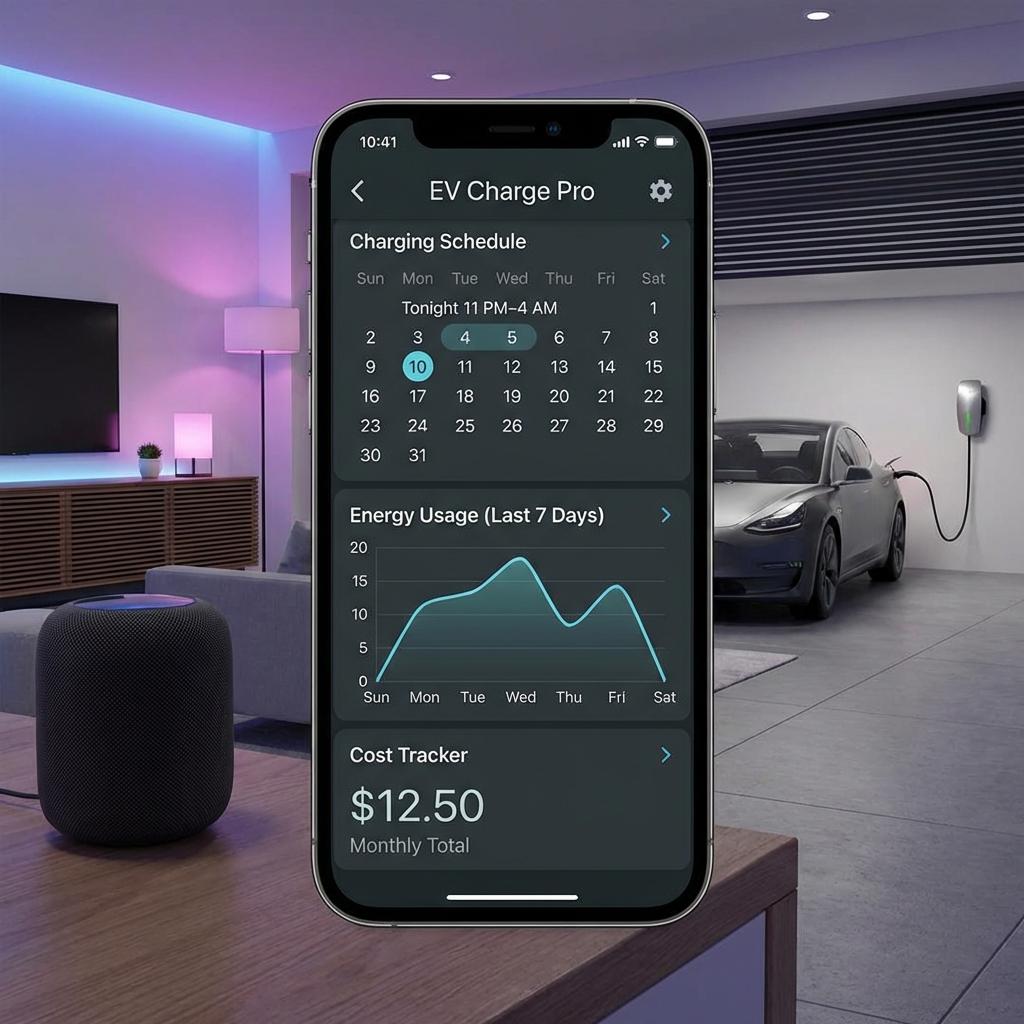
For an extended stay, the host and guest can agree whether to absorb or allocate the cost. Use utility-billed kWh and the current all-in tariff where possible. A compatible EVSE guest profile may help track sessions, subject to current software and account terms.
Smart Charger Guest Features
Some smart chargers offer guest access or multiple user profiles. The ChargePoint Home Flex, for example, allows you to share access without sharing your login credentials. The JuiceBox app can track energy consumed by different users. These features are useful for households that frequently host EV-driving guests or share a charger with a neighbor.
Pro tip from our team: If you regularly host EV-driving guests, consider mounting a small sign near your charger with basic instructions: connector type, any unlock procedure, and your WiFi password if the charger needs it. This laminated card saves you from repeating the same instructions at every gathering and empowers guests to charge independently.
EV Charging Etiquette for Guests
If you are the guest charging at someone else's home, observing a few etiquette practices shows respect for your host's generosity.
Ask Before You Plug In
Even if the host has offered charging, ask before connecting. They may need to adjust their own vehicle's schedule or want to show you the charger first. Never assume access to someone's charger without asking.
Do Not Over-Stay Your Charge
If your vehicle reaches its target charge level and other guests need to charge, unplug promptly. Most EV apps send a notification when charging is complete. Be responsive and free up the charger for others.
Handle Equipment Carefully
Treat the host's charger and cable with care. Do not drop the connector on the ground, do not run over the cable, and return the connector to its holster or hook when you unplug. The cable and connector are expensive components that the host invested in.
Offer to Contribute
For extended stays, offer to cover measured charging cost even if the host declines. Use the applicable tariff and reported energy rather than a universal per-charge estimate.
Looking Ahead: EV Hosting in Northern Virginia
As EV adoption grows in the DMV area, hosting EV-driving guests will become as routine as offering WiFi. Having a home charger and knowing how to welcome EV-driving visitors positions you as a thoughtful, prepared host in Northern Virginia's increasingly electric future.
Install a Guest-Ready EV Charger
AJ Long Electric installs EV chargers that work with every vehicle brand across Northern Virginia. Whether you want a universal J1772 charger for maximum guest compatibility or a Tesla Wall Connector with an adapter for non-Tesla visitors, our team recommends and installs the right solution for your home and hosting needs. Contact AJ Long Electric at (571) 444-6886 to make your Fairfax, Arlington, Loudoun, or Prince William County home EV-guest-ready.