
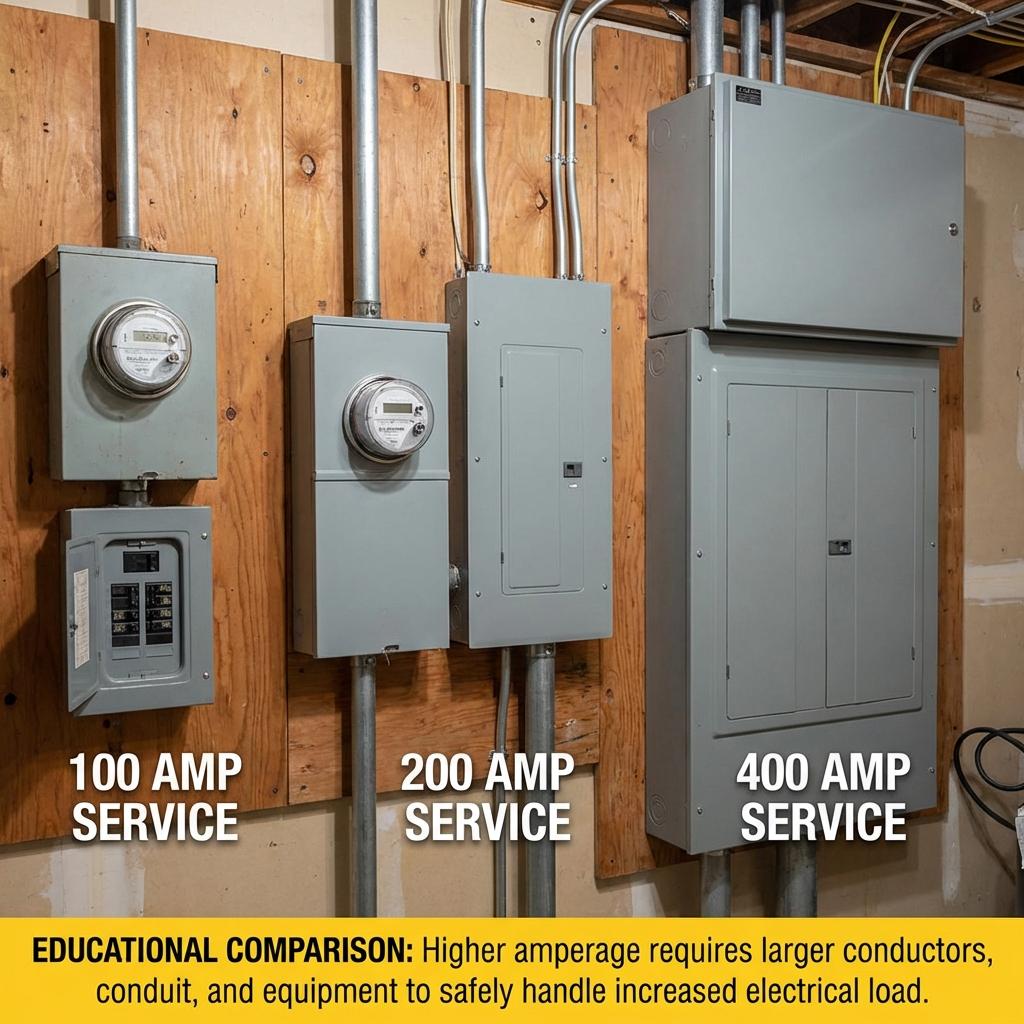
What Is a Heavy-Up? The DMV Term for an Electrical Service Upgrade, Explained
Heavy-up is what electricians around Washington, DC call an electrical service upgrade. Learn what a heavy-up includes,...
6 min read
Read 
Premium Electrical Service
Upgrade your home's electrical service from the utility meter to the main panel.
AJ Long Electric evaluates and performs residential electrical service upgrades in Northern Virginia. Scope, capacity, meter and service equipment, utility coordination, permit path, outage sequence, and timeline are determined from the address, serving utility, AHJ requirements, load calculation, and approved design.
Overview
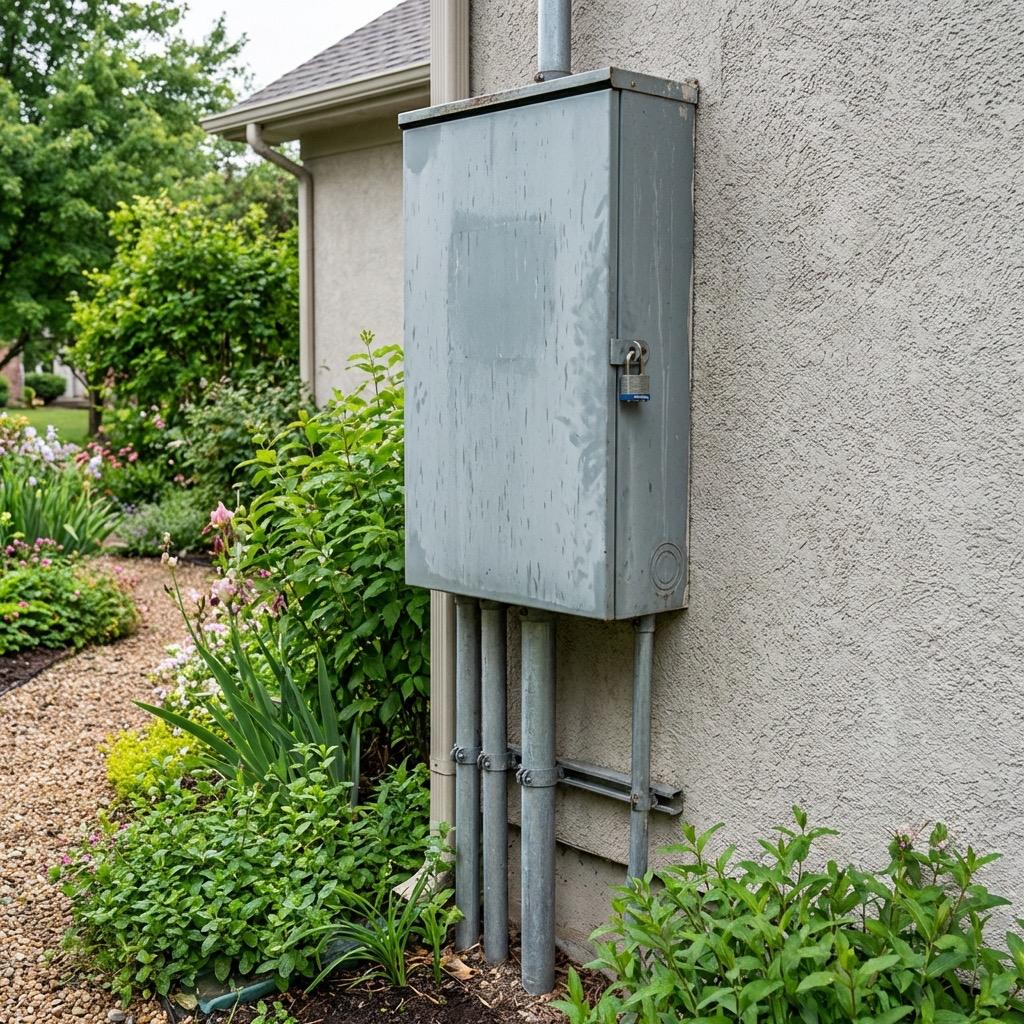
Your electrical service is the backbone of your home's power system, from the serving utility's connection through the meter equipment, service conductors, disconnect, and main panel. When a load calculation and equipment review show that the existing service cannot support planned loads, the project may require a complete service upgrade rather than only a panel replacement. AJ Long Electric documents the service configuration, equipment condition, utility ownership boundary, grounding and bonding, conductor route, and requested capacity before defining the scope. Meter work, disconnect and reconnect steps, transformer or service-lateral changes, permit review, inspection sequence, and outage timing depend on the address, serving utility, authority having jurisdiction, and approved design. The written proposal identifies those dependencies and distinguishes confirmed electrical work from utility-owned work and conditions that remain subject to review.
Support modern electrical demands including EV chargers, heat pumps, and high-draw appliances without overloading.
Replace aging service components that may be deteriorated, undersized, or no longer meeting safety standards.
Required meter, disconnect, reconnect, and capacity steps are confirmed with the utility serving the address.
Service entrance cables, meter base, panel, and grounding are all upgraded as an integrated project.
Proper service sizing accommodates future additions, EV chargers, and electrification of heating and cooking.
Send the project details for staff review. We will discuss the scope and next step before confirming a visit.
Request QuoteServing Fairfax, Vienna, McLean, Oakton, Burke, Annandale, Falls Church, Arlington & Alexandria.
Local Expertise
Fairfax, Arlington, Alexandria, Loudoun & Prince William Counties
Northern Virginia includes multiple utilities and authorities having jurisdiction, and service ownership, meter requirements, disconnect procedures, permit review, and inspection sequencing depend on the property address. Older homes may have 60-amp or 100-amp service, while EV charging, heat pumps, electric cooking, additions, and other planned loads can change the load calculation. A service upgrade recommendation begins with the existing equipment and documented loads, not a region-wide assumption about required capacity or utility process.
Real Projects
See how we have helped homeowners across Northern Virginia with their electrical service upgrades needs.
Challenge
A 1948 colonial still had its original 60-amp service with a fuse box and aging service-entrance components. The homeowner wanted to add central air conditioning and a Level 2 EV charger, so the planned loads and existing service required a documented capacity review.
Solution
The defined scope replaced the applicable service-entrance equipment, meter equipment, main panel, and grounding and bonding components, with reconnection coordinated through the utility serving the address.
Result
The home now has modern 200-amp service with ample capacity for the new central AC, EV charger, and future additions. The homeowner's insurance premium dropped after the fuse box was eliminated, and the property value increased with the modernized electrical system.
Challenge
A townhome community was converting from overhead to underground utility service as part of a neighborhood improvement project. Each unit required address-specific coordination among the HOA, general contractor, serving utility, and local authority before an individual capacity change could be defined.
Solution
The approved scope documented the meter equipment, service conductors, underground termination, panel work, trenching boundary, and coordination responsibilities for the property.
Result
The overhead service lines and weatherhead were eliminated, improving the unit's appearance and eliminating storm damage risk to the service entrance. The upgraded 200-amp service provides capacity for the homeowner's EV charger and planned kitchen renovation.
Challenge
A tree branch damaged the weatherhead, service conductors, and meter equipment during an ice storm. The serving utility made the utility-owned connection safe while the property-side damage, capacity, emergency permit path, and reconnection sequence were evaluated.
Solution
The approved repair scope identified the damaged service components, required capacity, grounding and bonding work, utility boundary, emergency permit steps, and inspection sequence before replacement work began.
Result
Restoration remained dependent on safe field completion, required inspection or authorization, serving-utility availability, corrections, and successful energization rather than a promised turnaround.
Challenge
The homeowners were fully electrifying their 6,000 sq ft estate, replacing a propane furnace with dual heat pumps, converting a gas range to induction, adding three EV chargers for their vehicle fleet, and building a heated pool with an electric heat pump. A detailed load calculation showed their 200-amp service would be approximately 40% over capacity with all planned additions.
Solution
The property-specific design used utility-accepted metering and distribution equipment, with transformer and service-lateral requirements confirmed by the utility serving the address. Conductor sizing, panel arrangement, grounding and bonding, and simultaneous-load assumptions followed the approved load calculation.
Result
Commissioning verified the approved service and panel configuration against the documented loads; future additions remain subject to updated load calculations and equipment ratings.
Permits & Compliance
Permit requirements for electrical service upgrades vary by county. We handle the entire permitting process for you.
Permit Process
Fairfax County controls the current application, documentation, review, correction, and inspection process for service upgrades. Required load calculations, site information, and utility documents depend on the proposed work. The county and serving utility control their respective review and scheduling timelines, which must be confirmed for the address.
Inspection Notes
Fairfax inspectors perform a thorough review of the service entrance, meter base, panel, and grounding system. They verify conductor sizing matches the service rating, the meter base is properly sealed and grounded, and the grounding electrode system meets NEC 250 requirements.
Special Requirements
Permit Process
Loudoun County controls the current permit, plan-review, correction, and inspection process. Underground service work may require additional site or right-of-way information. Review timing and any emergency pathway must be confirmed with the county for the exact scope.
Inspection Notes
Loudoun inspectors verify the complete service entrance from the weatherhead or underground lateral to the main panel. They check conductor sizing, meter base installation, grounding electrode system, and proper panel installation.
Special Requirements
Permit Process
Prince William County controls the current permit, emergency-repair, review, correction, and inspection process for service upgrades. Required documentation and timing depend on the condition of the property and defined scope and must be confirmed with Development Services.
Inspection Notes
Prince William inspectors review the permitted service components, which may include the meter equipment, weatherhead, service conductors, grounding and bonding, disconnect, and main panel. Utility disconnect and inspection sequencing are confirmed for the address.
Special Requirements
Permit Process
Arlington County controls the current permit, plan-review, correction, and inspection process. Underground conversions and work affecting public space may require additional review. Timing is set by the county, utility, and project status and must be confirmed for the address.
Inspection Notes
Arlington inspectors are detail-oriented with service entrance installations, checking conductor sizing, proper support and protection, meter base installation, and grounding. They pay particular attention to clearances from windows, doors, and walkways for overhead service entrances.
Special Requirements
Pricing Options
Transparent options organized by project scope. Your approved estimate defines the included work.
$3,500-$7,500
100-amp to 200-amp service upgrade with all essential components for homes needing increased capacity.
$3,500-$7,500
A 200-amp service scope with property-specific entrance, grounding, access, and coordination requirements documented in the proposal.
Quoted per project
400-amp service upgrade for high-demand homes with extensive electrical loads and multiple panel configurations.
Prices may vary based on the specific requirements of your project, the condition of existing electrical systems, and your home's unique characteristics. Contact us to request a property-specific estimate.
By Home Type
Different home styles have unique electrical characteristics. Select your housing type to see specific considerations.
Colonial homes in Falls Church, McLean, and Vienna can have aging service components and conductors routed through finished interior walls. Replacement paths, finish boundaries, utility ownership, outage steps, and inspection sequencing must be documented for the property.
How It Works
We review the equipment and site, agree on the scope, arrange the work, and test the completed installation. Timing depends on access, materials and any required coordination.
We evaluate your existing service size, condition, and capacity, and discuss your current and future power needs.
We perform a detailed load calculation to determine the correct service size for your home's requirements.
You receive a comprehensive quote covering all components: service entrance, meter base, panel, grounding, permits.
We confirm the address-specific permit path and coordinate required meter or capacity work with the serving utility.
We install the new service entrance cables, meter base, main panel, and grounding electrode system.
When utility action is required, the serving utility follows its approved reconnection and energization process.
We schedule the county inspection, test all circuits, and verify proper operation of the complete system.
FAQs
Get answers to common questions about our electrical service upgrades services.
A panel upgrade replaces just the electrical panel (breaker box) inside your home. A service upgrade encompasses the entire power delivery system from the utility connection to the panel, including service entrance cables, meter base, weatherhead, and main panel. A service upgrade is needed when you are increasing your total amperage capacity.
A 100A to 200A service upgrade in the DC metro area typically costs $3,500-$7,500. A 200A to 400A upgrade is quoted per project based on the distance from meter to panel, whether service is underground or overhead, and specific utility requirements. We provide detailed quotes after a site assessment.
Field duration and outage time depend on the approved scope, service configuration, access, utility work, inspection sequence, equipment availability, and corrections. The written project plan identifies the expected work stages after the serving utility and authority requirements are confirmed.
That depends on the address, service configuration, ownership boundary, and approved scope. Meter work, disconnect and reconnect steps, service-lateral changes, or transformer review may require the serving utility. We confirm the applicable coordination path before scheduling field work.
Most modern homes require at least 200-amp service. Large homes with multiple high-draw systems (EV chargers, heat pumps, electric cooking, pool equipment) may need 400-amp service. We perform a detailed load calculation based on your current and anticipated electrical needs to determine the right service size.
Yes, we can convert overhead service to underground as part of a service upgrade. Underground service eliminates the weatherhead and exposed service entrance cables, improving appearance and reducing storm damage risk. Underground conversion costs more due to trenching but is increasingly popular in Northern Virginia.
A service upgrade requires a planned outage for portions of the work. Duration and restoration timing depend on the address, utility and inspection sequence, field conditions, approved corrections, and successful energization; the proposal documents the project-specific plan without promising same-day restoration.
Often, yes. Older grounding systems may not meet current NEC 250 requirements. During a service upgrade, we verify your grounding electrode system (ground rods, water pipe bonding, etc.) and upgrade it as needed. Proper grounding is critical for safety and is inspected during the final permit inspection.
Pricing
Every home is different. Here are the factors that influence pricing for electrical service upgrades services.
Defined after utility, AHJ, equipment, access, and outage requirements are confirmed
$3,500-$7,500 (200A); 400A quoted per project
Our quoted electrical installations include a five-year workmanship warranty from completion. Parts and equipment carry their manufacturer warranties.
At a Glance
Typical pricing, timeline, and what's included for electrical service upgrades in Northern Virginia.
| Detail | Specification |
|---|---|
| Typical price range | $3,500-$7,500 (200A); 400A quoted per project |
| Typical timeline | Defined after utility, AHJ, equipment, access, and outage requirements are confirmed |
| Permits & code | Performed to applicable code requirements: Service entrance conductors must be sized per NEC 310 ampacity tables for the service rating; Grounding electrode systems must meet NEC 250 requirements including proper ground rod installation; Meter and service equipment must meet the serving utility's current requirements and the adopted electrical code; Service disconnects must be accessible and clearly marked per NEC 230.70 |
| Warranty | Our quoted electrical installations include a five-year workmanship warranty from completion. Parts and equipment carry their manufacturer warranties. |
| Brands & certifications | Square D by Schneider Electric, Siemens, Eaton, Milbank (meter bases), Meter and service equipment accepted by the serving utility, Licensed Virginia Electrician |
Related Services
Explore other electrical services that complement electrical service upgrades.
Property-specific electrical panel replacement and service-capacity planning, with load calculations, utility coordination, labeling, and permit-path confirmation.
Home Level 2 EV charger installation with panel-capacity review, circuit planning, equipment connection, testing, and permit coordination for the defined scope.
Property-specific branch-circuit installation for appliances, workshops, offices, and specialty equipment, sized to the connected load and existing panel.
Electrical hookups for customer-owned or dealer-supplied portable generators and battery equipment, including compatible transfer equipment and inlet connections.
Our Promise
AJ Long Electric documents the existing service, utility ownership boundary, load calculation, meter and panel equipment, conductor route, grounding and bonding, and planned loads before proposing a service upgrade. The written scope identifies AJLE work, serving-utility work, AHJ requirements, known access conditions, and open dependencies so scheduling is based on the address and approved design.
Virginia Licensed Electricians
Fully Bonded & Insured
Serving Northern Virginia
Five years on quoted electrical installations
Service Areas
We proudly provide electrical service upgrades services across Northern Virginia, Washington DC, and Maryland. Click on your area to learn more.
Common Problems
Learn about common electrical issues and when to call a professional.
Partial power loss — some outlets dead, or 240V loads weak — usually means a broken neutral, a hidden breaker trip, or a single-leg service failure. A broken neutral in particular is dangerous: it lets line voltage swing far above or below 120V, damaging every electronic device in the affected part of the home within seconds.
Learn MoreStorm-related power loss in Northern Virginia is usually one of three things: a Dominion Energy grid event (out of your control, fixed by the utility); damage to your service entrance (the wires + mast + meter base, which we coordinate with Dominion to repair); or surge damage to your panel and downstream devices (which we repair without utility involvement). The first step is to check the Dominion outage map; the second is to call us if there's visible damage at your home.
Learn MoreGuides
Expert electrical guides to help you make informed decisions.
A comprehensive guide to electrical panel upgrades covering signs you need an upgrade, the process, costs, and what to expect.
Navigate the electrical permit process in Northern Virginia with confidence. Learn requirements for Fairfax County, Arlington, Alexandria, and surrounding areas.
Expert Resources
Learn more about electrical service upgrades from our team of licensed electricians in Northern Virginia.
Heavy-up is what electricians around Washington, DC call an electrical service upgrade. Learn what a heavy-up includes,...

Get the most current 2026 pricing data for every major electrical service in Northern Virginia, from outlet...
Emergency electrical calls cost 1.5x to 2x standard rates. Learn when emergency service is necessary and how pricing...