Loading services…

Residential project planning
Outdoor Lighting in Manassas, VA
Outdoor lighting can support safer movement, security, and the appearance of a home after dark. A practical plan matches low-voltage or line-voltage equipment to each purpose, then accounts for controls, wiring routes, trenching, and final aiming.
- Licensed & insured
- Family-owned since 1996
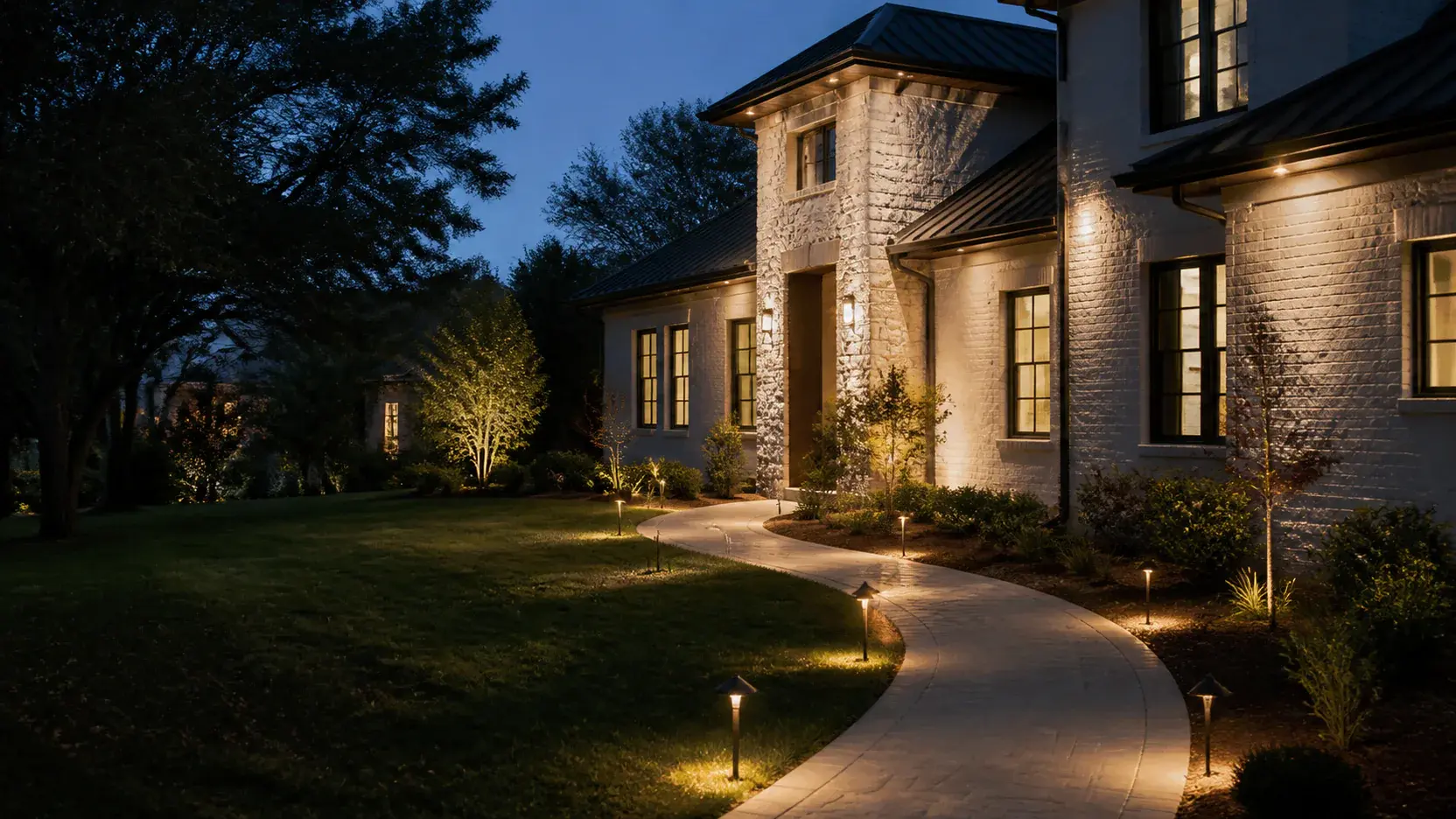
Field briefing / Manassas, VA
Project briefing
Jurisdiction confirmed by property address
- Project
- Outdoor Lighting
- Resolve the transformer location and control location separately from the City-or-County boundary so design and jurisdiction are not conflated.
- Permit path
- City of Manassas Community Development for City addresses; Prince William County Development Services outside the independent city
- Final jurisdiction is confirmed from the property address.
Planning your project in Manassas
Porch light, walkway light and workshop access
For a Manassas home with a detached work area, distinguish the front entrance from the route to the outbuilding. Each may need different controls and cable planning. If a visible fixture is on a property within a city historic overlay, check the applicable review before altering it. Shielded light should serve the route without lighting neighboring yards unnecessarily.
Before your estimate
Sketch the buildings and walking routes and identify existing power. Provide the address and any applicable exterior-design guidance.
The City of Manassas has historic overlay provisions as well as downtown planning policies. A Manassas mailing address should be checked against the actual property jurisdiction before applying city or historic-district guidance.
Scope first
What this project involves
Purpose and fixture placement
Decide where light is needed for paths, security, or architectural emphasis before selecting fixture positions.
Power and controls
Choose low-voltage or line-voltage equipment and the switches, timers, or sensors that fit how the lighting will be used.
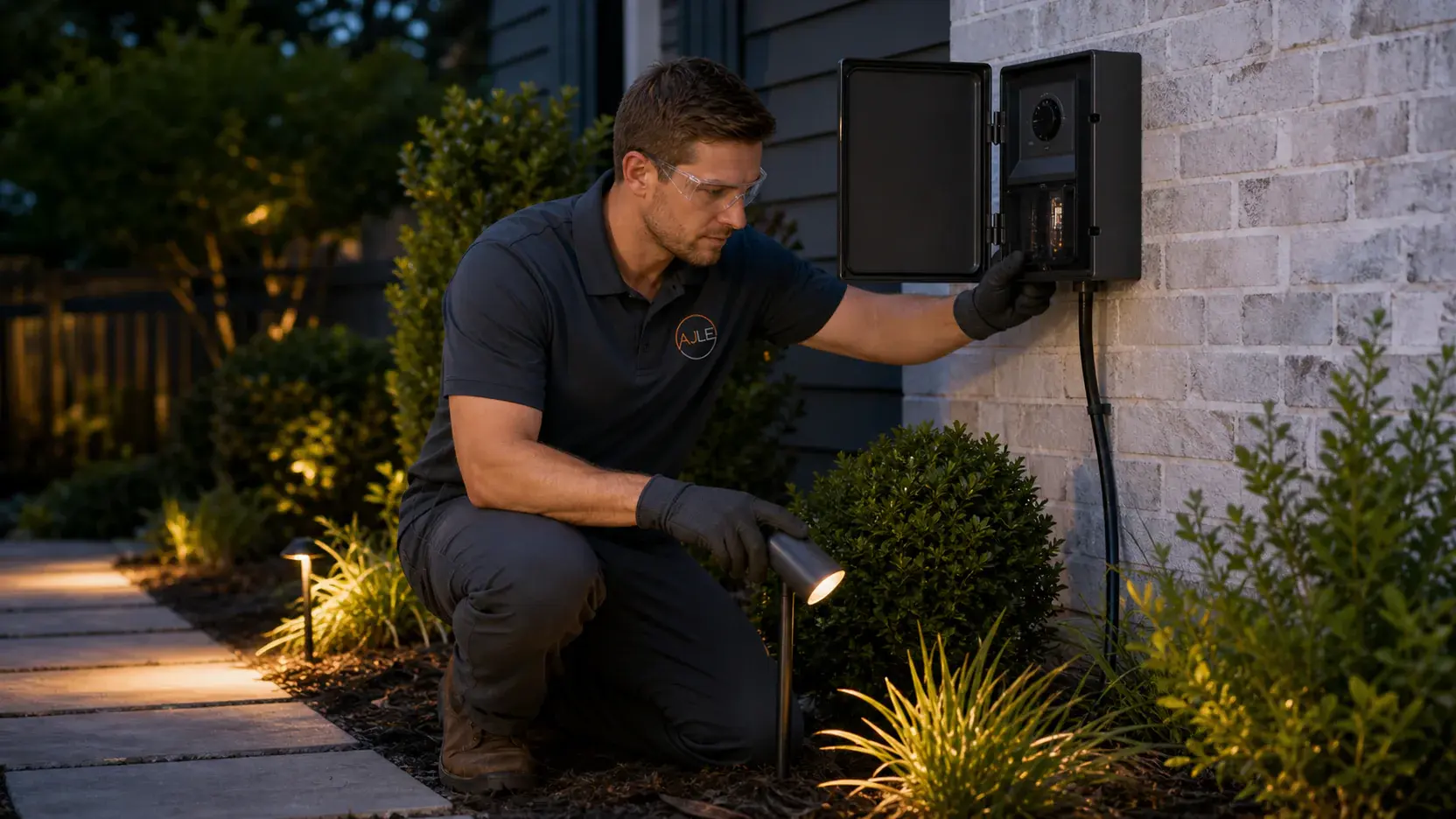
Field view / Outdoor Lighting
Representative field view for Outdoor Lighting; final scope is confirmed at the property.Address-specific planning
What matters in Manassas
A Manassas outdoor-lighting project has two independent inputs: the exact address for jurisdiction and the lot form for design. The walking route, steps, and grade come from the property rather than the mailing label.
Historic Downtown, Georgetown South, and Sudley are part of the location profile, but none settles City of Manassas versus Prince William County authority. On site, we document mature landscape growth, fixture aiming, hardscape, trenching, and access; after the electrical scope is known, the exact address determines which authority's review applies.
Explore the Manassas service areaProject fit / review at the property
- A low-voltage route through an existing courtyard or yard after surface access is confirmed
- Separately scoped line-voltage equipment at a building or detached-use point with a verified serving circuit
- A townhouse or managed property when the customer supplies any HOA approval or spill-light direction applicable to the address
Quote inputs
Scope and cost drivers
Included in the defined scope
- Identify lighting goals for paths, entries, security areas, and architectural features
- Compare suitable low-voltage and line-voltage approaches
- Plan controls, cable routes, trenching, and weather-exposed connections
- Place and aim fixtures for the intended area and effect
What can change scope and cost
- Number, type, and placement of fixtures
- Low-voltage or line-voltage power requirements
- Trenching, routing, and landscape access
- Control locations and aiming adjustments
Work sequence
From assessment to completion
- 01
Walk the property
Identify the paths, entries, activity areas, and features the homeowner wants to light.
- 02
Design the layout
Choose fixture purposes, approximate positions, power method, and controls.
- 03
Plan the route
Confirm wiring paths, trenching needs, mounting surfaces, and outdoor connections.
- 04
Install and aim
Install the approved layout, test the controls, and adjust fixture direction after dark when practical.
Property-specific answers
Local questions
Who supplies HOA approval for lighting at a Manassas townhouse?
The owner does. Where a townhouse association or property manager sets rules for exterior fixtures or spill light, send us the approval or written direction for the address. We then place and aim the fixtures and choose the transformer and control locations to fit it.
What property details shape a Manassas lighting layout?
We use the current walking pattern, changes in grade, hardscape openings, planting growth, available mounting points, and cable access. Those findings guide the low-voltage route and any separate line-voltage discussion.
Related Services
Related Services in Manassas
Guides
Outdoor Lighting Planning Guides
Expert electrical guides to help you make informed decisions.
Beginner
Recessed Lighting Cost & Planning Guide — Northern Virginia 2026
How ceiling access, fixture count and dimmers drive a recessed-lighting quote, layout planning for kitchen, basement and living room installs, and the code items that apply.
9 min read
Read GuideBeginner
Home Electrical Safety Inspection Checklist
A comprehensive room-by-room electrical safety checklist every homeowner should review regularly to identify potential hazards.
10 min read
Read GuideBeginner
Whole-House Surge Protection Cost Guide for Northern Virginia
Understand what an installed surge-protection quote includes, why panel fit and connection work change the price, and how to compare a device price with a complete project.
8 min read
Read GuideNearby Outdoor Lighting Service Areas
We also provide expert electrical services in these communities.
Next step / property-specific quote
Request a quote for Outdoor Lighting in Manassas
Share the property address and project goal so the scope can be reviewed for your home.