Loading services…

Residential project planning
Outdoor Lighting in Lorton, VA
Outdoor lighting can support safer movement, security, and the appearance of a home after dark. A practical plan matches low-voltage or line-voltage equipment to each purpose, then accounts for controls, wiring routes, trenching, and final aiming.
- Licensed & insured
- Family-owned since 1996
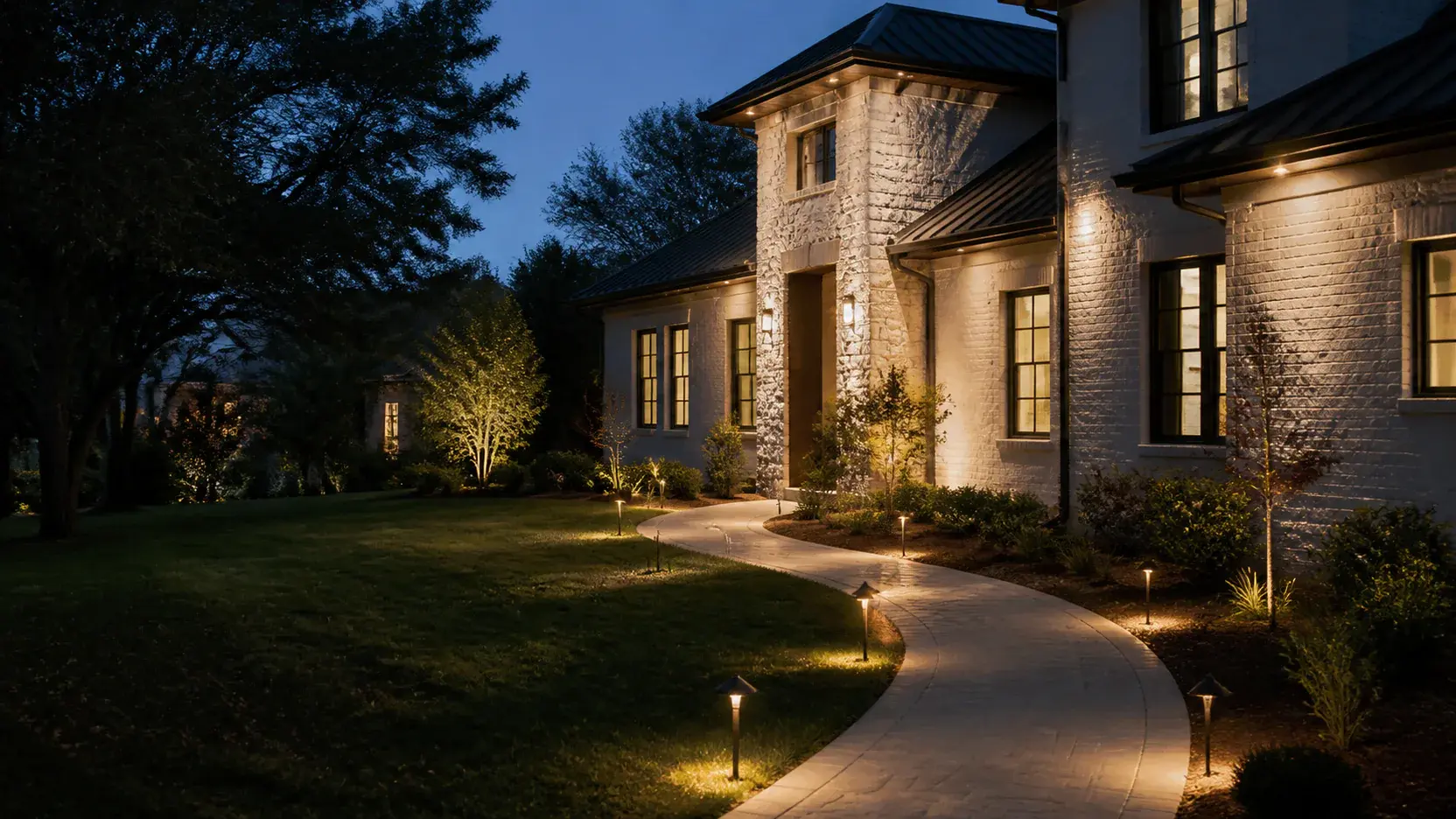
Field briefing / Lorton, VA
Project briefing
Jurisdiction confirmed by property address
- Project
- Outdoor Lighting
- Locate the transformer location and control location in relation to the serving panel, route length, and ongoing access before fixing the lighting zones.
- Permit path
- Fairfax County Land Development Services
- Final jurisdiction is confirmed from the property address.
- Local condition
- Lorton
- Laurel Hill, Newington, and Mason Neck represent different property settings, so the review does not assume an attached or detached arrangement. We inspect mature landscape growth, fixture aiming, hardscape, trenching, and access along the actual route, then confirm Fairfax County review responsibility for any electrical work included in the approved scope.
Planning your project in Lorton
Light the changes in level around a rear entrance
For a Lorton walkout entrance, focus on the steps, retaining edges and path back to the main yard. Shielded fixtures placed for the walking surface may be more useful than one high floodlight casting deep shadows. Keep a deck's ambient lighting separate from motion coverage, and consider camera glare before choosing a fixture above the door.
Before your estimate
Send a sequence of photos from the house to the yard and note elevation changes. Identify existing exterior power and any drainage work planned nearby.
Lorton is within Fairfax County's local planning framework. A project involving a rear deck, walkout level or detached space benefits from considering the whole route from the indoor supply to the place where the fixture will be used.
Scope first
What this project involves
Purpose and fixture placement
Decide where light is needed for paths, security, or architectural emphasis before selecting fixture positions.
Power and controls
Choose low-voltage or line-voltage equipment and the switches, timers, or sensors that fit how the lighting will be used.
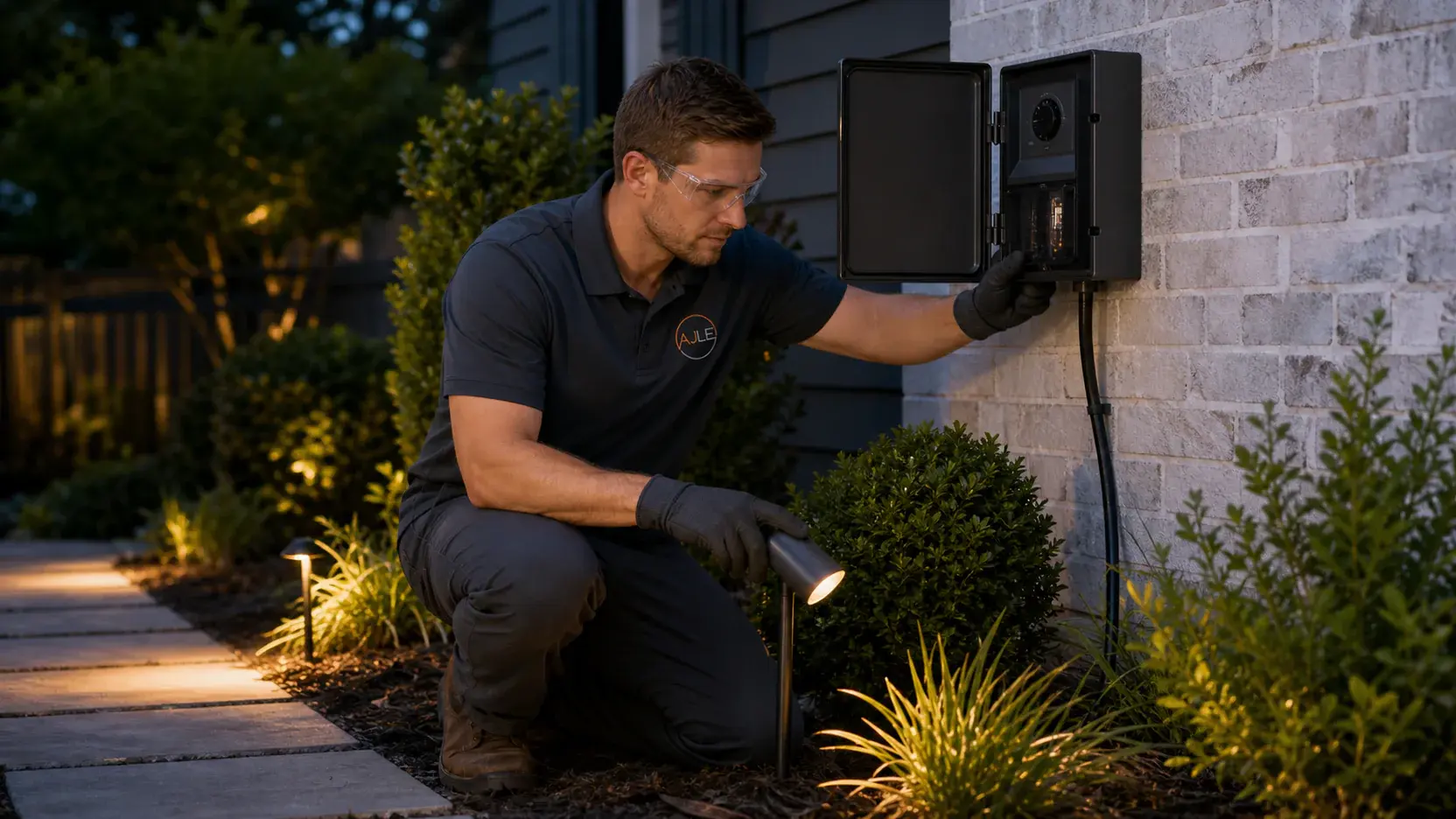
Field view / Outdoor Lighting
Representative field view for Outdoor Lighting; final scope is confirmed at the property.Address-specific planning
What matters in Lorton
A Lorton lighting plan first identifies the property's lot form and whether the walking route stays near the home or continues toward another use area. Distance, steps, and grade are observed before selecting a power method.
Laurel Hill, Newington, and Mason Neck represent different property settings, so the review does not assume an attached or detached arrangement. We inspect mature landscape growth, fixture aiming, hardscape, trenching, and access along the actual route, then confirm Fairfax County review responsibility for any electrical work included in the approved scope.
Explore the Lorton service areaProject fit / review at the property
- A low-voltage route extending from the residence toward a customer-selected path or detached-use area
- Separately scoped line-voltage equipment where distance, mounting, and the serving circuit need an independent review
- A property with a customer-identified association approval or spill-light concern that affects placement near a boundary
Quote inputs
Scope and cost drivers
Included in the defined scope
- Identify lighting goals for paths, entries, security areas, and architectural features
- Compare suitable low-voltage and line-voltage approaches
- Plan controls, cable routes, trenching, and weather-exposed connections
- Place and aim fixtures for the intended area and effect
What can change scope and cost
- Number, type, and placement of fixtures
- Low-voltage or line-voltage power requirements
- Trenching, routing, and landscape access
- Control locations and aiming adjustments
Work sequence
From assessment to completion
- 01
Walk the property
Identify the paths, entries, activity areas, and features the homeowner wants to light.
- 02
Design the layout
Choose fixture purposes, approximate positions, power method, and controls.
- 03
Plan the route
Confirm wiring paths, trenching needs, mounting surfaces, and outdoor connections.
- 04
Install and aim
Install the approved layout, test the controls, and adjust fixture direction after dark when practical.
Property-specific answers
Local questions
How is lighting planned between structures at a Lorton property?
We identify which structure supplies power, walk the full distance, and record grade, hardscape, gates, and other access conditions. That information shows whether a low-voltage route is practical or whether a different electrical scope needs discussion.
Does a long Lorton route automatically call for line voltage?
No automatic choice is made from distance alone. The fixture load, voltage behavior, transformer placement, cable route, mounting, controls, and intended use are compared before separately scoped line-voltage equipment is proposed.
Related Services
Related Services in Lorton
Guides
Outdoor Lighting Planning Guides
Expert electrical guides to help you make informed decisions.
Beginner
Recessed Lighting Cost & Planning Guide — Northern Virginia 2026
Per-fixture install costs by ceiling type, layout planning for kitchen + basement + living room installs, dimmer compatibility, and the cost-driving factors in a typical Northern Virginia home.
9 min read
Read GuideBeginner
Home Electrical Safety Inspection Checklist
A comprehensive room-by-room electrical safety checklist every homeowner should review regularly to identify potential hazards.
10 min read
Read GuideBeginner
Whole-House Surge Protection Cost Guide — Northern Virginia 2026
Type 1 vs Type 2 surge protective devices, why panel-mount install matters, and the device-replacement math that makes whole-house surge protection the best $700 you can spend on a Northern Virginia home.
7 min read
Read GuideNearby Outdoor Lighting Service Areas
We also provide expert electrical services in these communities.
Next step / property-specific quote
Request a quote for Outdoor Lighting in Lorton
Share the property address and project goal so the scope can be reviewed for your home.