Loading services…

Residential project planning
Electrical Repair in Arlington, VA
Electrical repair begins by finding the cause of the problem before choosing a fix. Service can address outlets, switches, breakers, partial outages, and warning signs such as unusual heat or evidence of arcing, with the repair based on accessible findings.
- Licensed & insured
- Family-owned since 1996
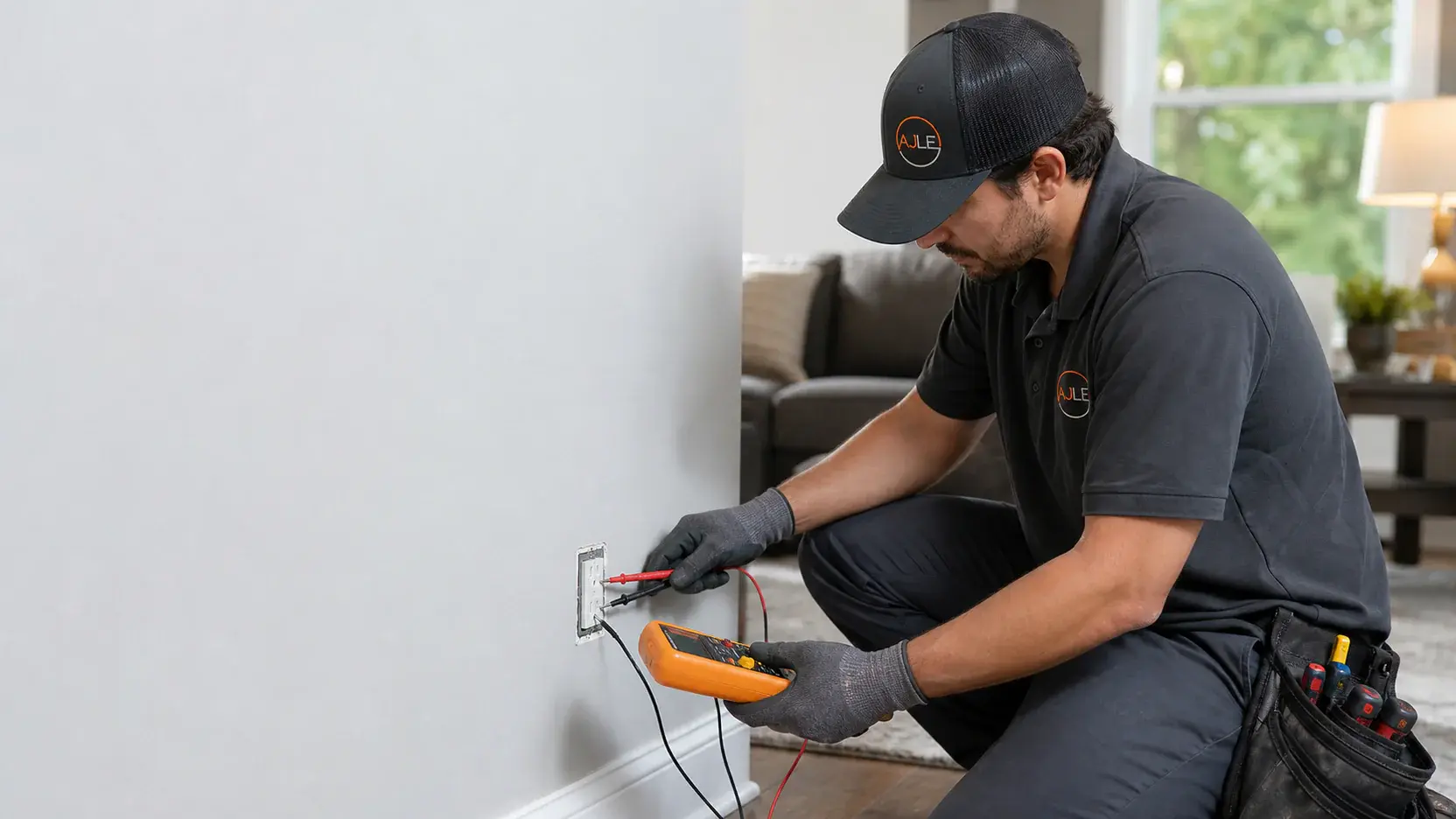
Field briefing / Arlington, VA
Project briefing
Jurisdiction confirmed by property address
- Project
- Electrical Repair
- Confirm which electrical equipment belongs to the homeowner and which is building-managed before authorizing access beyond the unit panel.
- Permit path
- Arlington County Inspection Services Division
- Final jurisdiction is confirmed from the property address.
Planning your project in Arlington
Find out whether the problem stops at the unit
When an Arlington condo loses power in several rooms, check the reported extent of the outage with building management and describe the affected devices. A unit circuit problem and an issue involving shared equipment require different access and responsibility. Testing within the agreed scope can identify the next step without assuming all visible symptoms come from the same fixture.
Before your estimate
Provide the building contact and a list of affected locations. Mention any recent work in the unit or known building electrical interruption.
Arlington's 2025 housing profile reports that 73% of housing units are multifamily apartments or condos. Its neighborhood directory also distinguishes areas such as Cherrydale, Columbia Pike and Virginia Square. A condo installation and a detached-home installation can therefore need very different preparation.
Scope first
What this project involves
Hazard or service issue
Separate conditions that require immediate shutoff or isolation from issues suitable for a normal service visit.
Access and repair path
Decide what diagnostic access is reasonable and whether the affected part should be repaired or replaced.
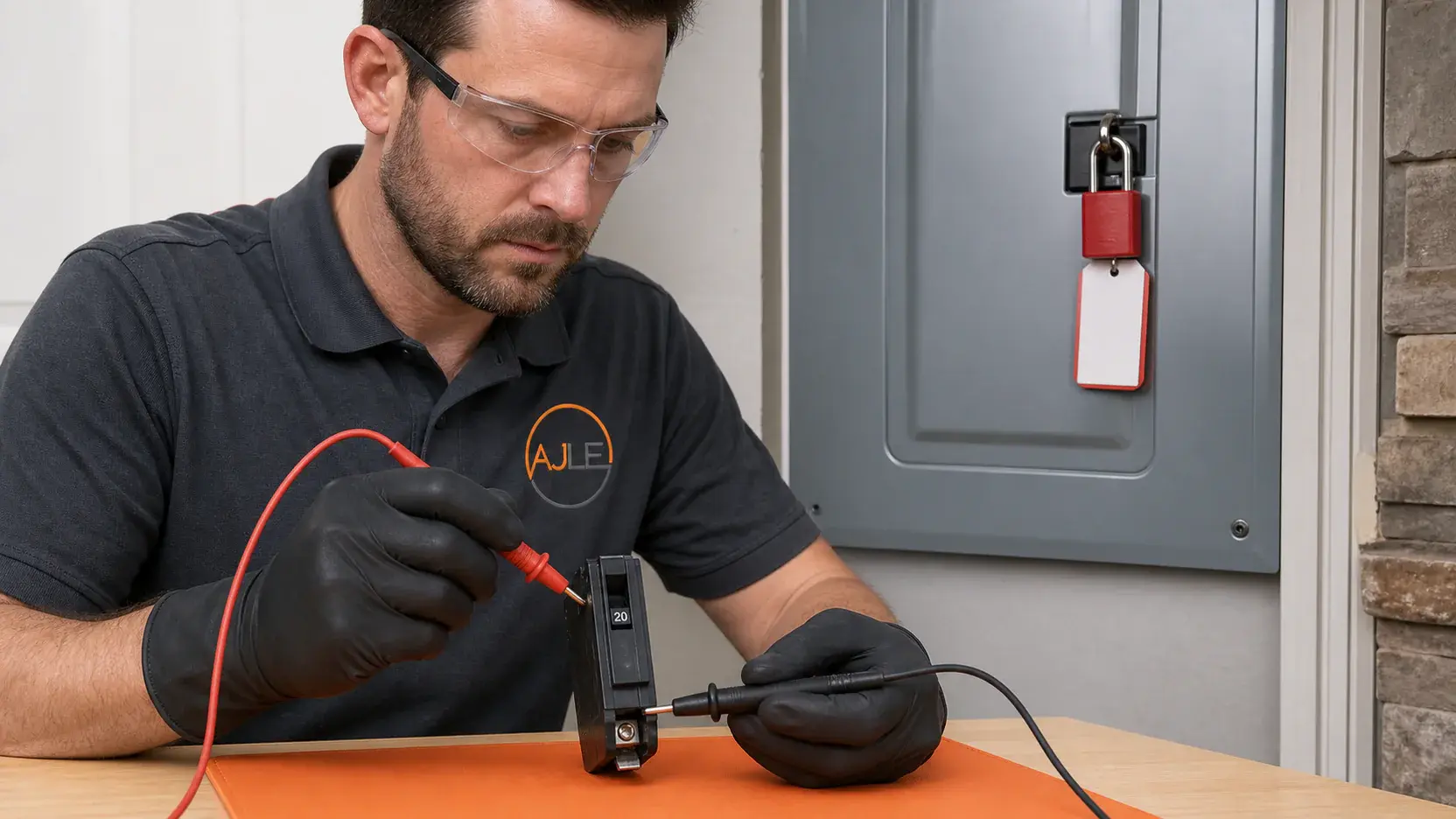
Field view / Electrical Repair
Representative field view for Electrical Repair; final scope is confirmed at the property.Address-specific planning
What matters in Arlington
An Arlington electrical repair may stop at the dwelling panel or depend on building-managed equipment beyond it. The diagnostic scope identifies that ownership boundary while testing the outlets, switches, breakers, and circuits accessible within the property.
A Clarendon, Cherrydale, or Rosslyn address may involve a detached home, a unit panel, or shared service equipment; the actual arrangement is confirmed before testing crosses a managed boundary. For a unit or coordinated building, we document the unit panel generation and any building-recorded replacement work; that boundary evidence directs diagnostic testing and whether repair remains homeowner-side or enters managed scope. We document affected rooms and loads, isolate accessible heat or arcing damage, and distinguish a replaceable unit component from a fault requiring building coordination. Arlington County Inspection Services Division handles electrical permits when the repair scope requires one.
Explore the Arlington service areaProject fit / review at the property
- A unit-level outage needing the dwelling panel separated from shared distribution
- A hot outlet, switch, or breaker requiring safe isolation and access review
- A diagnosed fault where repair, component replacement, or building coordination must be compared
Local housing & wiring
Planning electrical work in Arlington
Arlington bungalows and colonials in Cherrydale, Lyon Village, and Ashton Heights hide troubleshooting problems that newer houses do not have: shared neutrals, ungrounded circuits, and lights that brighten and dim together. AJ Long Electric diagnoses them on scheduled visits with a meter, not a guess.
Houses from the 1920s to the 1940s have been rewired in pieces for eighty years, and two conditions are worth checking first. First, a single neutral wire shared by two hot circuits, called a multiwire branch circuit. When that neutral loosens, lights on both circuits swing bright and dim, and some bulbs burn out early. Second, two-wire cable with no ground, with grounded-looking outlets added later in some rooms. A shared neutral also means one breaker may not kill everything you expect, so we shut off both and verify with a tester before opening a box. A plaster ceiling and a finished attic floor can make the junction box hard to reach, so we ask where past work was done and which rooms were added. Apartment owners in Clarendon or Ballston face a different chain of access: building management, a unit subpanel, and common-area shutoffs. If the problem is inside your unit, we work from the unit panel outward and coordinate with management for anything above it.
Quote inputs
Scope and cost drivers
Typical published range for this work: Diagnostics and repairs cost $195 for the first 30 minutes, then $60 for each additional 15 minutes.. The written Arlington proposal is project-specific.
Included in the defined scope
- Document the reported symptoms and affected rooms or circuits
- Test accessible outlets, switches, breakers, and connections related to the problem
- Identify visible heat or arcing damage and make unsafe conditions clear
- Explain a repair or replacement path based on the diagnosis
What can change scope and cost
- Time and access needed to isolate the fault
- Number of affected devices, connections, or circuits
- Repairable condition versus replacement of damaged components
- Access behind finishes or inside equipment
Work sequence
From assessment to completion
- 01
Listen and assess
Review the symptoms and identify signs that call for immediate electrical safety steps.
- 02
Diagnose
Test the affected devices and circuit to narrow down the fault.
- 03
Explain options
Show the findings and compare repair with replacement when both are reasonable.
- 04
Repair and verify
Complete the authorized work and test the affected circuit or device.
Property-specific answers
Local questions
When does an Arlington repair need building coordination?
Coordination may be needed when the suspected fault, disconnect, meter, feeder, or panel is in a shared or managed area. We document the unit-side findings so the responsible party has a clear starting point.
How is an Arlington hot device handled during diagnosis?
The device is taken out of use and its circuit is turned off when that can be done safely. We then inspect accessible conductors, terminations, the device, and related panel components before choosing repair or replacement.
Why do my Arlington lights get brighter when I turn something else on?
That pattern often points to a loose or open neutral, especially where two circuits share one neutral wire. The load on one circuit pushes voltage onto the other. It can damage electronics, so have it tested instead of replacing bulbs, and avoid running large appliances on the affected rooms until it is traced.
Can an ungrounded outlet in my old Arlington house be fixed without rewiring?
Sometimes, within code limits. A grounded outlet cannot simply be installed where no ground exists. Code allows a GFCI-protected outlet with a No Equipment Ground label on such a circuit, and a full rewire is a separate project we would quote after diagnosis. Troubleshooting only establishes what you have and what is failing.
Does my Arlington condo unit need the building to be involved in troubleshooting?
Not always. If the fault is inside your unit panel or wiring, we can test it directly. If the loss of power starts at the riser, a common-area panel, or something management controls, the building has to be involved. We find out which side the problem is on before anything else.
Related Services
Related Services in Arlington
Guides
Electrical Repair Planning Guides
Expert electrical guides to help you make informed decisions.
Nearby Electrical Repair Service Areas
We also provide expert electrical services in these communities.
Next step / property-specific quote
Request a quote for Electrical Repair in Arlington
Share the property address and project goal so the scope can be reviewed for your home.