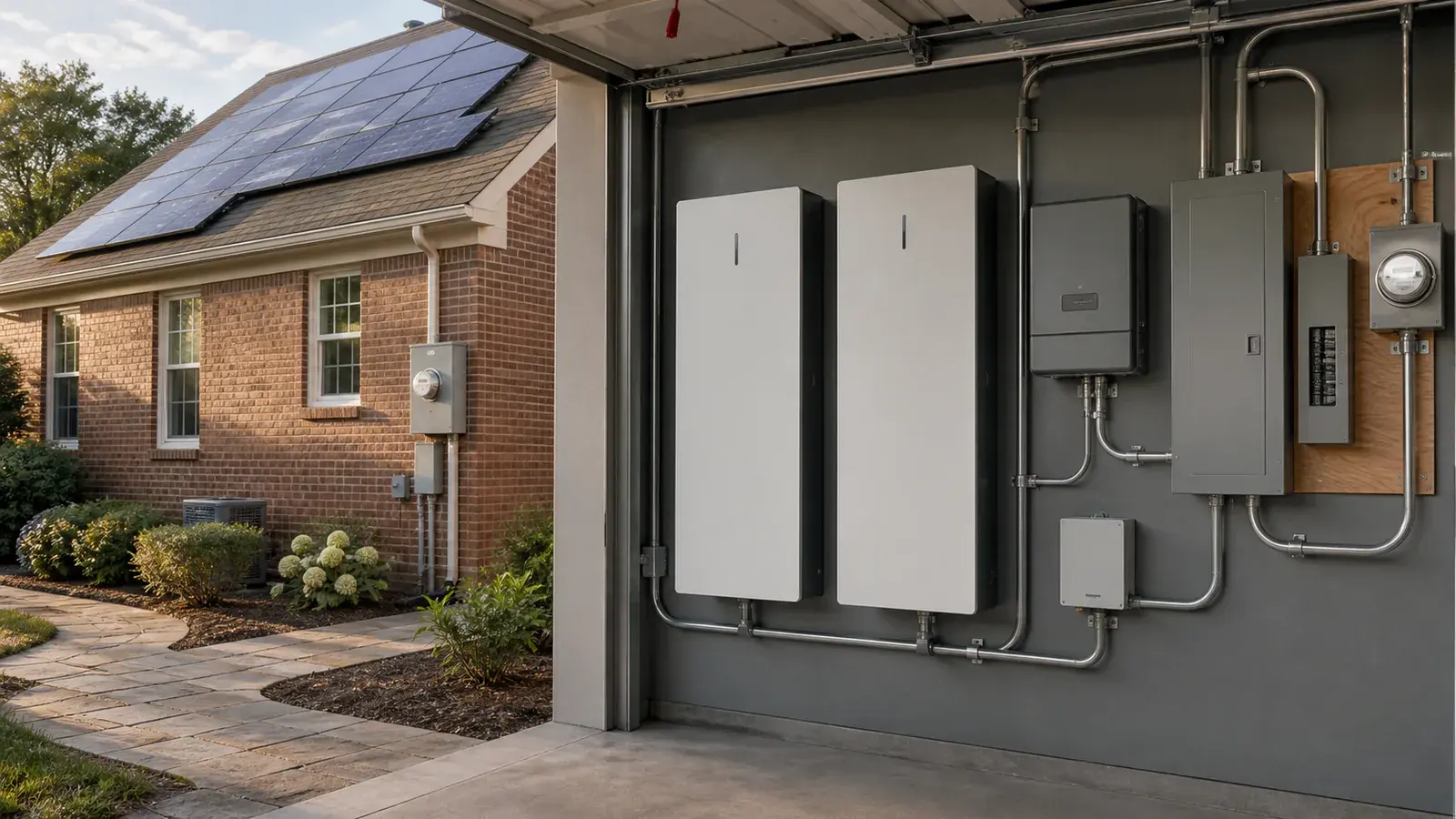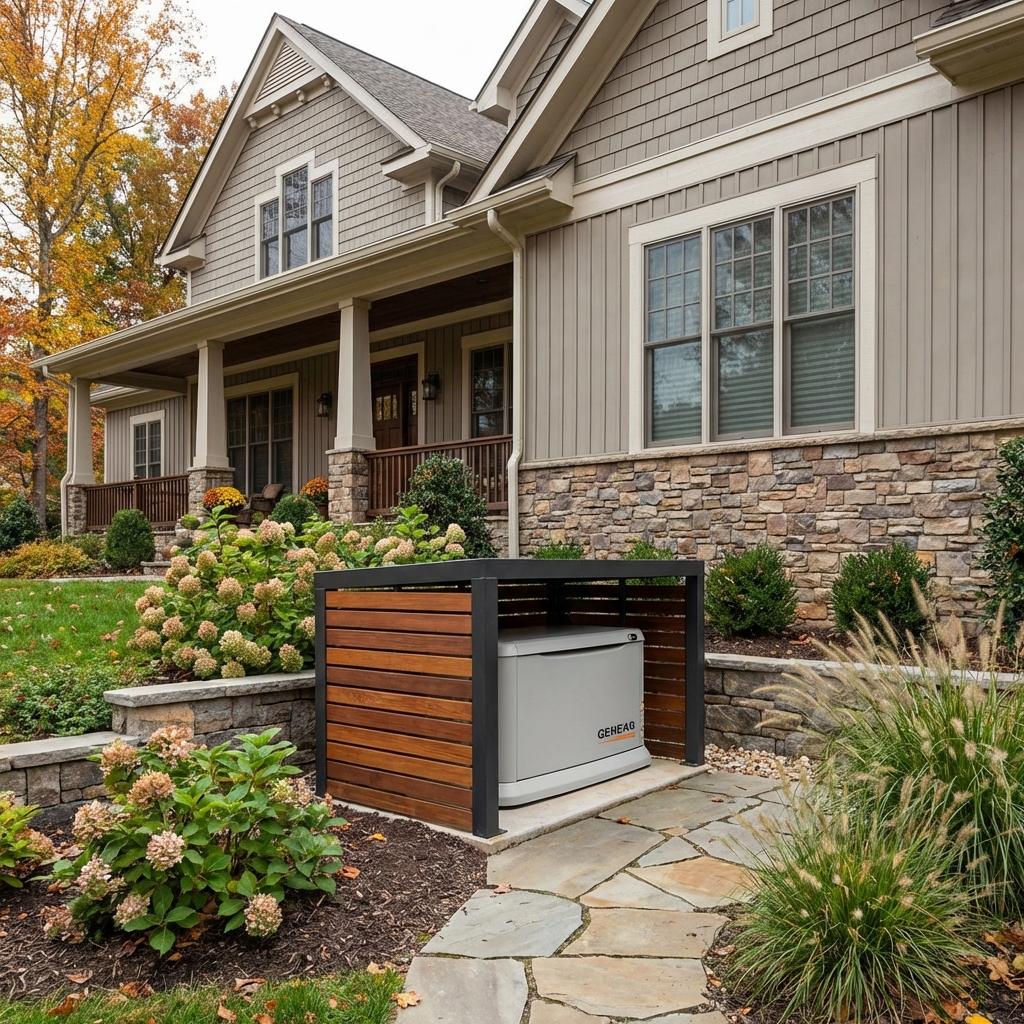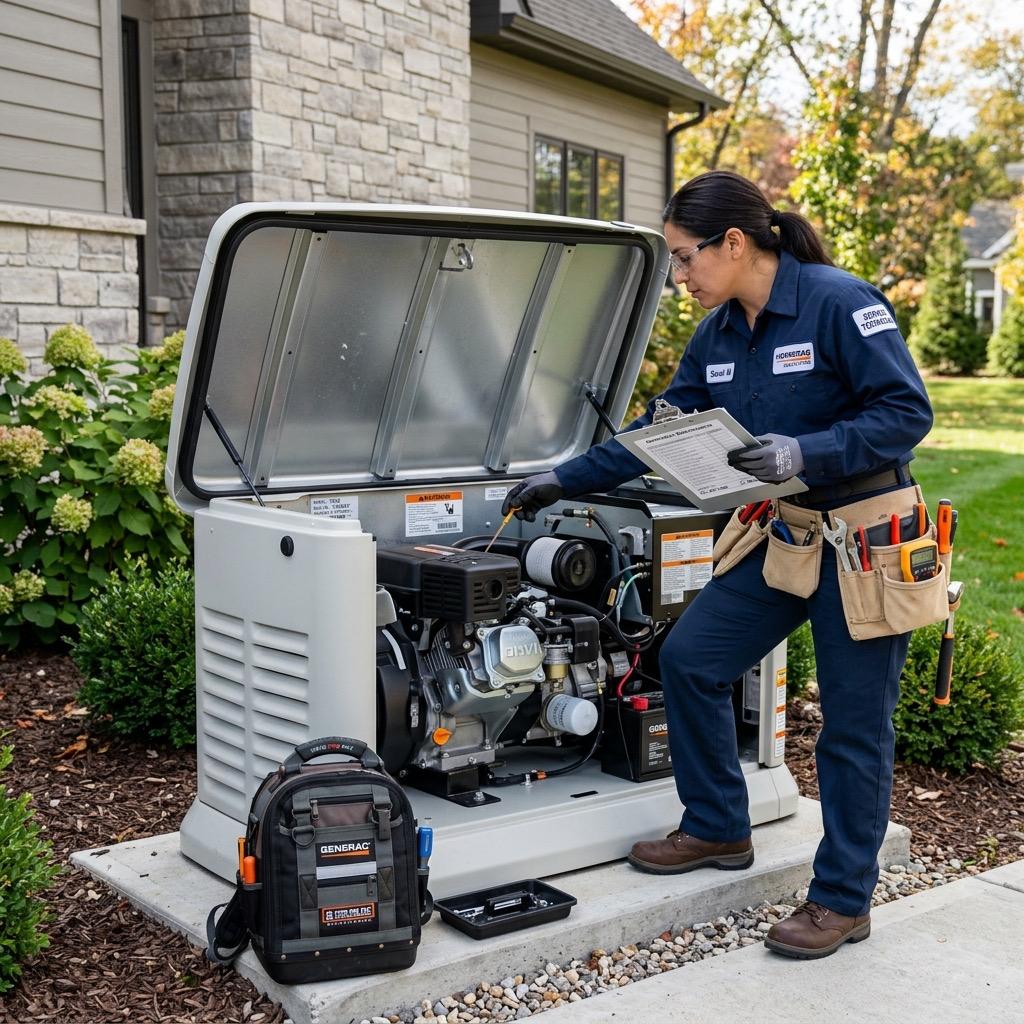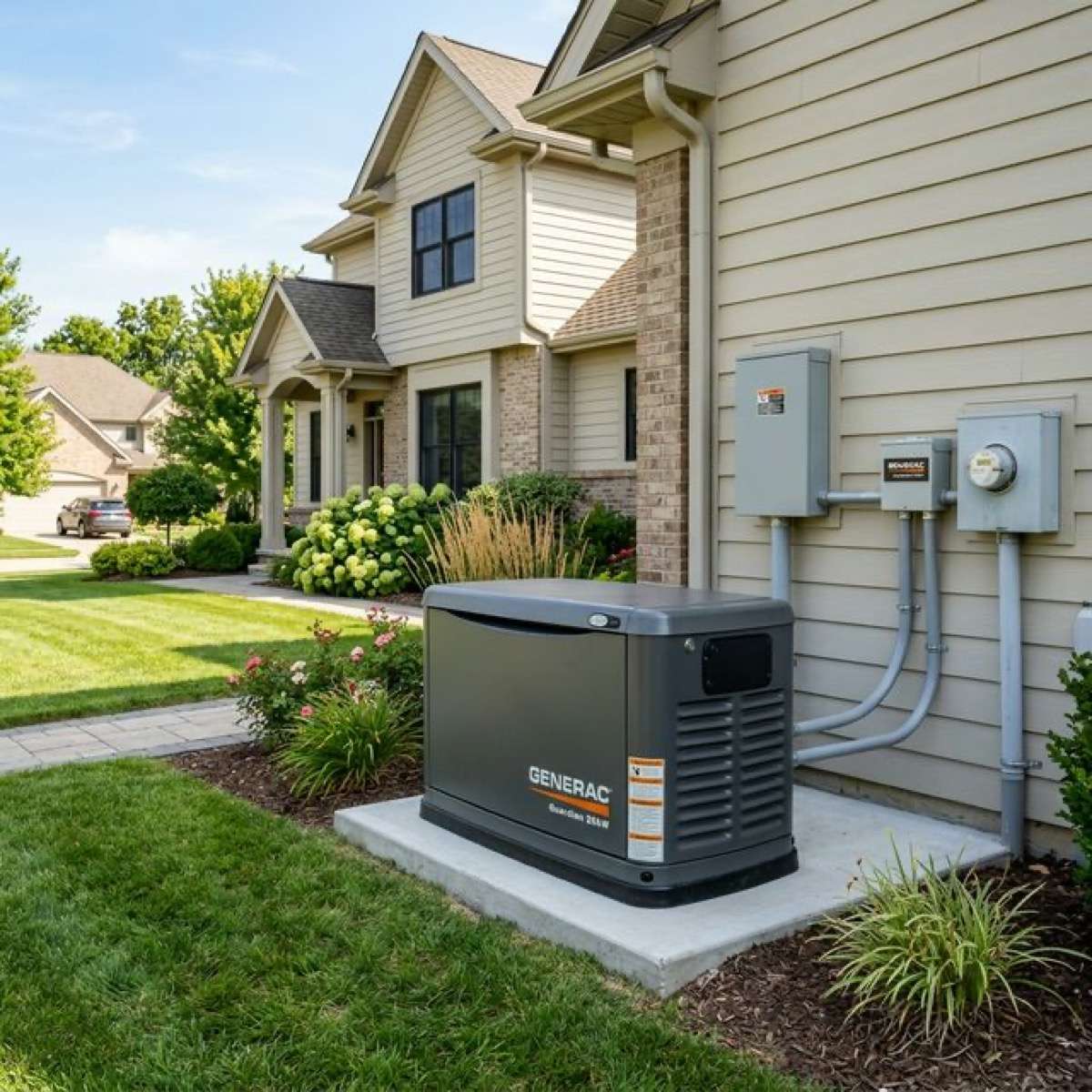

A listed wall pack can support selected loads only within the exact equipment's output, usable capacity, transfer behavior, placement rules, and approved design. A portable-generator hookup is a separate fuel-based option with its own electrical and outdoor-operation requirements.
Key Takeaways
- AJ Long Electric can include compatible listed battery equipment in the approved scope or connect customer-selected listed equipment.
- Typical installed cost across portable stations and whole-home wall-pack integrations: $2,500-$6,000 portable; $6,000-$15,000+ whole-home.
- Portable generators stay hookup-only. We do not sell generators or perform fuel work.
- The written proposal identifies the exact listed equipment, backed-up circuits, transfer method, and placement clearances without implying an unsupported manufacturer certification or product relationship.
Compare a listed battery wall pack and a portable generator hookup
Both approaches isolate backed-up household circuits from the utility grid during an outage, but they solve different problems and carry different site constraints. The Department of Energy storage overview explains how battery capacity (kilowatt-hours) and power output (kilowatts) govern what a storage system can run and for how long.
Planning Backup Power for Your Home?
Plan for the next outage with a listed portable-generator hookup or a compatible battery-backup installation. We evaluate the panel, selected loads, equipment, and transfer method before quoting the electrical scope. Call (571) 444-6886 to request an in-home assessment.
| Planning Factor | Listed Battery Wall Pack / Power Station | Portable Generator Hookup (Inlet + Interlock / Transfer) |
|---|---|---|
| Typical Installed Scope | $2,500–$6,000 for portable station + transfer install; $6,000–$15,000+ for whole-home smart-panel integration | Complete listed hookup (inlet plus listed transfer or interlock) scoped as a dedicated electrical connection |
| Equipment Supply | Compatible listed battery equipment in the approved scope or customer-selected listed equipment | Hookup-only electrical installation; homeowner supplies and maintains the portable generator |
| Placement & Clearances | Must follow the exact listing, manufacturer instructions, wall structure, temperature limits, and local fire/building clearances | Generator must operate outdoors at a safe distance from openings; exterior inlet wired to panel interlock or transfer switch |
| Outage Operation | Automatic or manual transfer depending on the exact listed transfer equipment and configured load list | Manual setup: roll unit outdoors, connect cord to inlet, start engine, and operate interlock or transfer switch |
| Duration & Load Limits | Bounded by usable stored energy (kWh) and continuous/surge inverter output (kW) | Bounded by generator rated wattage, fuel supply on hand, and safe outdoor refueling intervals |
What the electrical site assessment checks before quoting
Before quoting a wall pack or power-station integration, the electrician evaluates four site-specific details:
- Backed-up load profile: We list the exact circuits you want energized during an outage—such as refrigeration, sump pump, gas furnace blower, Wi-Fi, and selected lighting—and compare their starting and continuous demand against the battery's continuous and surge ratings.
- Transfer or isolation method: Depending on the equipment, circuits may be routed through a critical-loads subpanel, a listed transfer switch, or a compatible smart panel with listed load-shedding controls.
- Mounting, clearances, and environment: Stationary energy storage systems must satisfy the exact manufacturer installation manual and local code requirements for working space, wall framing, garage vehicle-impact protection, temperature range, and separation from doors, windows, and appliances.
- Main panel condition and bus capacity: If the existing main load center is crowded, damaged, or undersized, a $3,500–$7,500 panel upgrade may be evaluated alongside the battery scope.
Coordinating a battery wall pack with a panel upgrade or EV charger
If a $3,500–$7,500 panel upgrade, an EV circuit, and battery work are being considered together, one coordinated design can identify shared panel, routing, control, permit, and access inputs. For example, deciding early which circuits belong in a backed-up subpanel prevents re-terminating those branch circuits twice, and documenting EV charger behavior during an outage prevents an EV from unintentionally draining stored backup capacity. Any combined-scope cost difference is project-specific and not guaranteed.
Permits and inspection records in Northern Virginia
Battery storage and transfer equipment installations require electrical permits and local inspections in jurisdictions such as Fairfax County, Arlington, Alexandria, and Loudoun County. Additional building or fire review can apply depending on the storage capacity, mounting location, and jurisdiction rules. Keep the permit record, final inspection sign-off, circuit schedule, and manufacturer documentation together in your home electrical file.
Our quoted electrical installations include a five-year workmanship warranty from completion. Parts and equipment carry their manufacturer warranties.
Start at home battery wall packs, read the home battery integration guide for how battery equipment is supplied or connected, compare portable generator hookups, or request a free project estimate with photos of your closed main panel, proposed mounting wall, and priority outage loads.