
Electrical-system condition can affect underwriting, coverage, and premiums, but outcomes vary by carrier, policy, property, and documented work. For Northern Virginia homeowners, the first step is to ask the insurer what documentation or remediation it requires rather than assume a discount.
Key Takeaways
- Electrical-system condition can affect underwriting, coverage, or premiums, but no discount is guaranteed
- Federal Pacific panels, fuse boxes, and knob-and-tube wiring may trigger carrier-specific questions or remediation requirements
- Coverage depends on the policy language, cause of loss, exclusions, and documented work
- Unpermitted work can create claim or resale complications
- Keep permits, inspection records, invoices, and equipment documentation for the insurer
How Your Electrical System Affects Insurance Premiums
Insurance companies assess risk when setting your homeowner's premiums, and your electrical system is one of the things they may ask about. Electrical fires are a known underwriting concern, so a carrier may want the age and type of your panel and wiring. In Northern Virginia's older housing stock, particularly in communities built before the 1980s in Fairfax County, Arlington, and Falls Church, outdated electrical systems can prompt those questions.
Request an Estimate from AJ Long Electric
Whether it is a simple repair or a major electrical project, our licensed team is ready to help. Serving all of Northern Virginia with transparent pricing and expert workmanship. Call (571) 444-6886 today.
Upgrades an Insurer May Ask About
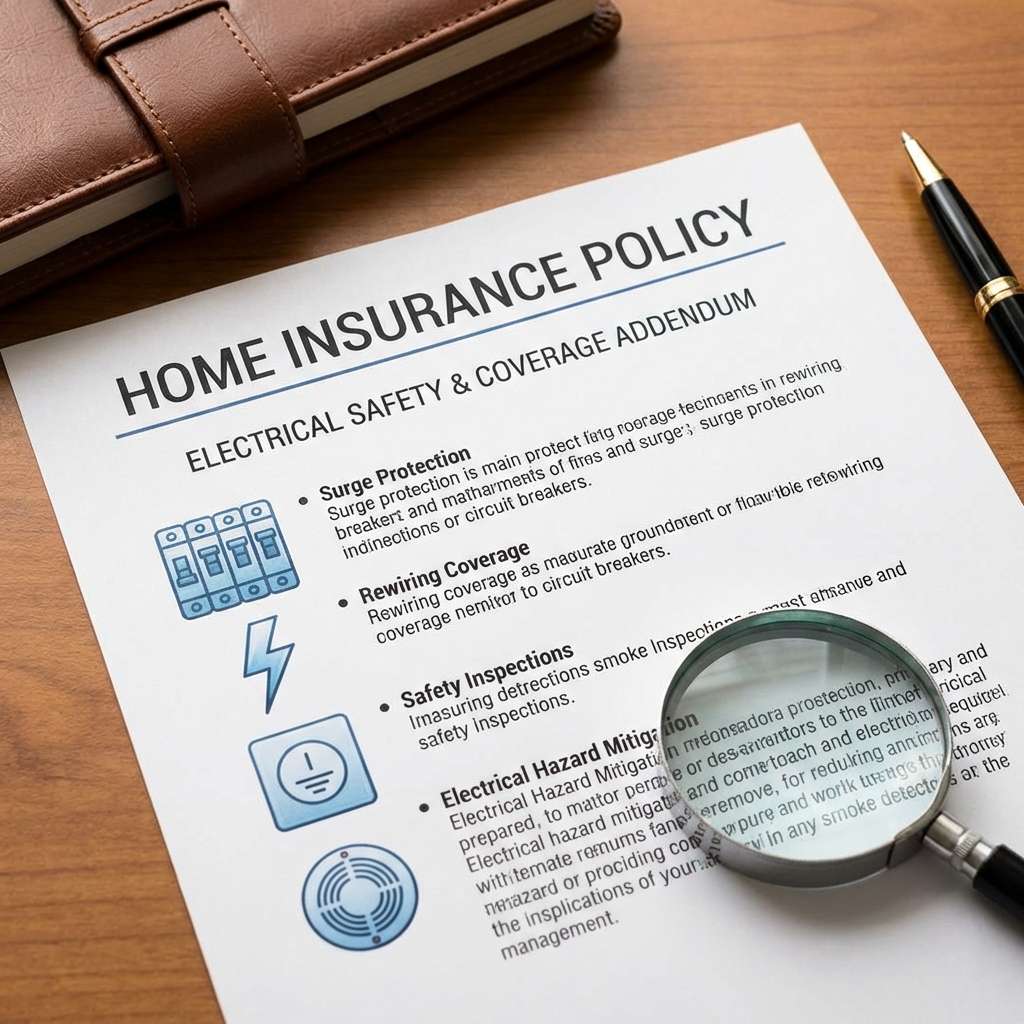
These are the electrical items a carrier may ask about when it writes or renews a policy. Whether any of them changes your premium is the carrier's decision.
- Modern electrical panel: Replacing a fuse box or outdated panel with a current circuit breaker panel gives a clear answer to application questions about panel type and age.
- AFCI protection: Arc-fault circuit interrupters detect dangerous electrical arcs before they can start fires.
- Whole-house surge protection: A surge protective device at the panel limits voltage spikes that reach connected equipment.
- Updated wiring: Replacing knob-and-tube, cloth-covered, or aluminum branch wiring removes wiring types that carriers commonly ask about.
- Smoke and CO detection: Hard-wired, interconnected smoke and carbon monoxide alarms throughout the home.
Carrier treatment varies. Ask the insurer or broker whether a specific documented upgrade changes eligibility, coverage terms, or premium before using any insurance outcome in the project math; AJ Long Electric does not guarantee a discount or underwriting result.
Premium Increases and Coverage Concerns
Certain electrical conditions can dramatically increase your premiums or even result in a coverage denial. Insurance underwriters in the Northern Virginia market pay particular attention to these risk factors:
- Federal Pacific Electric (FPE) Stab-Lok panels: These panels have well-documented breaker failure rates and are considered a serious fire hazard. Some insurers require replacement as a condition of coverage, which can make it harder to obtain or renew a policy until the panel is replaced.
- Zinsco panels: Similar to FPE panels, Zinsco panels have known safety issues including breakers that melt to the bus bar, preventing them from tripping during overloads.
- Fuse boxes: While properly maintained fuse systems can be safe, insurers view them as outdated and associate them with higher risk. Many require panel upgrades as a condition of new or renewed coverage.
- Knob-and-tube wiring: This wiring type, found in pre-1940 homes, has no ground conductor and cannot safely be in contact with insulation. Some insurers will not cover homes with active knob-and-tube wiring.
- Aluminum branch circuit wiring: Used in homes built from the mid-1960s to mid-1970s, aluminum wiring creates fire risk at connection points. Insurers may require remediation or charge higher premiums.
Good to Know: When shopping for homeowner's insurance in Northern Virginia, be upfront about your electrical system. Misrepresenting the age or type of your wiring, panel, or other electrical components can be grounds for policy cancellation or claim denial. Honesty protects you, and many agents can help you find coverage even for homes with older systems while you plan upgrades.
What Insurance Covers for Electrical Issues
Understanding what your homeowner's policy covers for electrical damage helps you set appropriate expectations and plan your electrical maintenance budget accordingly.
Typically Covered
- Electrical fire damage: If an electrical fire damages your home, your policy's dwelling coverage typically pays for repairs, minus your deductible. This includes structural damage, personal property loss, and additional living expenses if you are displaced.
- Lightning surge damage: If lightning strikes your home or nearby utility infrastructure and damages your electrical system and electronics, this is typically covered. However, you may need to add specific coverage or adjust your deductible for electronics.
- Wiring repair after a covered event: If a covered event (fire, storm, water damage) damages your wiring, the cost to repair or replace the affected wiring is generally covered.
Typically Not Covered
- Preventive upgrades and maintenance: Your insurer will not pay for panel upgrades, rewiring, or other improvements you choose to make proactively. These are considered normal homeownership costs.
- Wear and tear: Deterioration of wiring insulation, aging connections, and general degradation over time are excluded from coverage. The cost of addressing age-related electrical issues falls on the homeowner.
- Code upgrades required by age: If your municipality requires electrical upgrades during a renovation or sale, insurance does not cover these mandated improvements.
- Damage from unpermitted or DIY work: If improperly installed electrical work causes damage, your insurer may deny the claim on the basis that the work was not performed by a licensed professional or was not properly permitted.
- Power surge damage without surge coverage: Standard policies may not cover electronics and appliance damage from utility power surges unless you have specific equipment breakdown or surge coverage added to your policy.
Keeping Records After Electrical Work
Document Everything
After completing any electrical upgrade, maintain documentation that includes the contractor's invoice with a detailed description of work performed, copies of the building permit and passed inspection report, before and after photos of the electrical panel or wiring, and the contractor's license and insurance information. Store these documents with your insurance policy records.
Notify Your Insurance Company
After a panel upgrade, rewiring, or other significant electrical work, tell your insurance agent what changed and send the records. Ask whether the policy record, coverage terms or premium should change. The carrier decides; no discount is guaranteed. For the records to send after a panel replacement specifically, see electrical panel upgrades and home insurance.
Tip: Before the project starts, ask your agent which records the carrier wants to see afterward, so you keep the right ones.
Review Coverage Annually
As you make electrical improvements to your home, your risk profile changes. Review your homeowner's coverage annually with your agent to make sure the policy describes the current panel and wiring, and that your coverage limits still fit the home.
The Insurance Advantage of Professional Electrical Work
One of the strongest arguments for hiring a licensed electrician rather than attempting DIY work is the insurance protection it provides. When work is performed by a licensed, insured contractor and properly permitted through your local jurisdiction, you have a documented chain of accountability. If anything goes wrong, you can show the insurer what was done, who did it and that it passed inspection. For how insurers can treat a loss traced to unpermitted or owner-performed wiring, see the risks of DIY electrical work.
Conversely, if you or an unlicensed handyman performs electrical work and a fire or other damage results, your insurer has grounds to investigate whether the unpermitted or improperly performed work was a contributing factor. If it was, your claim may be denied or reduced. With Northern Virginia home values, that is a large risk to take on to save the cost of a licensed electrician.
Records From AJ Long Electric
When a project needs a permit, AJ Long Electric handles the permit and the county inspection. After the work, you receive the invoice and permit records to share with your insurer. Whether the carrier changes your premium or coverage is its decision. Our quoted electrical installations include a five-year workmanship warranty from completion. Parts and equipment carry their manufacturer warranties. Call (571) 444-6886 to request a free estimate. We serve homeowners throughout Fairfax, Arlington, Loudoun, and Prince William counties.