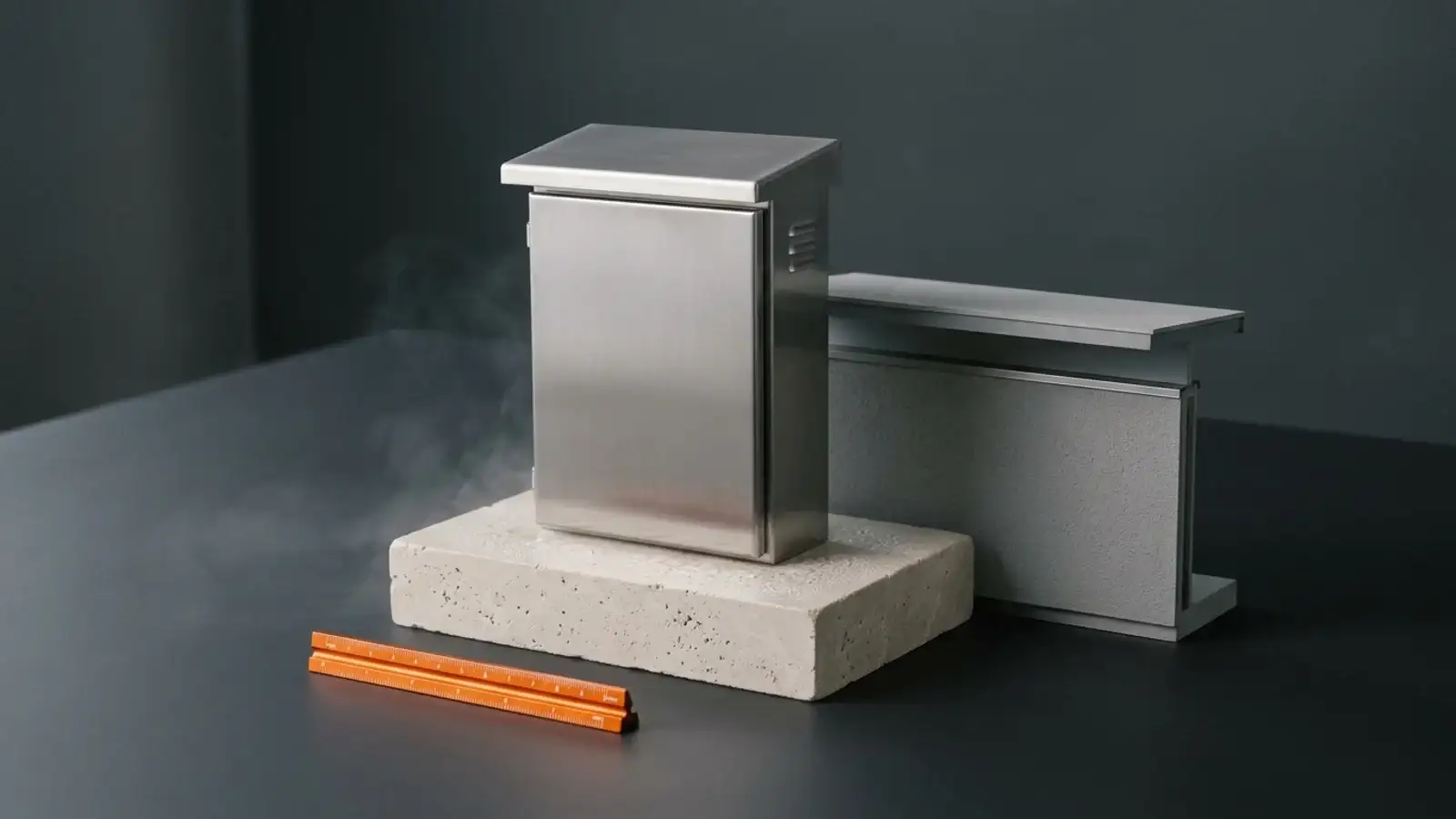

Many Northern Virginia homes have electrical equipment mounted on an exterior wall, but an outdoor box is not always the home’s entire breaker panel. Depending on the property’s layout and when the service was built or upgraded, the exterior cabinet may be a utility meter socket, an emergency service disconnect, a meter-main combination unit, an outdoor subpanel for pool or HVAC equipment, or the main branch-circuit distribution panel. Understanding which piece of equipment is outside—and how outdoor enclosures are rated and maintained—helps you spot weather damage early without taking unsafe DIY risks.
Key Takeaways
- An exterior electrical enclosure may be a meter base, an outdoor emergency disconnect, a meter-main, or a branch-circuit distribution panel—having an outdoor disconnect does not necessarily mean every branch breaker is outdoors.
- NEMA enclosure numbers are not a numeric ladder where higher always means more weatherproof: per the ANSI/NEMA 250 enclosure overview, Type 12 is an indoor rating while Type 3R is an outdoor/indoor rating.
- Per Schneider Electric’s NEMA 3 vs. 3R guidance, Type 3R protects against falling rain, sleet, and external ice formation with drainage provisions, whereas Type 3 adds windblown-dust protection.
- Keep homeowner checks strictly external: look at the closed cabinet for rust, latch problems, encroaching shrubs, or water staining, and leave internal inspection, gasket work, or raceway sealing to a licensed electrician.
Distinguish the Three Types of Exterior Electrical Equipment
Before planning a repair or upgrade, identify what role the outdoor cabinet serves on your home:
Need a Panel Upgrade?
Outdated or overloaded electrical panels can present safety and capacity concerns. Our team evaluates 200-amp upgrades throughout Northern Virginia and confirms scheduling after reviewing the property. Call (571) 444-6886 to get started.
- Utility meter equipment: Houses the utility’s watt-hour meter and jaws. The homeowner frequently owns the meter socket enclosure and riser/conductors on the load side, while the utility controls the meter itself and the supply connection.
- Exterior emergency or service disconnect: Modern code editions and many local service upgrades use an outside main disconnect (or a combined meter-main) so first responders can shut off power from the exterior, while the home’s branch-circuit load center remains indoors in a basement, garage, or utility room.
- Outdoor branch-circuit distribution panel or subpanel: Some homes—especially slab-on-grade houses, townhomes with limited interior wall space, or properties with detached garages, pools, spas, or outdoor kitchens—place branch breakers inside an outdoor-rated load center.
Why “NEMA 3R or Higher” Is a Misleading Rule of Thumb
Homeowners are often told that an outdoor panel needs a “NEMA 3R or higher” rating. In the NEMA 250 standard, enclosure type numbers describe specific environmental conditions, not a single 1-to-13 scale of outdoor durability. As the ANSI/NEMA 250 classification summary notes, Type 12 and Type 13 enclosures are designed for indoor industrial dust and dripping-liquid environments, whereas Type 3, Type 3R, Type 4, and Type 4X are rated for outdoor use.
Schneider Electric’s comparison of NEMA 3 and NEMA 3R explains that Type 3R enclosures provide a degree of protection against falling rain, sleet, and external ice formation and include drainage provisions, while Type 3 enclosures additionally protect against windblown dust. Neither rating makes an electrical panel submersible or immune to floodwater, pressure washing, or unsealed top-entry raceways.
| Enclosure type | Indoor or outdoor category | Primary environmental focus | Typical residential or light-commercial context |
|---|---|---|---|
| Type 1 | Indoor only | General indoor enclosure reducing contact with enclosed equipment and falling dirt | Basement, garage, or utility-room load centers out of weather exposure |
| Type 3R | Indoor / Outdoor | Falling rain, sleet, and external ice formation; uses drainage provisions rather than a watertight seal | Standard residential exterior meter-mains, disconnects, and outdoor load centers |
| Type 3 | Indoor / Outdoor | Falling rain, sleet, external ice, plus windblown dust | Outdoor equipment exposed to heavy dust or blowing debris |
| Type 4 | Indoor / Outdoor | Rain, sleet, splashing water, and hose-directed water | Locations exposed to washdown or direct wind-driven spray where specified |
| Type 4X | Indoor / Outdoor | Type 4 protection plus corrosion resistance (often stainless steel or non-metallic) | Corrosive, chemical, salt-air, or pool-equipment environments |
| Type 12 | Indoor only | Circulating dust, lint, fibers, and non-corrosive dripping liquids | Indoor shop or mechanical rooms—not a substitute for an outdoor Type 3R cabinet |
Installation Details That Keep Water Out of Exterior Panels
An outdoor enclosure’s rating only holds when the cabinet is mounted and connected according to its listing and manufacturer instructions:
- Listed wet-location raceway entries: Conduits entering above the level of uninsulated live parts generally require listed watertight hub fittings, while side or bottom entries must use fittings listed for wet locations so water cannot track along the raceway into the busbar area.
- Cable drip loops and weatherheads: On overhead services, the service head and drip loop must be positioned so rainwater sheds away from the service entrance cable rather than funneling down the jacket into the meter socket or panel.
- Unblocked manufacturer drainage: Type 3R cabinets are designed to let incidental moisture exit through small factory drainage openings at the bottom. Never caulk shut factory weep openings, and never drill makeshift holes into a listed electrical enclosure.
- Clear working space and emergency access: Keep the approach and working space in front of the equipment free of AC condensers, trash bins, firewood, and dense shrubs. Do not place a homeowner padlock on a required exterior emergency disconnect that first responders or utility personnel need to operate.
Safe External Homeowner Checks (Covers Closed)
Because outdoor equipment faces Northern Virginia’s summer humidity, freeze-thaw cycles, UV exposure, and wasps, a periodic visual walk-around from outside the closed cabinet is helpful. Always leave the deadfront and inner cover in place—opening an outdoor panel exposes live service lugs even when the main breaker is switched off.
- Check the outer door and latch: Confirm the outer weather door swings freely and latches shut so wind cannot blow rain directly onto the inner cover or breakers.
- Look for exterior rust or water tracks: Rust bubbling through the bottom of the cabinet, mineral streaks below conduit hubs, or staining on the siding underneath the box can indicate water intrusion inside.
- Watch for wasp or ant activity: Paper wasps and ants frequently enter around unsealed knockouts or unlatched doors. Do not spray liquid insecticide into an electrical enclosure.
- Keep landscaping trimmed back: Prune bushes, ivy, and tree limbs well clear of the cabinet and the walkway leading to it so moisture does not stay trapped against the metal and technicians have unobstructed working space.
- Listen and smell from a safe distance: Buzzing, crackling, acrid odors, warm enclosure surfaces, or breakers that trip during rainstorms require prompt professional troubleshooting.
Repairing, Relocating, or Upgrading an Outdoor Panel
When an exterior load center or meter-main shows internal corrosion, water-damaged breakers, or heat discoloration on the busbar, replacing a rubber gasket or dabbing silicone around the top will not make compromised internal parts safe. An electrician needs to inspect the interior, test the service and grounding connections, and determine whether the cabinet can be repaired with listed parts or should be replaced.
Depending on your home’s framing and utility layout, an upgrade can either replace the exterior equipment in place with new outdoor-rated components or install an exterior meter-disconnect while relocating branch-circuit distribution indoors. For a typical 200-amp panel upgrade, AJ Long Electric’s current public range is $3,500–$7,500; panel relocations, meter-base replacements, and custom exterior subpanels are quoted per project after an on-site review.
See what county inspectors look for after permitted work in our panel upgrade inspection guide, explore our panel upgrade services, or request a free project estimate with safe exterior photos of your closed outdoor equipment.