
You plug in a phone charger, desk lamp, or coffee maker and nothing happens — yet the overhead lights in the room still work and no breaker appears tripped. Dead outlets are one of the most frequent troubleshooting calls we run in Fairfax, Arlington, Alexandria, and across Northern Virginia. In many homes, the problem is not even inside the outlet that went dead: it is an upstream GFCI receptacle in a garage or basement, a wall switch controlling half of a duplex outlet, or a loose push-in ("backstab") wire inside the last working box upstream.
Key Takeaways
- Check every GFCI first: A single tripped GFCI in a garage, powder room, or unfinished basement can cut power to downstream bathroom, outdoor, or bedroom outlets on another floor.
- Test both slots and room switches: In many 1970s–2000s Northern Virginia homes, the top half of a living-room or bedroom receptacle is controlled by a wall switch while the bottom half stays hot.
- Multiple dead outlets usually mean one upstream failure: When outlets are daisy-chained, a loose backstab or neutral splice at one box shuts off every receptacle downstream.
- Never ignore heat or odor: A warm faceplate, buzzing sound, scorch mark, or breaker that trips immediately on reset requires de-energizing the circuit and calling a licensed electrician.
- Transparent diagnostic rate: AJ Long Electric bills troubleshooting and repair at $195 for the first 30 minutes and $60 per additional 15-minute block, which covers both finding the fault and completing straightforward repairs at accessible boxes.
Quick Diagnostic Matrix: Symptom vs. Likely Cause
Before opening any enclosure, match what you see to the pattern below. The boundary between working and non-working devices tells an electrician almost immediately whether the issue is a reset, a branch-circuit termination, or a panel/service fault.
Request an Estimate from AJ Long Electric
Whether it is a simple repair or a major electrical project, our licensed team is ready to help. Serving all of Northern Virginia with transparent pricing and expert workmanship. Call (571) 444-6886 today.
| What You Notice | Safe Homeowner Check | Likely Electrical Fault if Checks Fail | What the Electrician Tests |
|---|---|---|---|
| One half of an outlet is dead, the other half works | Plug a known-working lamp into both slots and toggle every wall switch in the room | Switched half-hot receptacle with a failed switch, broken brass tab, or loose backstab on one half | Switch leg continuity, receptacle bridge tab, and terminal torque at the switch and outlet box |
| Bathroom, outdoor, garage, or kitchen outlet is dead (breaker ON) | Press RESET on every GFCI outlet in the house (check garage, basement utility room, powder room, and exterior boxes) | Failed GFCI mechanism (end-of-life trip coil) or sustained ground fault downstream preventing reset | Line-vs-load voltage at the head GFCI, downstream insulation resistance, and UL 943 self-test status |
| 2 to 5 outlets in one room or along shared walls are dead (breaker ON) | Map which outlets still work in the room and adjacent rooms; check for warm faceplates | Open hot or open neutral in a daisy chain — usually a loose push-in backstab or wire nut in the last working box or first dead box | Voltage under load from panel breaker through each receptacle box in sequence to isolate the open segment |
| Outlet works intermittently or dies when a space heater / vacuum runs | Stop using high-wattage appliances on that circuit immediately; check if the plug prongs or cover feel warm | High-resistance connection (worn receptacle blades or loose backstab) opening as metal expands under heat | Receptacle contact retention, conductor insulation condition, and thermal/voltage-drop check under load |
| Entire circuit is dead and breaker sits in the middle or re-trips | Unplug devices on the circuit; push breaker firmly to full OFF, then back to ON once | Overloaded branch circuit, short circuit, arc/ground fault on an AFCI/GFCI breaker, or failing breaker stab | Amp draw, hot-to-neutral/ground continuity, AFCI/GFCI fault code readout, and panel bus stab condition |
5 Safe Steps to Try Before Calling an Electrician
You can complete these checks in about ten minutes without tools and without removing any cover plates. If you also want a quick symptom reference card, see our dead outlet problem guide.
Step 1: Test With a Known-Working Lamp or Charger
Plug a small lamp or phone charger into an outlet you know works, confirm it turns on, and then test both the top and bottom receptacles of the dead outlet. Appliance power bricks, surge strips with tripped internal reset switches, and frayed cords fail far more often than wall wiring.
Step 2: Toggle Every Wall Switch for Half-Hot Outlets
In Fairfax, Burke, Springfield, Vienna, Reston, and Loudoun subdivisions built from the 1970s through the early 2000s, bedrooms and living rooms frequently omitted ceiling lights in favor of switch-controlled receptacles. Electricians break the small brass tab between the two brass terminal screws so the top slot is controlled by the wall switch while the bottom slot remains constant hot (or vice versa). Flip every switch in the room — including multi-gang switches by hallways or patio doors — and re-test both halves.
Step 3: Hunt Down Hidden Upstream GFCI Outlets
A tripped GFCI receptacle is the number-one cause of "mystery" dead outlets when every breaker in the panel looks normal. Under earlier editions of the National Electrical Code, builders often wired a single GFCI receptacle to protect multiple locations down the line to save hardware cost. In split-levels, colonials, and townhomes across Northern Virginia, we routinely see:
- A garage GFCI (often hidden behind storage shelving or a freezer) that protects the front porch, rear deck, and basement receptacles.
- A first-floor powder room GFCI that feeds the hall bathroom and primary bathroom on the second floor.
- An unfinished basement or utility-room GFCI that protects outdoor weatherproof outlets.
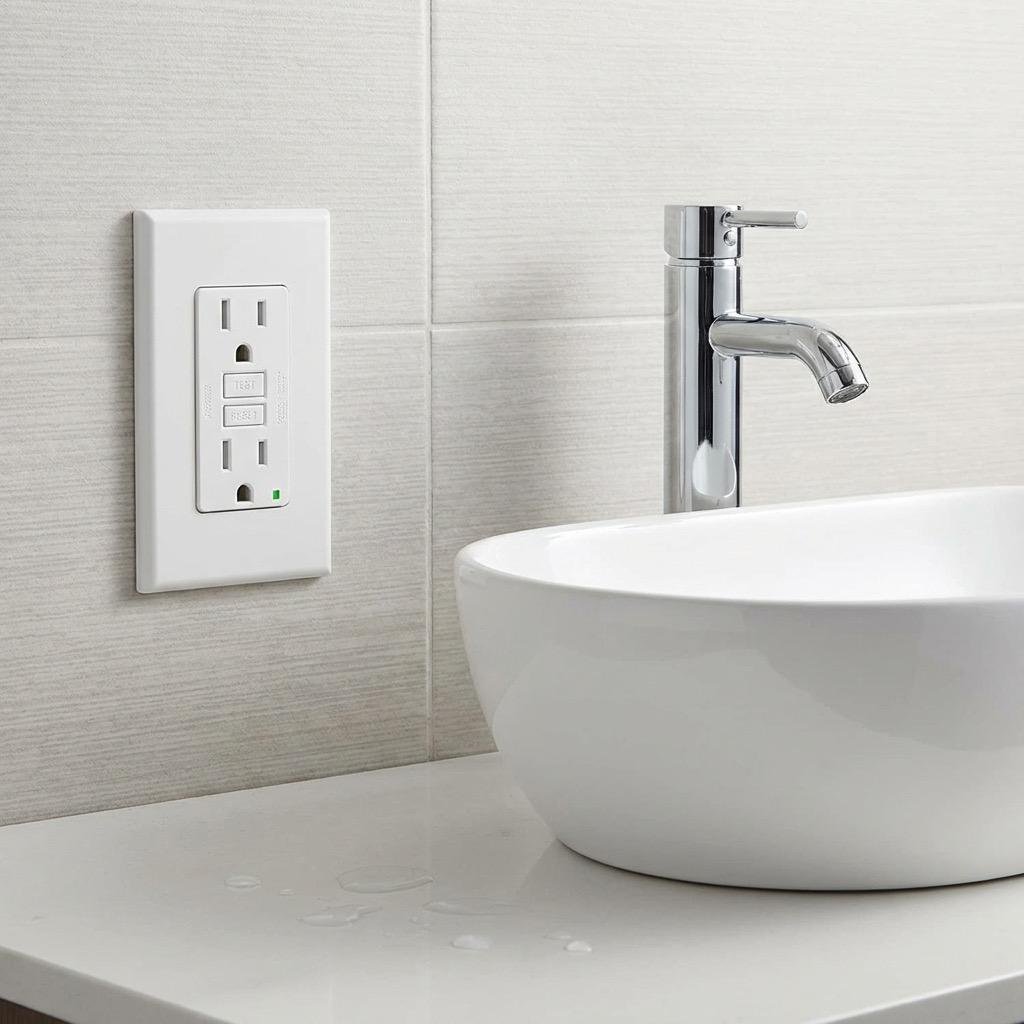
Walk through every bathroom, kitchen, garage, basement, laundry area, and exterior wall. Look for the TEST and RESET buttons, press TEST, and then press RESET firmly until it clicks and latches.
Why won't my GFCI reset? A GFCI receptacle will refuse to latch if there is no line power reaching it (for example, a tripped breaker or a second GFCI upstream), if an outdoor extension cord or holiday light string downstream has moisture inside it, or if the GFCI's internal sensing circuitry has failed and locked out for safety.
Step 4: Inspect and Reset the Circuit Breaker Properly
Open your electrical panel door and scan every breaker handle. When a breaker trips, the handle usually moves to a middle position between ON and OFF rather than snapping all the way to OFF. Lightly wiggle the handles — a tripped breaker will feel slightly springy. To reset it, push the handle all the way to OFF until it clicks, then flip it back to ON. If the breaker trips again right away, stop and leave it off.
Step 5: Map the Exact Pattern of Dead vs. Live Devices
Before you call, jot down every outlet, switch, and ceiling fixture that lost power and note which nearby outlets in the same room still work. Also note whether anything happened right before the outage — such as running a 1,500-watt space heater, microwave, hair dryer, or treadmill, or hanging heavy wall decor. That map saves diagnostic time on site because it points directly to the boundary between the live upstream portion of the circuit and the failed downstream segment.
What Actually Fails Behind the Wall?
When GFCI resets and breaker checks do not restore power, a licensed electrician looks for four common hardware failures inside the branch circuit:
1. Failed Push-In ("Backstab") Wire Connections
During original residential construction, installers frequently used push-in holes on the back of 15-amp receptacles ("backstabbing") instead of wrapping copper conductors around the side screw terminals. Inside a backstab hole, a tiny spring-steel edge bites into the wire. Over 15 to 40 years of heating and cooling cycles, that spring tension relaxes. When the contact opens, the outlet — and every outlet fed downstream from it — goes dead. Even worse, a high-resistance backstab can heat up and char the receptacle body before failing completely.
2. Upstream Daisy-Chain Splice Failures
General-purpose 15-amp and 20-amp branch circuits typically loop from the panel to five, eight, or ten outlets in sequence. If outlet #3 in the chain has a failed backstab or a loose wire nut, outlets #4 through #10 will be completely dead even though the wires inside outlets #4 through #10 are intact. During a diagnostic visit, we trace the circuit to the physical boundary between the last working receptacle and the first dead receptacle — because the open connection is almost always inside one of those two boxes. When we repair a daisy-chained box, we replace backstab pass-throughs with a proper wire-nut pigtail and side-screw termination torqued to NEC 110.14 specifications.
3. Open Neutral Conductors (The "120 Volts But Nothing Works" Trap)
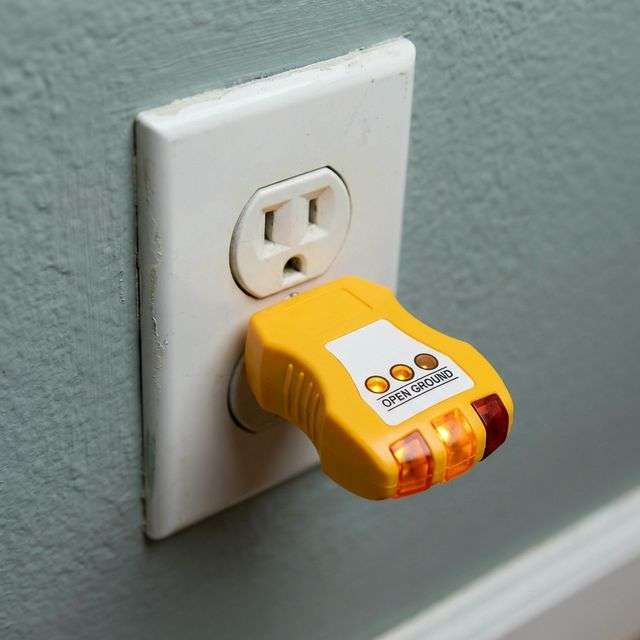
Homeowners with a non-contact voltage pen are often baffled when the pen beeps red at a dead outlet, proving hot voltage is present, yet a lamp still will not turn on. Electricity requires a complete loop: current travels out on the black (hot) wire and returns to the panel on the white (neutral) wire. If the white neutral wire is loose at an upstream receptacle or panel neutral bar, the hot slot stays energized at 120V to ground — which is a shock hazard — while the outlet cannot power any load.
4. Older Panel Bus or Breaker Termination Issues
Occasionally, every device on a branch circuit is dead even though the breaker handle is in the ON position. That happens when a breaker's internal contacts fail open, when the wire lug on the breaker loosens, or when a legacy panel bus stab (such as on older Federal Pacific Stab-Lok or Zinsco panels, or heavily loaded split-bus panels in 1960s–1970s Fairfax homes) oxidizes and loses contact with the busbar. If inspection shows heat damage at the panel bus rather than the wall outlet, we explain whether a targeted breaker repair or a panel upgrade is the right permanent fix.
How Electrical Troubleshooting & Repair Pricing Works
Homeowners searching for an electrician to fix dead outlets want to know upfront what a visit costs before a truck rolls. Here is how AJ Long Electric handles troubleshooting and repair:
- Free estimates vs. paid diagnostics: Estimates for planned installations (like a new circuit, EV charger, lighting layout, or panel replacement) are always free. Troubleshooting an active fault is skilled diagnostic work and is priced transparently by time.
- Published diagnostic rate: Our standard rate is $195 for the first 30 minutes and $60 for each additional 15-minute interval.
- Diagnosis + straightforward repair in the same clock: That time rate covers both isolating the fault and completing repairs that fit within the visit window (plus any replacement receptacles, GFCI devices, or breakers). Many single-outlet, tripped-GFCI, or loose-backstab repairs are diagnosed and resolved within 30 to 60 minutes ($195–$315 in labor, plus parts).
- No surprise invasive work: If tracing shows a damaged concealed cable, an overloaded circuit that needs a new home-run, or panel damage that requires a larger repair, we stop, show you the test results, and provide a clear written scope before proceeding. See our full breakdown in Electrical Repair Cost Estimates vs. Diagnostic Fees.
If your outlets are still not working after checking switches, GFCIs, and breakers — or if you notice warmth, buzzing, or scorching at any receptacle — schedule a visit through our electrical repair service or local Fairfax electrical repair team, or call us directly at (571) 444-6886.