Why grid-tied solar shuts down in an outage
A grid-tied inverter follows the utility's voltage and frequency. When the grid drops, the inverter stops sending power out. That is anti-islanding, and it is a safety requirement, not a defect: an array that kept pushing power into a dead neighborhood line could energize wires that line workers expect to be off. Dominion Energy Virginia says it plainly on its net metering page: if the electric service to your home is out, your system is forced offline. Dominion also requires every net-metered system and its inverter to be certified to UL 1741 and IEEE 1547, the listing and interconnection standards that cover this shutdown. Sun on the roof does not change it. The panels still make power, but a standard grid-tied inverter has no safe place to send it, so the house goes dark with the rest of the street.
Anti-islanding and rapid shutdown are two different things
Homeowners often hear both terms and assume they mean the same shutdown. They do not. Anti-islanding is inverter behavior tied to the utility: the system stops feeding a dead grid. Rapid shutdown is a separate National Electrical Code requirement in Article 690 that drops the voltage on the conductors on and near the roof when an initiation switch is operated, so firefighters can work around the array. Rapid shutdown stays in place on a battery-backed system. What a battery changes is the outage behavior: with the right equipment, the house disconnects from the grid first and then runs on its own power.
What keeps the lights on: a battery and a backup-capable inverter
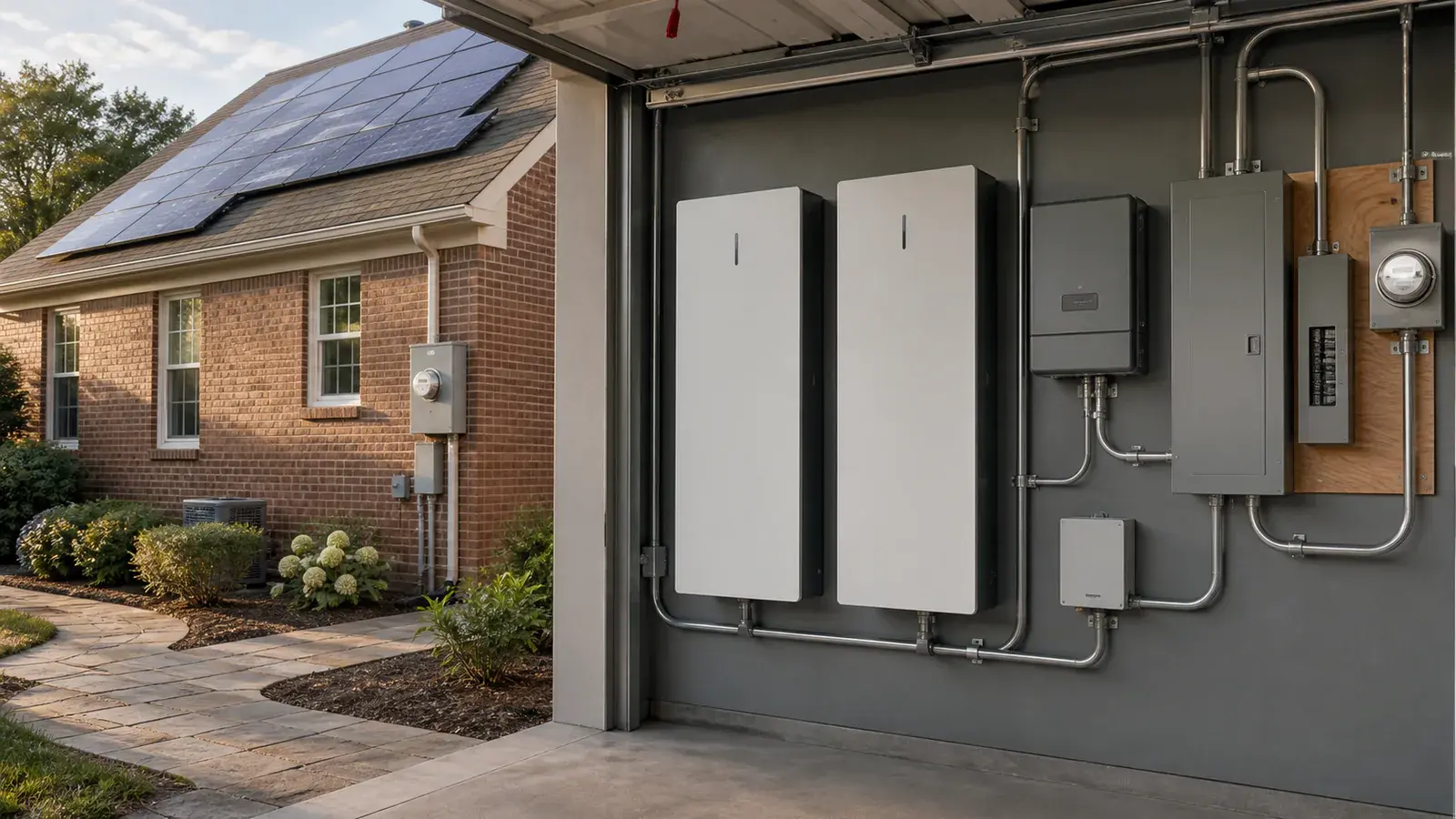
The Department of Energy puts it in one line: for solar panels to produce power on their own, they need a properly configured inverter and a storage system. When the grid fails, a backup system detects the loss, opens an automatic transfer or isolation device so the home is islanded from the utility, and the inverter runs the backed-up circuits from the battery. In daylight the array recharges the battery. A few inverter models also offer a sunlight-only backup outlet or circuit without a battery; it runs a limited load while the sun is up and stops at dusk. A portable generator hookup is the non-solar path to outage power, and it works with or without an array.
| Setup | During an outage | Question to settle first |
|---|---|---|
| Standard grid-tied solar | Shuts down with the grid, day or night | Is any backup mode actually included in the proposal? |
| Solar plus battery with automatic transfer | Runs the backed-up circuits; the array recharges the battery in daylight | Which circuits, surge loads, and duration are designed in? |
| Inverter with a sunlight-only backup circuit | Limited daytime power to one outlet or circuit; nothing at night | Does the exact inverter model support it, and what load fits? |
| Portable generator with inlet and interlock | Runs selected circuits through the panel; not solar | Which loads fit the generator and the hookup ratings? |
Adding outage power to solar you already own
An existing grid-tied array can gain outage power. The common path is a battery system coupled to the existing inverter output, plus the transfer or isolation equipment and a backed-up-load panel. A hybrid inverter is the other path, usually when the original inverter is due for replacement. Either way, the design starts with the panel, the service size, and the circuit list, and the utility is notified of the change under the interconnection rules. Do not try to bypass the anti-islanding shutdown or backfeed the house through an outlet. That is exactly the hazard the shutdown exists to prevent.
Which circuits to back up
Start with critical loads: the refrigerator, sump or well pump, gas furnace blower and controls, internet and phone charging, a few lighting circuits, and the garage door. Those fit a selected-load design that one battery can carry. Medical equipment requires device-manufacturer compatibility for the exact source, waveform, voltage, frequency, grounding, transfer, restart behavior, output, and duration. Maintain device-specific backup and a separate emergency plan; no home battery, solar configuration, or generator promises uninterrupted medical power. Whole-home backup is a bigger design because central air, electric heat, well pumps, electric cooking, and EV charging carry large starting and running loads. Whole-home battery integration runs $6,000–$15,000+ on top of the array, and the proposal lists every circuit it covers.
How long a battery runs
Runtime is a design number, not a brochure number. It depends on usable capacity, the actual running load, starting current, equipment settings, temperature and weather, solar production, and recharge conditions. A refrigerator, internet, and a few lights draw far less than a heat pump in January. The written proposal shows the selected circuits and the assumptions behind the runtime estimate so you can see what changes it.
The non-solar alternative: a portable generator hookup
If the goal is outage power and not solar, a portable generator hookup covers selected circuits for less money. The hookup is a power inlet outside the house plus a listed interlock or transfer switch at the panel, so the generator can never backfeed the utility. AJ Long Electric installs the inlet and the transfer equipment for $900–$2,500. We do not sell generators and do not do fuel work. The generator runs as long as it has fuel and someone to refuel it; a battery refills from the roof.
What to bring to the quote
Bring a recent electric bill, the model number of any existing inverter, and a list of what you want running in an outage. The site visit checks the panel, the service size, and the equipment location, and the proposal names the backup mode, the transfer equipment, the circuits covered, and the permit and utility steps for the address. Estimates are free.
Continue to the Next Decision
Frequently Asked Questions (7)
Do solar panels work during a power outage?
Not on a standard grid-tied system. The inverter shuts the array down when the grid goes out so it cannot feed power onto lines crews are repairing. Solar powers a home in an outage only with a battery and a backup-capable inverter that disconnect the house from the grid first.
Does solar work during a power outage on a sunny day?
No. Sunlight does not matter to a standard grid-tied inverter; it stays offline until utility power returns. Dominion's net metering page says a customer system is forced offline when the home's electric service is out.
How do I use solar panels during a power outage?
Add a battery with an automatic transfer or isolation device, either coupled to your existing inverter or on a hybrid inverter, and choose the circuits it backs up. Some inverter models also offer a sunlight-only backup outlet. Never bypass the shutdown or backfeed the house through an outlet.
Is anti-islanding the same as rapid shutdown?
No. Anti-islanding stops the system from feeding a dead utility grid and is covered by UL 1741 and IEEE 1547. Rapid shutdown is a National Electrical Code Article 690 requirement that drops rooftop conductor voltage for firefighter safety.
How long will a home battery run?
It depends on usable capacity, running load, starting current, weather, solar production, and recharge conditions. The proposal shows the selected circuits and the assumptions behind the estimate.
Should I back up the whole house or critical circuits?
Most homes start with critical circuits: refrigerator, sump or well pump, furnace controls, internet, and some lights. Whole-home backup needs a larger battery and a load review; whole-home battery integration runs $6,000–$15,000+.
Is a generator hookup an alternative to a solar battery?
Yes, for outage power without solar. AJ Long Electric installs the inlet and a listed interlock or transfer switch for $900–$2,500. We do not sell generators or do fuel work.
Authoritative Sources
- Dominion Energy Virginia: Net MeteringOfficial Dominion Energy Virginia net-metering and interconnection path; verify the serving utility by address.
- U.S. Department of Energy: Solar and Resilience BasicsFederal overview of how solar, storage, and resilience planning relate.
- NFPA 70: National Electrical Code (NEC)The NEC is the foundational safety standard for electrical wiring and installation in the U.S.