Loading services…

Residential project planning
Aluminum Wiring Evaluation and Repair in Annandale, VA
Aluminum branch-circuit wiring calls for a careful review of accessible devices, splices, and panel connections. The next step follows the documented conditions, with corrective work for defined connections or a defined copper-replacement scope considered as appropriate.
- Licensed & insured
- Family-owned since 1996
4.9 ★ on our Annandale, VA Google Profile (67+ Local Reviews)Backed by 1,463+ 4.9 ★ Reviews Across the DMV
7138 Little River Turnpike #305, Annandale, VA 22003Our long-standing Annandale local presence — serving the Annandale community for over two decades.
Field briefing / Annandale, VA
Project briefing
Jurisdiction confirmed by property address
- Project
- Aluminum Wiring Evaluation and Repair
- Prioritize boxes where conductor material changes, because those observations can set a more useful access boundary than room labels alone.
- Permit path
- Fairfax County Land Development Services
- Final jurisdiction is confirmed from the property address.
Scope first
What this project involves
Extent of the work
Determine whether the concern is limited to selected connections or requires a broader branch-circuit plan.
Repair method and records
Define corrective work for documented connections or a copper-replacement scope, and identify records requested by the homeowner.
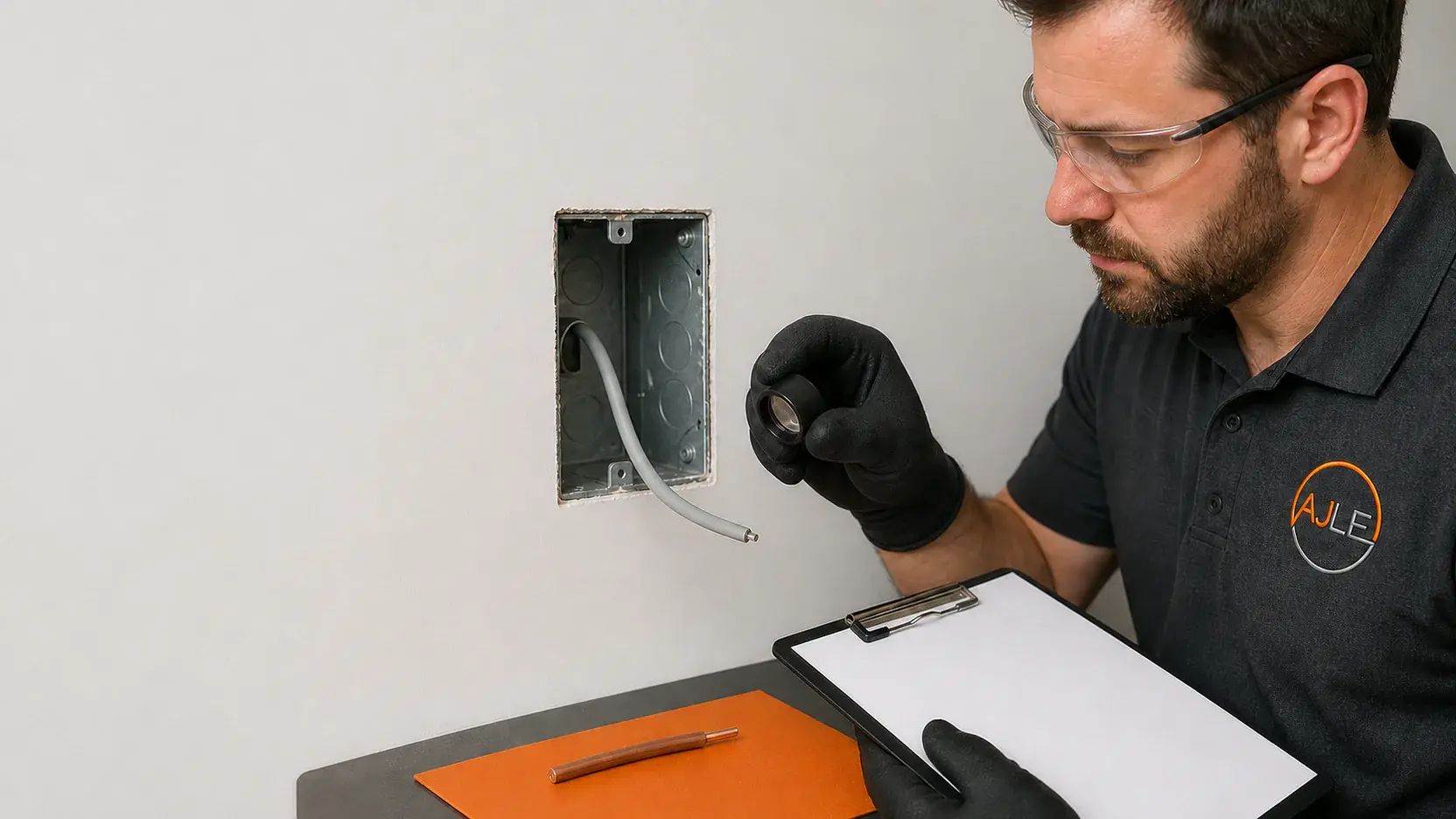
Field view / Aluminum Wiring Evaluation and Repair
Representative field view for Aluminum Wiring Evaluation and Repair; final scope is confirmed at the property.Address-specific planning
What matters in Annandale
An Annandale aluminum-wiring review should account for visible conductor transitions created by prior electrical changes. Mapping those transitions helps distinguish corrective work for a documented connection from a circuit segment that warrants replacement planning.
A Ravensworth, Woodburn, or Sleepy Hollow Woods home can have a renovation history that changes where junctions are accessible, so current conditions are verified rather than inferred. Inspection records the actual wiring material and condition identified at opened devices, visible splices, and panel terminations. Fairfax County Land Development Services remains the permit authority if the defined corrective scope needs County review.
Explore the Annandale service areaProject fit / review at the property
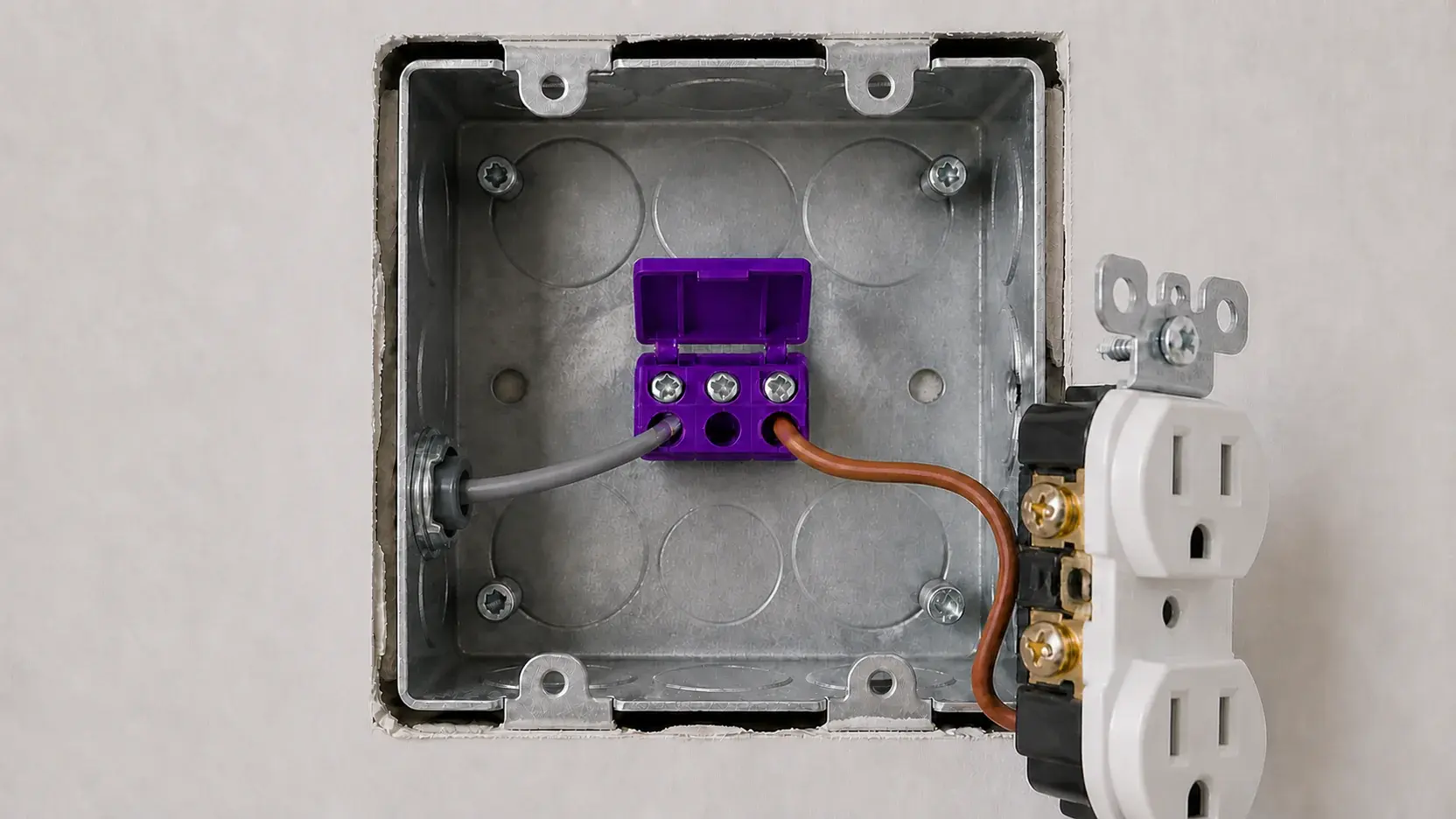
- Comparison of accessible devices, accessible splices, and panel connections across a visible conductor transition
- Documenting the extent of affected connections associated with a prior alteration
- Corrective work for the documented connections versus copper replacement after transition points are inspected; localized work does not represent whole-system permanent remediation
Local housing & wiring
Planning electrical work in Annandale
In Annandale, aluminum wiring questions usually come from renovated houses in Annandale Terrace and Ravensworth, where newer copper work was spliced into original circuits. We sort out which runs are which before recommending any repair.
Annandale's ramblers and splits were mostly built in the 1950s and 1960s, and the later part of that range overlaps with aluminum branch wiring. What makes Annandale different is how often these houses have been altered. A kitchen was gutted in the nineties, a basement was finished in the two-thousands, and each change added devices and splices. The result is a mix: copper in the newer rooms, aluminum in the original bedrooms, and a few places where the two meet. Those meeting points are where we spend the most time, because a copper wire nut or an ordinary receptacle is not a safe match for aluminum conductors. In Annandale Terrace and Ravensworth, we trace the circuit from the panel outward, record what each box contains, and identify any earlier fix that does not fit the conductor. Permits for the resulting scope go through Fairfax County Land Development Services.
Quote inputs
Scope and cost drivers
Included in the defined scope
- Identify accessible aluminum branch-circuit wiring and affected connection points
- Inspect selected devices, splices, and panel terminations for visible concerns
- Explain corrective options for documented devices and connections
- Define where copper replacement is the more appropriate scope
What can change scope and cost
- Number and accessibility of affected connections
- Selected corrective-work or copper-replacement scope
- Panel, device, and splice conditions
- Documentation and access requirements
Work sequence
From assessment to completion
- 01
Define the concern
Review known wiring information and any homeowner or insurance documentation needs.
- 02
Inspect
Examine accessible branch-circuit connections, devices, splices, and panel terminations.
- 03
Choose the method
Select corrective work for the documented connections or define a copper-replacement scope where the observed conditions call for it.
- 04
Complete and document
Perform the authorized work, check affected connections, and document the completed scope.
Property-specific answers
Local questions
Why does alteration history matter in Annandale?
A changed device or junction can join different wiring generations. We inspect the reachable transition, identify conductor material and condition found there, and use scope documentation to separate observed segments from concealed routing.
What documentation is available for an Annandale project?
Homeowner-requested records and insurer-requested records may list inspected locations, access limits, and the authorized corrective scope. They do not describe unexamined connections as completed work.
Can I just twist copper pigtails onto aluminum with regular wire nuts?
No. Ordinary wire connectors are not listed for joining aluminum to copper, and the connection can loosen and heat over time. A connector must be listed for the specific conductor combination and installed exactly as its instructions require. That is why we check each splice instead of assuming earlier work was done correctly.
My Annandale house was renovated. Could the aluminum still be behind the walls?
Yes. Remodels often replace one room while leaving the rest of the original circuits untouched. We look at the panel, the accessible attic and basement runs, and several devices to learn what is original. Areas we could not open are listed as not inspected, so you know what remains unknown.
What kind of work is involved in repairing a mixed copper and aluminum circuit?
It depends on what we find. Options include replacing mismatched splices with listed connectors, using CO/ALR devices where the conductors are in good condition, or running new copper to replace a circuit entirely. We explain the conditions behind each option before you choose.
Related Services
Related Services in Annandale
Guides
Aluminum Wiring Evaluation and Repair Planning Guides
Expert electrical guides to help you make informed decisions.
Beginner
Home Electrical Safety Inspection Checklist
A comprehensive room-by-room electrical safety checklist every homeowner should review regularly to identify potential hazards.
10 min read
Read GuideIntermediate
Understanding Electrical Permits in Northern Virginia
Navigate the electrical permit process in Northern Virginia with confidence. Learn requirements for Fairfax County, Arlington, Alexandria, and surrounding areas.
12 min read
Read GuideNearby Aluminum Wiring Evaluation and Repair Service Areas
We also provide expert electrical services in these communities.
Next step / property-specific quote
Request a quote for Aluminum Wiring Evaluation and Repair in Annandale
Share the property address and project goal so the scope can be reviewed for your home.