Loading services…

Residential project planning
Aluminum Wiring Evaluation and Repair in Burke, VA
Aluminum branch-circuit wiring calls for a careful review of accessible devices, splices, and panel connections. The next step follows the documented conditions, with corrective work for defined connections or a defined copper-replacement scope considered as appropriate.
- Licensed & insured
- Family-owned since 1996
5.0 ★ on our Burke, VA Google Profile (54+ Local Reviews)Backed by 1,463+ 4.9 ★ Reviews Across the DMV
5244 Lyngate Ct, Burke, VA 22015Our long-standing Burke local presence — serving the Burke and Springfield communities since the 1990s.
Field briefing / Burke, VA
Project briefing
Jurisdiction confirmed by property address
- Project
- Aluminum Wiring Evaluation and Repair
- Choose the first access points from the known circuit pattern, then expand the scope only when the observed conductor path supports it.
- Permit path
- Fairfax County Land Development Services
- Final jurisdiction is confirmed from the property address.
Scope first
What this project involves
Extent of the work
Determine whether the concern is limited to selected connections or requires a broader branch-circuit plan.
Repair method and records
Define corrective work for documented connections or a copper-replacement scope, and identify records requested by the homeowner.
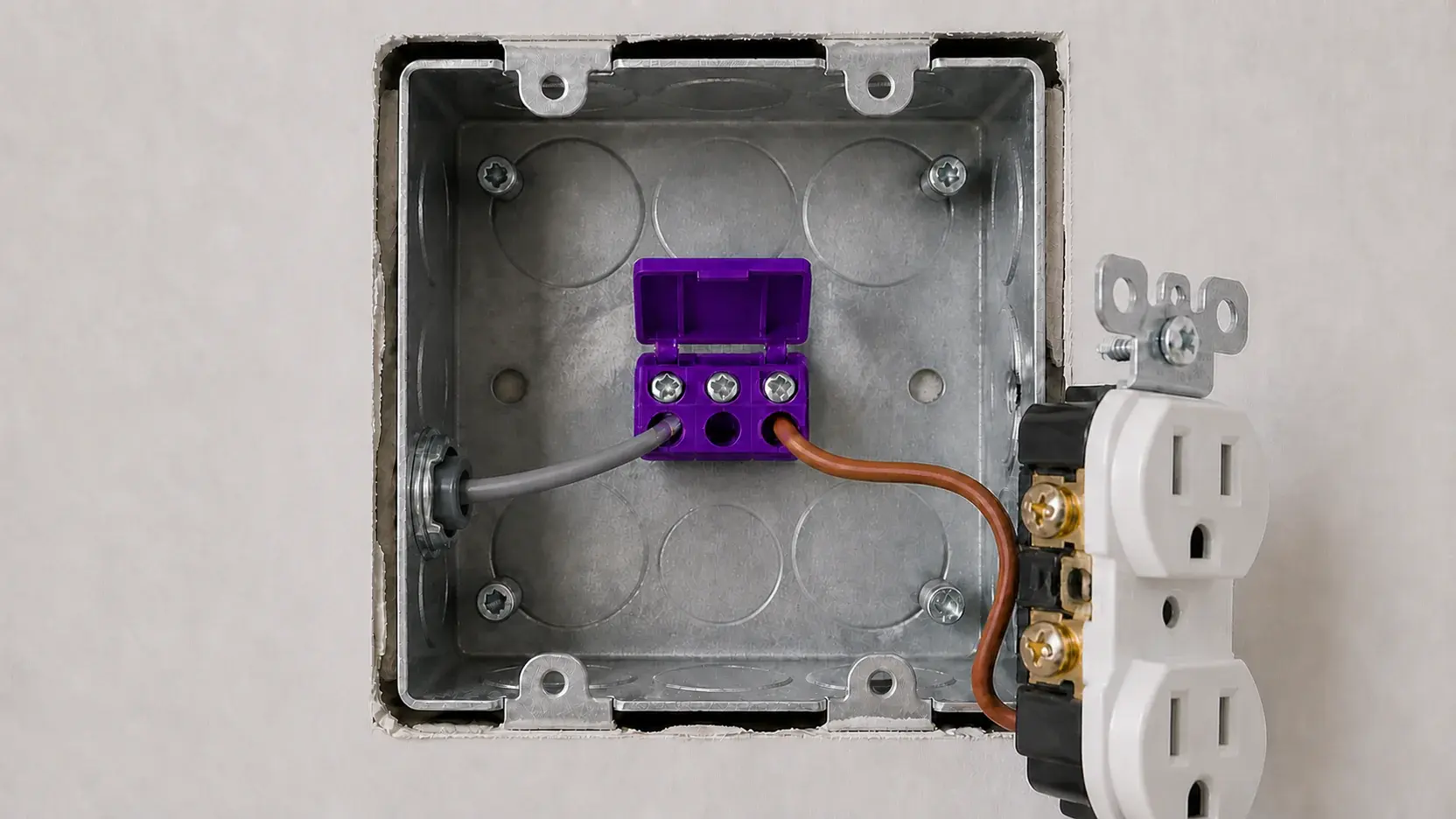
Field view / Aluminum Wiring Evaluation and Repair
Representative field view for Aluminum Wiring Evaluation and Repair; final scope is confirmed at the property.Address-specific planning
What matters in Burke
A Burke aluminum-wiring plan begins by confirming what conductors are actually present and which devices belong to the same branch circuit. That keeps a visible concern at one box from being treated as proof of the wiring beyond the inspected area.
At a Burke Centre, Lakewood Hills, or Rolling Valley property, finished lower-level rooms can change how device boxes and junction points are reached, but access is confirmed at the home. Inspection identifies the wiring material and the condition observed at reachable terminations before the project boundary is set. Fairfax County Land Development Services is the permit authority for an authorized scope that requires local review.
Explore the Burke service areaProject fit / review at the property
- Review of accessible devices, accessible splices, and panel connections tied to a defined concern
- A room-by-room count used to establish the extent of affected connections that can be reached
- Corrective work for the documented connections versus copper replacement, based on the reached circuit; localized work does not represent whole-system permanent remediation
Local housing & wiring
Planning electrical work in Burke
Burke aluminum wiring work centers on the 1970s houses in Rolling Valley and the earliest sections of Burke Centre, where build date decides whether the question applies at all. We confirm the conductor before anything else.
Not every Burke house needs this conversation. Rolling Valley was built in the mid-1970s, near the end of the aluminum era, and the first Burke Centre sections came after that. Many of the newer homes in these communities were wired in copper from the start. The value of an evaluation here is getting a definite answer, either that the house is copper throughout or that specific circuits are aluminum. A second condition worth checking in 1970s Burke houses is worn push-in backstabbed receptacles. When a backstab device is on an aluminum circuit, the grip can loosen and heat, so those two conditions together are worth taking seriously. If aluminum is found, we describe the choices: connectors listed for the conductor, CO/ALR devices, or copper replacement. Fairfax County Land Development Services handles permits, and homeowner association rules matter only for exterior work.
Quote inputs
Scope and cost drivers
Included in the defined scope
- Identify accessible aluminum branch-circuit wiring and affected connection points
- Inspect selected devices, splices, and panel terminations for visible concerns
- Explain corrective options for documented devices and connections
- Define where copper replacement is the more appropriate scope
What can change scope and cost
- Number and accessibility of affected connections
- Selected corrective-work or copper-replacement scope
- Panel, device, and splice conditions
- Documentation and access requirements
Work sequence
From assessment to completion
- 01
Define the concern
Review known wiring information and any homeowner or insurance documentation needs.
- 02
Inspect
Examine accessible branch-circuit connections, devices, splices, and panel terminations.
- 03
Choose the method
Select corrective work for the documented connections or define a copper-replacement scope where the observed conditions call for it.
- 04
Complete and document
Perform the authorized work, check affected connections, and document the completed scope.
Property-specific answers
Local questions
How is aluminum wiring identified at a Burke property?
We inspect selected reachable boxes and panel terminations, identify the actual material and condition found, and record access limitations. Scope documentation distinguishes observed wiring from areas that were not opened.
What records can accompany a Burke connection review?
Homeowner-requested records and insurer-requested records are defined before work and describe only the inspected or completed scope. The homeowner controls whether those records are shared with another party.
Were Burke Centre townhomes built after the aluminum branch-wiring years?
Mostly, yes, which makes aluminum less likely there than in Burke's 1970s single-family homes. Aluminum branch wiring dates to roughly 1965 to 1975, and most Burke Centre construction came afterward. Build year is a clue, not proof, so we check the conductor itself. If it is copper, the evaluation is short and you can stop worrying about it.
What are backstabbed receptacles, and why do they matter with aluminum?
Backstabbed devices have a push-in hole at the back instead of a screw terminal. On aluminum conductors, which expand and soften differently than copper, a push-in grip can loosen and heat. Receptacles marked for aluminum use screw or clamp terminations. We look at how each device is connected during the evaluation.
Should a Rolling Valley house be checked further if only one receptacle looks aluminum?
Yes, it is worth checking more than that one box. A single silver conductor can mean one circuit was extended with aluminum, or it can be the first sign that a whole floor is aluminum. We check the panel, the attic runs and devices on each level, then tell you whether the condition is limited to one circuit or wider.
Related Services
Related Services in Burke
Guides
Aluminum Wiring Evaluation and Repair Planning Guides
Expert electrical guides to help you make informed decisions.
Beginner
Home Electrical Safety Inspection Checklist
A comprehensive room-by-room electrical safety checklist every homeowner should review regularly to identify potential hazards.
10 min read
Read GuideIntermediate
Understanding Electrical Permits in Northern Virginia
Navigate the electrical permit process in Northern Virginia with confidence. Learn requirements for Fairfax County, Arlington, Alexandria, and surrounding areas.
12 min read
Read GuideNearby Aluminum Wiring Evaluation and Repair Service Areas
We also provide expert electrical services in these communities.
Next step / property-specific quote
Request a quote for Aluminum Wiring Evaluation and Repair in Burke
Share the property address and project goal so the scope can be reviewed for your home.