Loading services…

Residential project planning
Aluminum Wiring Evaluation and Repair in Fairfax, VA
Aluminum branch-circuit wiring calls for a careful review of accessible devices, splices, and panel connections. The next step follows the documented conditions, with corrective work for defined connections or a defined copper-replacement scope considered as appropriate.
- Licensed & insured
- Family-owned since 1996
4.9 ★ on our Fairfax, VA Google Profile (1,180+ Local Reviews)Backed by 1,463+ 4.9 ★ Reviews Across the DMV
2724 Dorr Ave, Suite 102, Fairfax, VA 22031Our Fairfax headquarters — where mail, dispatch, and our licensed electrical team have been based since 1996.
Field briefing / Fairfax, VA
Project briefing
Jurisdiction confirmed by property address
- Project
- Aluminum Wiring Evaluation and Repair
- Treat prior paperwork as a question to verify, then let inspected material, condition, and access establish the authorized boundary.
- Permit path
- City of Fairfax Code Administration for City addresses; Fairfax County Land Development Services outside the independent city
- Final jurisdiction is confirmed from the property address.
Scope first
What this project involves
Extent of the work
Determine whether the concern is limited to selected connections or requires a broader branch-circuit plan.
Repair method and records
Define corrective work for documented connections or a copper-replacement scope, and identify records requested by the homeowner.
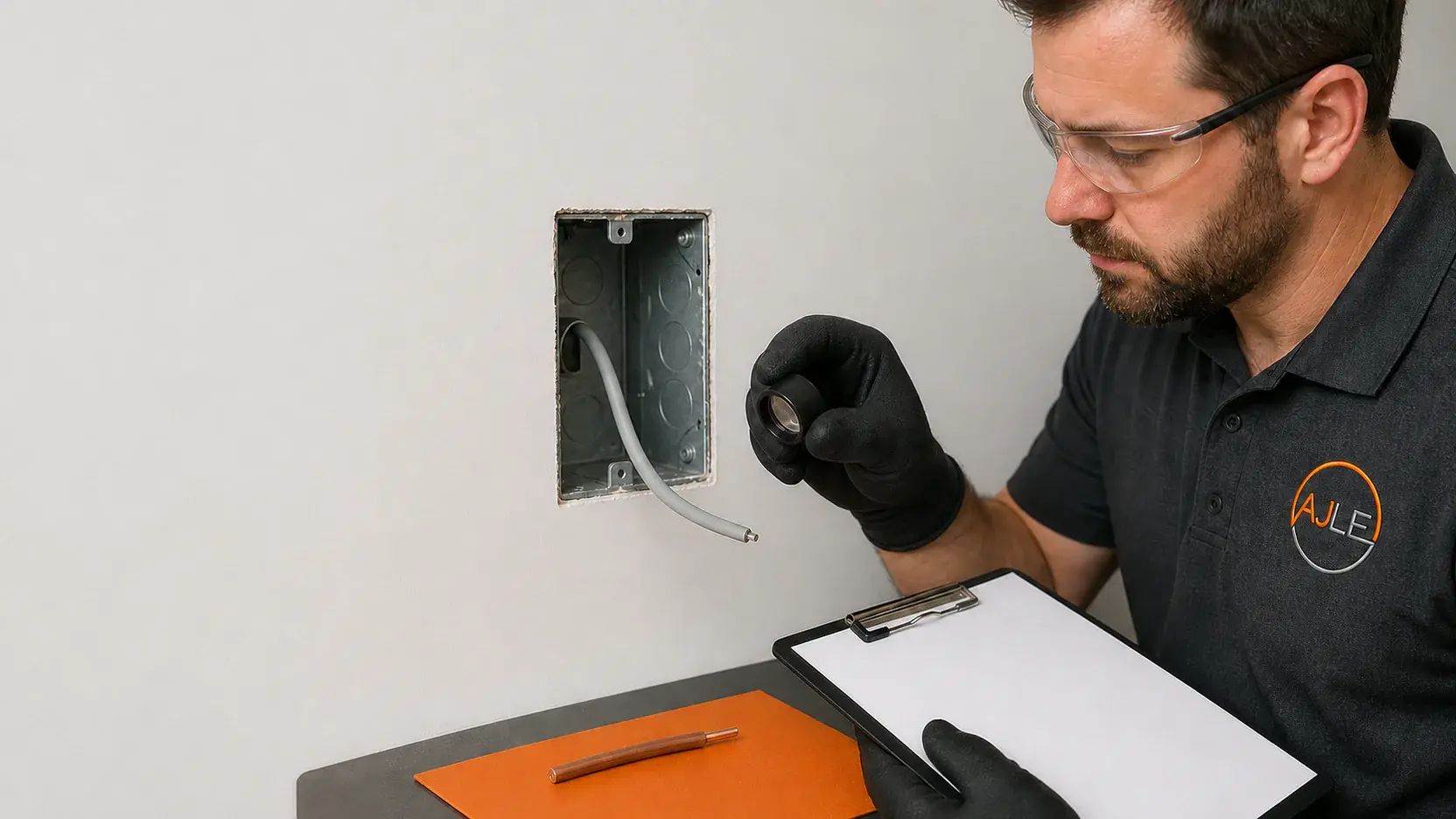
Field view / Aluminum Wiring Evaluation and Repair
Representative field view for Aluminum Wiring Evaluation and Repair; final scope is confirmed at the property.Address-specific planning
What matters in Fairfax
A Fairfax aluminum-wiring decision relies on the conductors reached at the property, not a City name or a broad age cue. The same inspection also keeps City and County permit responsibilities tied to the verified address.
Mantua, Fairfax City, and Fairfax Station illustrate the postal-area boundary without establishing wiring type. If property records or a prior inspection mention older branch wiring, we verify that property-specific cue at accessible points. Inspection records the actual wiring material and condition identified at devices, visible splices, and panel terminations. City addresses use City of Fairfax Code Administration; outside-City addresses use Fairfax County Land Development Services for applicable review.
Explore the Fairfax service areaProject fit / review at the property
- Property-specific review of accessible devices, accessible splices, and panel connections
- Using verified circuit observations to define the extent of affected connections
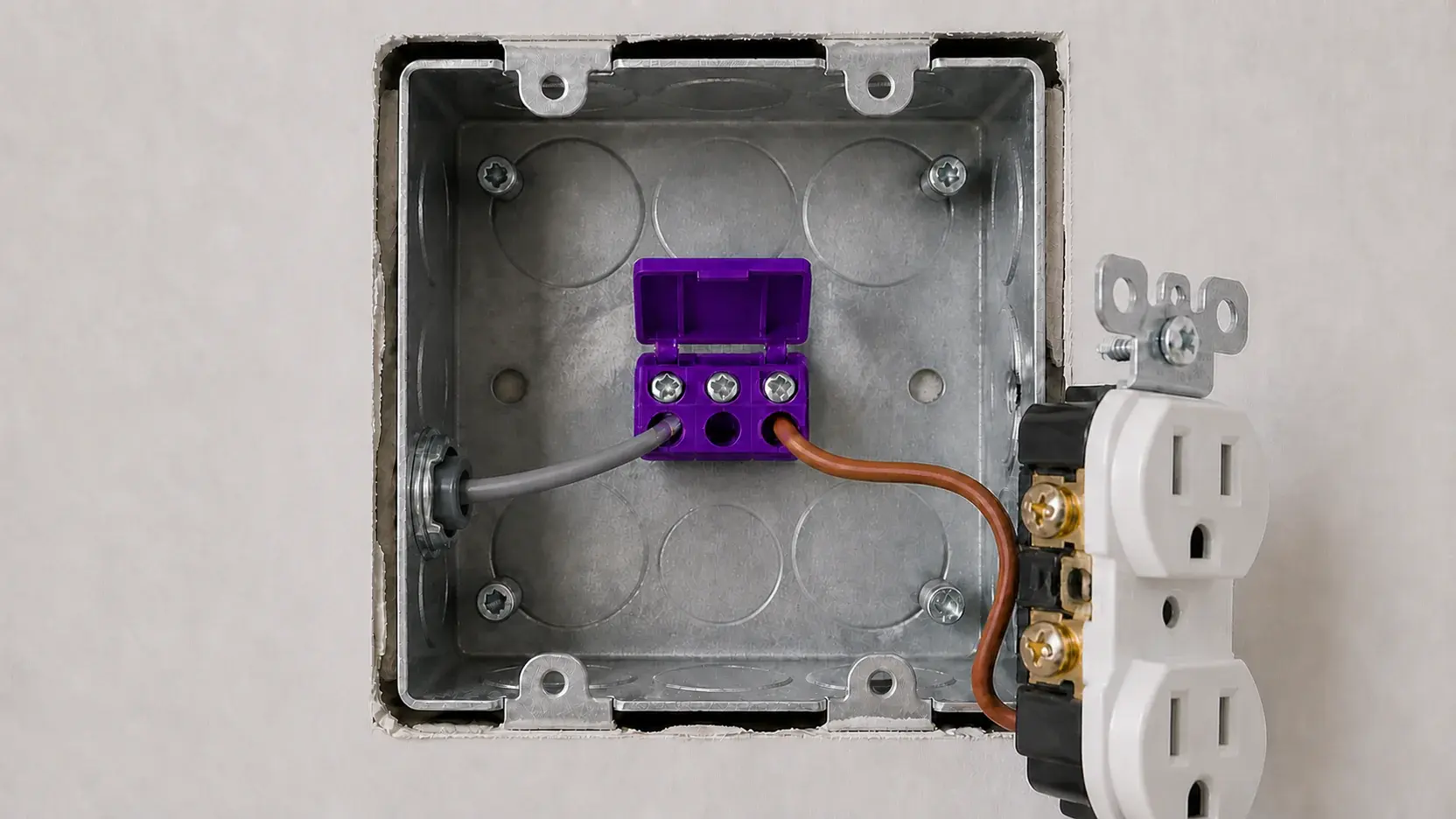
- Corrective work for the documented connections versus copper replacement, paired with the correct City or County authority; localized work does not represent whole-system permanent remediation
Local housing & wiring
Planning electrical work in Fairfax
Aluminum wiring evaluation in Fairfax mostly concerns the 1965 to 1975 split-levels and colonials around Mantua and Mosby Woods. We look for AL markings on the cable, check the devices, and explain what corrective work fits your house.
Mantua and Mosby Woods were built while aluminum branch wiring was a common choice for receptacle and lighting circuits, so a house from those years deserves a quick look even if nothing has gone wrong. The easiest place to start is the cable jacket. Aluminum cable is printed with AL or ALUMINUM along its length, and you can often read it where cable enters the panel or crosses an attic joist. Silver-colored conductors under the screws at a receptacle tell the same story. Many of these houses have been remodeled since, so a bathroom or basement may be copper while the bedrooms are still original. Because a Fairfax mailing address can sit in the City of Fairfax or in the surrounding county, we confirm whether City of Fairfax Code Administration or Fairfax County Land Development Services applies before we define the corrective scope. Whichever office applies, the evaluation comes first and the repair options follow from what we find.
Quote inputs
Scope and cost drivers
Included in the defined scope
- Identify accessible aluminum branch-circuit wiring and affected connection points
- Inspect selected devices, splices, and panel terminations for visible concerns
- Explain corrective options for documented devices and connections
- Define where copper replacement is the more appropriate scope
What can change scope and cost
- Number and accessibility of affected connections
- Selected corrective-work or copper-replacement scope
- Panel, device, and splice conditions
- Documentation and access requirements
Work sequence
From assessment to completion
- 01
Define the concern
Review known wiring information and any homeowner or insurance documentation needs.
- 02
Inspect
Examine accessible branch-circuit connections, devices, splices, and panel terminations.
- 03
Choose the method
Select corrective work for the documented connections or define a copper-replacement scope where the observed conditions call for it.
- 04
Complete and document
Perform the authorized work, check affected connections, and document the completed scope.
Property-specific answers
Local questions
Can a prior Fairfax note establish the present wiring condition?
It can identify a place to inspect, but the actual conductor material and condition found at reachable points control the decision. Scope documentation states whether the earlier note was verified and what remained inaccessible.
Which Fairfax records can be prepared?
Homeowner-requested records and insurer-requested records can list inspected locations, observed conditions, access limits, and authorized work. The verified address is included so City and County context are not confused.
How can I tell if my Fairfax house has aluminum branch wiring?
Look at the cable where it enters the main panel or crosses an attic joist. Aluminum cable is stamped AL or ALUMINUM on the jacket, and conductors at a receptacle appear silver instead of copper-colored. Houses built roughly 1965 to 1975 are the usual suspects. Do not open energized devices yourself. We can confirm the material safely during a visit.
Are CO/ALR switches and receptacles still available for a Fairfax house?
Yes. CO/ALR-rated 15- and 20-amp receptacles and switches are still made, though the selection is narrower than for copper-only devices, and many dimmers and smart switches are not rated for aluminum. Where the device you want has no CO/ALR version, a listed connector to a short copper lead is the usual alternative. We tell you which devices fit each box.
Why would a warm cover plate matter if the outlet still works?
Heat at a termination is one of the usual early signs of a loose or oxidized aluminum connection. A device that works can still be running warm. If a plate, plug or switch feels warm or smells off, stop using that circuit when it is safe to do so and have it evaluated before anything is replaced.
Related Services
Related Services in Fairfax
Guides
Aluminum Wiring Evaluation and Repair Planning Guides
Expert electrical guides to help you make informed decisions.
Beginner
Home Electrical Safety Inspection Checklist
A comprehensive room-by-room electrical safety checklist every homeowner should review regularly to identify potential hazards.
10 min read
Read GuideIntermediate
Understanding Electrical Permits in Northern Virginia
Navigate the electrical permit process in Northern Virginia with confidence. Learn requirements for Fairfax County, Arlington, Alexandria, and surrounding areas.
12 min read
Read GuideNearby Aluminum Wiring Evaluation and Repair Service Areas
We also provide expert electrical services in these communities.
Next step / property-specific quote
Request a quote for Aluminum Wiring Evaluation and Repair in Fairfax
Share the property address and project goal so the scope can be reviewed for your home.