Loading services…

Residential project planning
Dedicated Circuit Installation in Falls Church, VA
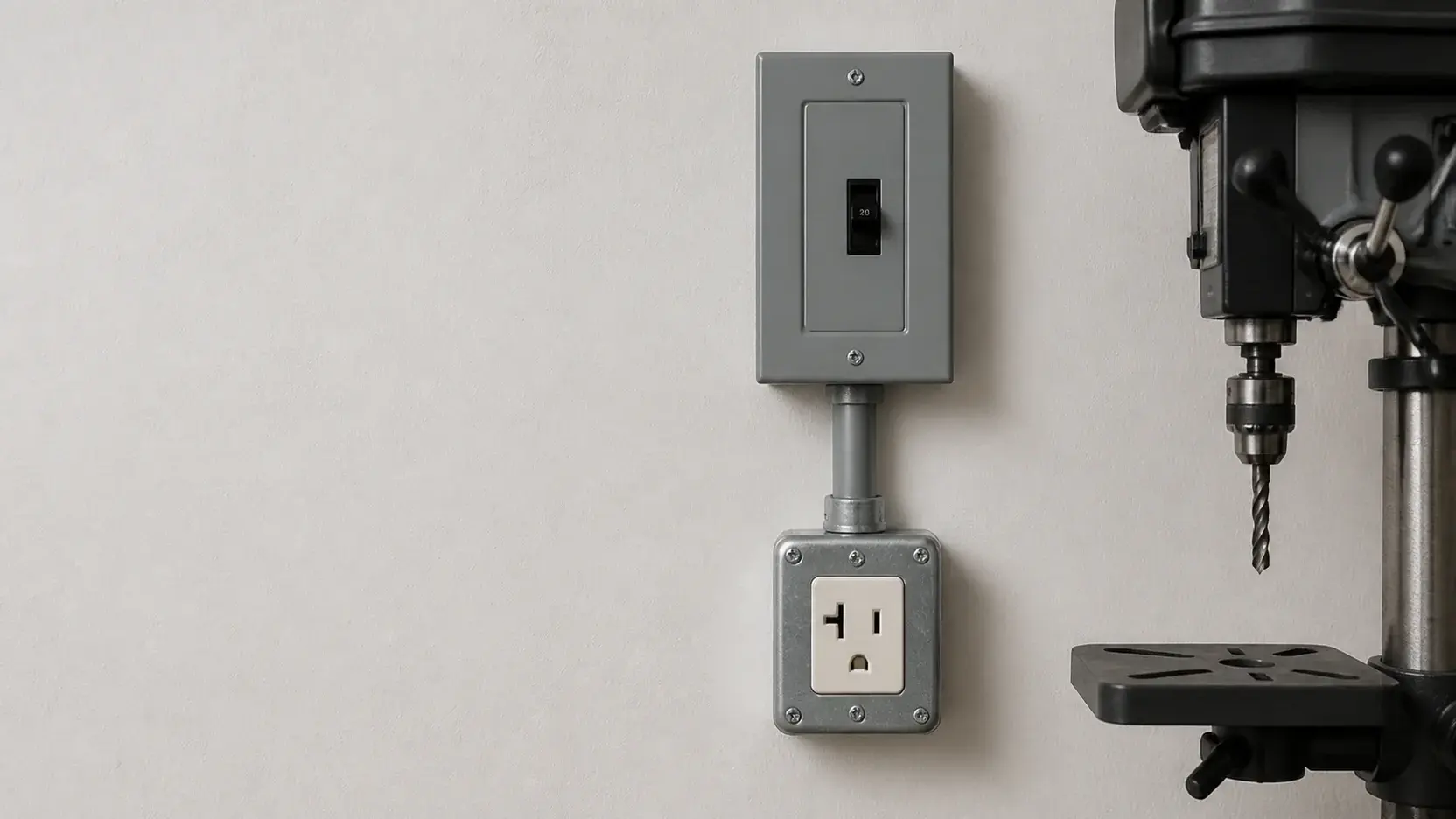
A dedicated circuit is sized for a specific load instead of sharing capacity with unrelated devices. The design accounts for appliances, workshop equipment, HVAC auxiliaries, EV equipment, or pumps, along with voltage, amperage, receptacle, and routing needs.
- Licensed & insured
- Family-owned since 1996
Field briefing / Falls Church, VA
Project briefing
Jurisdiction confirmed by property address
- Project
- Dedicated Circuit Installation
- Set the jurisdiction, serving panel, and equipment endpoint before comparing route options or choosing protection and connection hardware.
- Permit path
- City of Falls Church for City addresses; Fairfax County Land Development Services for nearby Falls Church postal addresses
- Final jurisdiction is confirmed from the property address.
Scope first
What this project involves
Circuit requirements
Match voltage, amperage, conductor size, and protection to the equipment's electrical load.
Connection and route
Confirm the receptacle or direct connection and choose a practical path from the panel to the equipment.
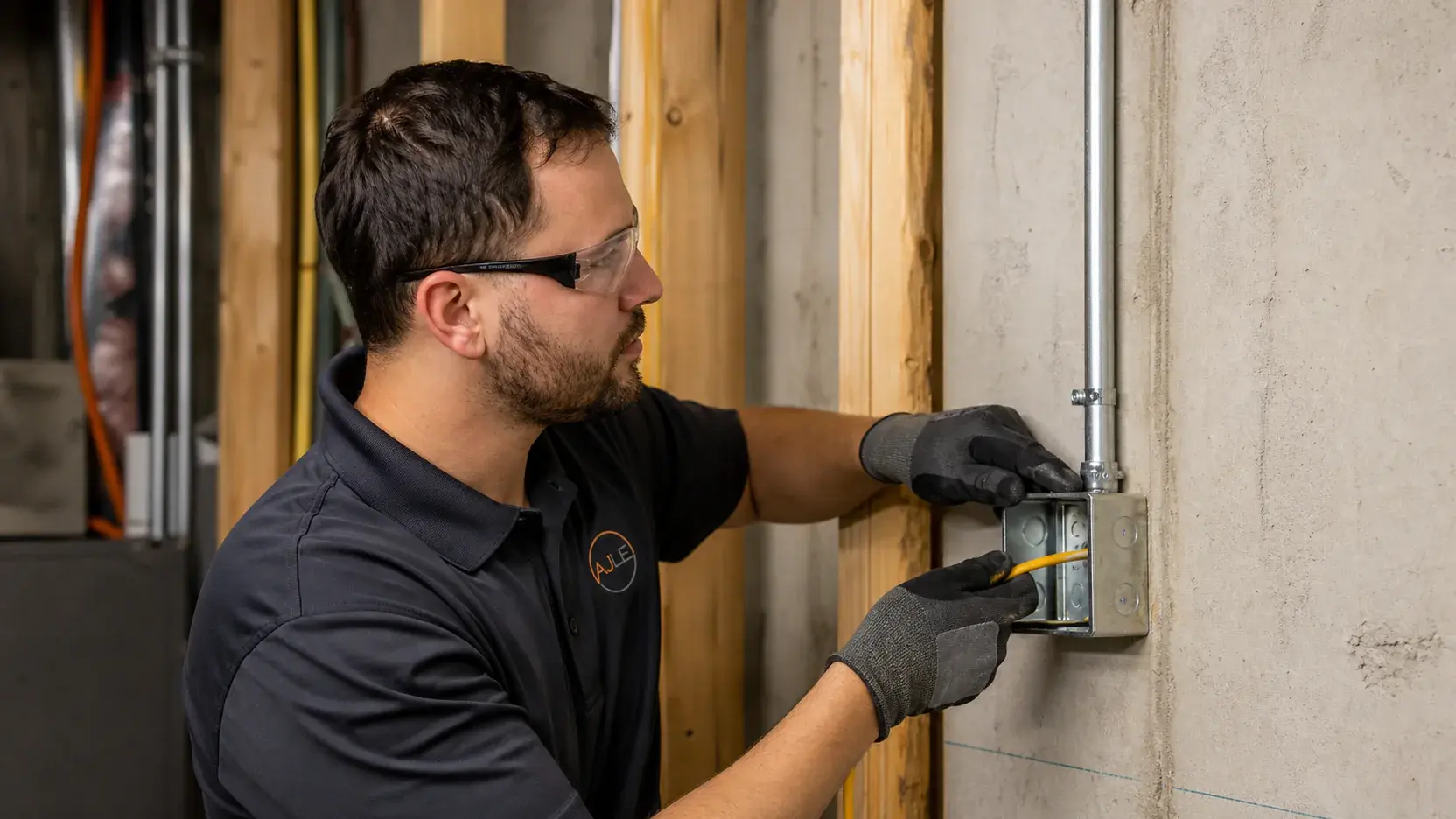
Field view / Dedicated Circuit Installation
Representative field view for Dedicated Circuit Installation; final scope is confirmed at the property.Address-specific planning
What matters in Falls Church
A Falls Church dedicated circuit is planned from the equipment nameplate and exact property address. Those details keep a 120V appliance or office load, or a 240V workshop load, from being scoped by postal name or an assumed panel layout.
Falls Church City, Pimmit Hills, and Seven Corners share a location name but not one electrical authority. On site, we verify panel capacity and a compatible breaker position, trace accessible routes through finished or shared areas, and identify any feeder to a detached structure. Conductor size, amperage, protection, and hardwired or receptacle connection follow the actual equipment. The City or Fairfax County review path is confirmed from the address and defined scope.
Explore the Falls Church service areaProject fit / review at the property
- A 120V kitchen, laundry, or office load with documented equipment requirements
- A 240V workshop tool whose amperage and receptacle or hardwire method are known
- A pump or detached-space load requiring review of the existing feeder and route
Local housing & wiring
Planning electrical work in Falls Church
A kitchen move or a laundry relocation in Falls Church, VA often means a new 240V circuit for a range or dryer through plaster walls. AJ Long Electric runs those circuits, and 20A office and equipment circuits, in Falls Church City bungalows and in Pimmit Hills and Seven Corners homes.
The independent City of Falls Church is full of 1920s to 1940s bungalows and small colonials with plaster walls, original fuse-era panels that were converted to breakers, and few spare circuits. When a kitchen or laundry moves, the dryer and range need 240V circuits with the right conductor, and the old receptacle usually cannot be reused. Fishing those circuits through plaster, old fire blocking and finished ceilings is the main job. Outside the city limits, Pimmit Hills and Seven Corners have 1950s and 1960s ramblers and splits with a different problem: crawl spaces, small panels and additions that were wired off nearby circuits. Many Falls Church mailing addresses are actually in Fairfax County, so the permit office is the City of Falls Church for city addresses and Fairfax County Land Development Services for county ones. Before work begins, we confirm the address, the equipment model, the connection type and the route, and we state in writing where wall or ceiling openings will be made.
Quote inputs
Scope and cost drivers
Included in the defined scope
- Confirm the equipment load, voltage, amperage, and connection requirements
- Check the electrical panel for a suitable circuit position and capacity
- Plan a code-sized wiring method and route to the equipment location
- Install the required breaker, wiring, and receptacle or direct connection
What can change scope and cost
- Equipment load and required circuit size
- Routing distance and access conditions
- Receptacle, disconnect, or direct-connection requirements
- Panel capacity and breaker compatibility
Work sequence
From assessment to completion
- 01
Confirm the load
Review the equipment information and intended operating location.
- 02
Check the panel
Evaluate capacity, circuit position, and compatible protection.
- 03
Plan the route
Define the wiring path, connection type, access, and permit scope.
- 04
Install and test
Complete the circuit and verify voltage and operation at the connection point.
Property-specific answers
Local questions
Does a Falls Church mailing address identify the electrical authority?
No. City of Falls Church addresses use the City's authority, while nearby postal addresses can fall under Fairfax County Land Development Services. The exact address must be checked before any permit responsibility for the circuit is assigned.
What is checked before adding a Falls Church equipment circuit?
We review nameplate voltage and amperage, conductor and protection needs, hardwire or receptacle instructions, calculated panel capacity, compatible breaker position, route length and access, and any detached-building feeder involved in reaching the load.
How do you fish a circuit past old fire blocking in a Falls Church City bungalow?
We locate the blocking with a scanner or a small inspection hole, then drill through it from above or below with a long flexible bit, or cut a small notch that is patched afterward. Where blocking and plaster make a wall too risky, a closet or a basement-to-attic chase is the alternate route. We mark each planned opening in the scope.
Can my old dryer outlet in a Falls Church bungalow be reused when the laundry moves?
Rarely. A three-wire dryer outlet may not meet current requirements for a new appliance cord, and the moved location needs a new run anyway. We confirm the dryer's connection type, then design a circuit with the conductor and receptacle it calls for.
Who patches the plaster after you fish a new circuit?
We state in the scope where openings will be, how large they are, and what is included. We close the opening around the wiring and leave it ready for patching. Final plaster and paint are often done by the remodeling contractor or the homeowner, and we say so up front.
Related Services
Related Services in Falls Church
Guides
Dedicated Circuit Installation Planning Guides
Expert electrical guides to help you make informed decisions.
Nearby Dedicated Circuit Installation Service Areas
We also provide expert electrical services in these communities.
Next step / property-specific quote
Request a quote for Dedicated Circuit Installation in Falls Church
Share the property address and project goal so the scope can be reviewed for your home.