Loading services…

Residential project planning
Dedicated Circuit Installation in Annandale, VA
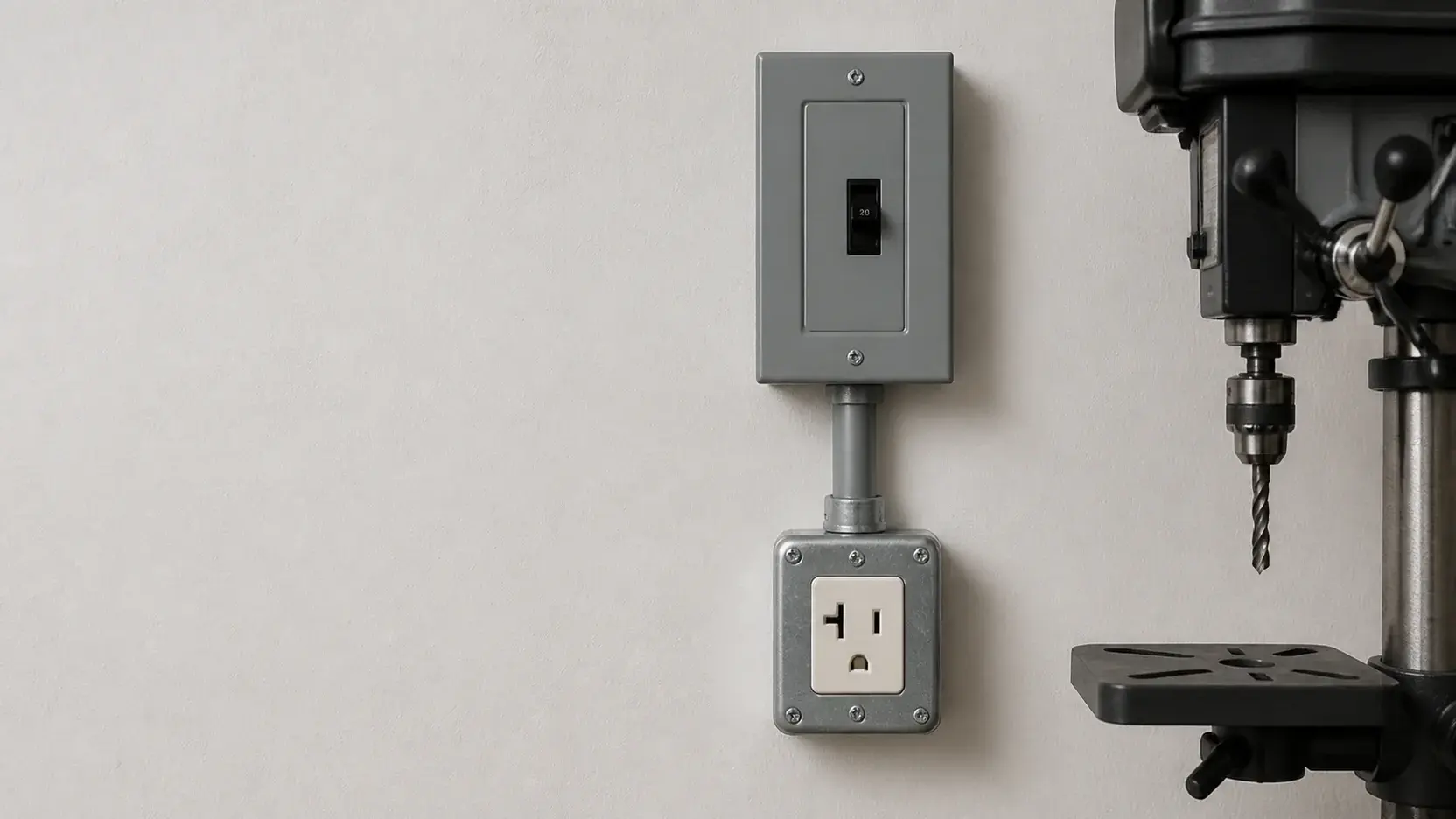
A dedicated circuit is sized for a specific load instead of sharing capacity with unrelated devices. The design accounts for appliances, workshop equipment, HVAC auxiliaries, EV equipment, or pumps, along with voltage, amperage, receptacle, and routing needs.
- Licensed & insured
- Family-owned since 1996
4.9 ★ on our Annandale, VA Google Profile (67+ Local Reviews)Backed by 1,463+ 4.9 ★ Reviews Across the DMV
7138 Little River Turnpike #305, Annandale, VA 22003Our long-standing Annandale local presence — serving the Annandale community for over two decades.
Field briefing / Annandale, VA
Project briefing
Jurisdiction confirmed by property address
- Project
- Dedicated Circuit Installation
- Do not rely on an existing panel label alone; verify the equipment endpoint and serving circuit before selecting the new route and protection.
- Permit path
- Fairfax County Land Development Services
- Final jurisdiction is confirmed from the property address.
Scope first
What this project involves
Circuit requirements
Match voltage, amperage, conductor size, and protection to the equipment's electrical load.
Connection and route
Confirm the receptacle or direct connection and choose a practical path from the panel to the equipment.
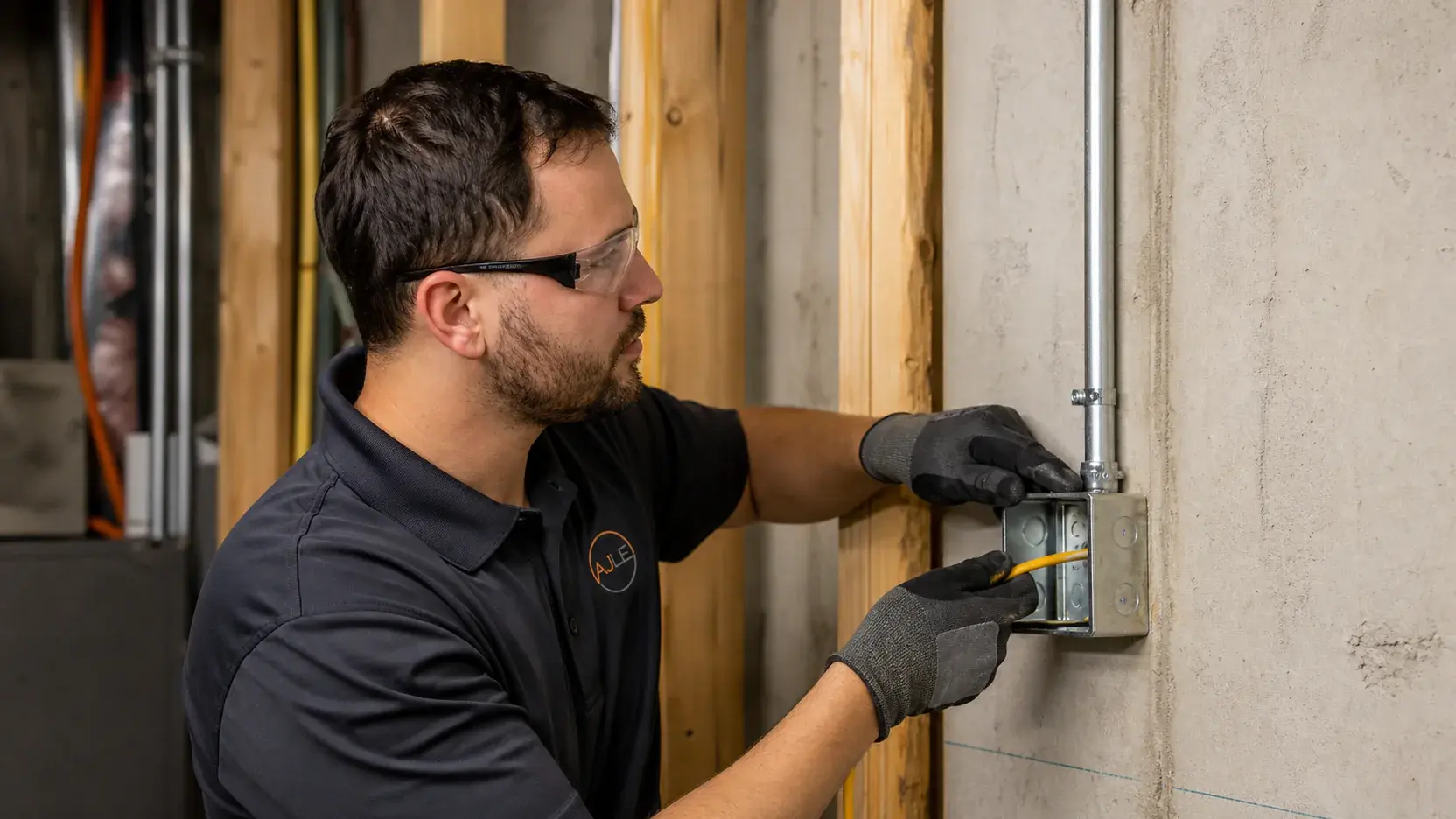
Field view / Dedicated Circuit Installation
Representative field view for Dedicated Circuit Installation; final scope is confirmed at the property.Address-specific planning
What matters in Annandale
An Annandale dedicated circuit should be tied to verified equipment data, especially where prior remodeling may have changed room use or circuit labels. We identify the load, voltage, amperage, and connection method before choosing a breaker or wire path.
At a Ravensworth, Woodburn, or Sleepy Hollow Woods property, the route may pass through an altered kitchen, finished lower level, crawl area, or garage, or continue to a detached workspace when one is present. Accessible tracing helps confirm which panel serves the appliance, office, workshop, or pump and whether it has capacity and a compatible breaker position. Conductor size, applicable protection, and hardwire versus receptacle details follow the equipment; any Fairfax County permit step is assigned only after the scope is known.
Explore the Annandale service areaProject fit / review at the property
- A remodeled-kitchen appliance needing a circuit matched to its current nameplate
- A 120V office equipment circuit separated from unrelated room loads
- A 240V workshop tool or pump with a route that must be checked through altered space
Local housing & wiring
Planning electrical work in Annandale
Annandale, VA ramblers from the 1950s and early 1960s have few circuits and often rely on window air conditioners and extension cords. AJ Long Electric adds dedicated 20A and 240V circuits in Ravensworth, Woodburn and Sleepy Hollow Woods to take that load off the original wiring.
The ramblers and small split-levels in Woodburn, Ravensworth and Sleepy Hollow Woods were wired with very few circuits for the electrical needs of the 1950s. Today they have a window air conditioner in every bedroom, a chest freezer in the basement, a home office in a spare room, and a detached garage that also serves as a shop. All of these sit on circuits that were meant for lamps. The panels are modest in size, and where the basement has exposed joists, the run to a new circuit is simple. A freezer or sump pump tripped by a shared circuit can be missed after the lights return from an outage. We start by listing what each room runs, checking panel space and capacity, and then decide where new circuits go. A detached garage may need a feeder and a small subpanel instead of several long branch circuits. Fairfax County Land Development Services issues the permit for the work.
Quote inputs
Scope and cost drivers
Included in the defined scope
- Confirm the equipment load, voltage, amperage, and connection requirements
- Check the electrical panel for a suitable circuit position and capacity
- Plan a code-sized wiring method and route to the equipment location
- Install the required breaker, wiring, and receptacle or direct connection
What can change scope and cost
- Equipment load and required circuit size
- Routing distance and access conditions
- Receptacle, disconnect, or direct-connection requirements
- Panel capacity and breaker compatibility
Work sequence
From assessment to completion
- 01
Confirm the load
Review the equipment information and intended operating location.
- 02
Check the panel
Evaluate capacity, circuit position, and compatible protection.
- 03
Plan the route
Define the wiring path, connection type, access, and permit scope.
- 04
Install and test
Complete the circuit and verify voltage and operation at the connection point.
Property-specific answers
Local questions
What information is needed for an Annandale equipment circuit?
The model number, nameplate voltage and amperage, installation instructions, intended location, and hardwired or receptacle requirement are the useful starting details. They guide conductor sizing, breaker selection, and any location-specific protection.
What if an Annandale panel has no obvious open breaker position?
An empty-looking position does not by itself establish usable capacity or compatibility. We review the panel labeling and condition, calculate the added load, check the manufacturer's permitted breaker arrangement, and explain if the dedicated circuit depends on separate panel work.
Can two window air conditioners share one circuit in my Annandale house?
Only if the circuit rating and the units' nameplates allow it, and often they do not. Many window units need their own circuit, especially larger ones. We read the labels, then add circuits as needed rather than guess.
Can the old bedroom outlets stay in use after you add new circuits in my Annandale house?
Yes, for light loads like lamps and chargers. The new circuits take the window units, freezer or heater, and the original outlets stay on their old circuit with less demand on it. If an old receptacle is loose, warm or ungrounded, we point it out, and replacing those devices is a separate item you can decide on.
Does a larger window air conditioner in my Woodburn rambler need a 240-volt circuit?
It can. The nameplate lists the voltage, and some larger window units are 240-volt models with a different plug that will not fit a standard outlet. Those need a circuit and receptacle installed to match. A 120-volt unit may still need its own circuit if it draws most of a shared one. We read the label before the unit goes in the window.
Related Services
Related Services in Annandale
Guides
Dedicated Circuit Installation Planning Guides
Expert electrical guides to help you make informed decisions.
Nearby Dedicated Circuit Installation Service Areas
We also provide expert electrical services in these communities.
Next step / property-specific quote
Request a quote for Dedicated Circuit Installation in Annandale
Share the property address and project goal so the scope can be reviewed for your home.