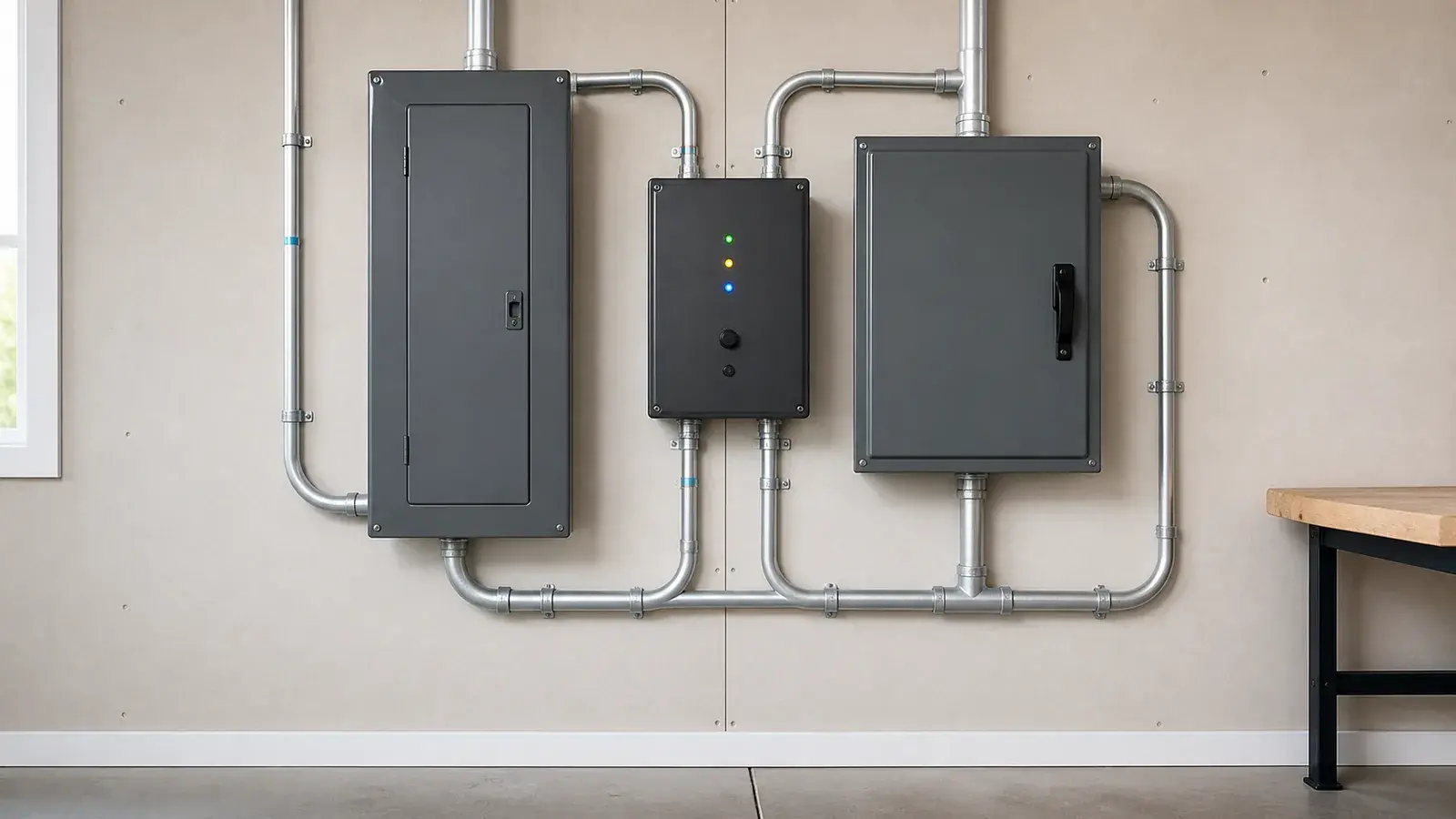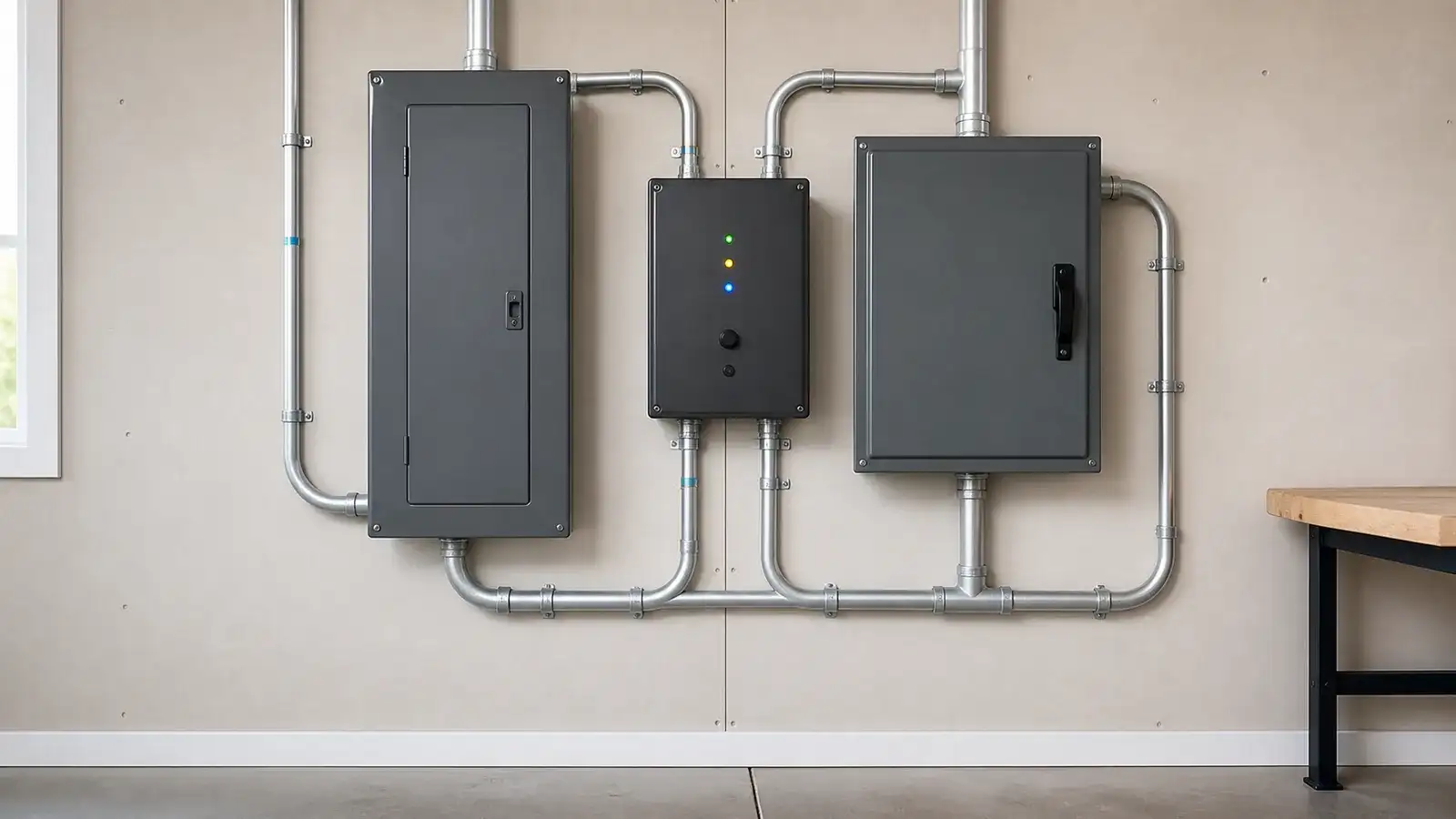

A panel can have empty breaker spaces and still need changes before a proposed solar inverter can connect. The useful question is which connection method the actual equipment supports, not simply whether two spaces remain.
Key Takeaways
- Panel spaces, electrical-service capacity, and generation connection capacity are separate checks.
- The 120% calculation applies to particular load-side arrangements; it is not the only permitted method.
- A main-breaker rating is not necessarily the busbar rating.
- A future solar design still needs its own equipment, permit, and utility review.
Know which rating you are reading
The busbar is the conductive assembly that distributes power within the panel. Its rating belongs to the equipment, while the main overcurrent device has its own rating. Do not infer one from the other. For example, Eaton describes solar-ready equipment with a 225-amp bus and a 200-amp main. That combination does not make the house a 225-amp service.
Need a Panel Upgrade?
Outdated or overloaded electrical panels can present safety and capacity concerns. Our team evaluates 200-amp upgrades throughout Northern Virginia and confirms scheduling after reviewing the property. Call (571) 444-6886 to get started.
Use the exact model and equipment labeling for the assessment. A larger enclosure, an unused space, or a marketing label cannot substitute for those details. Leave the panel cover in place when gathering homeowner photos; the electrician can inspect internal conditions safely.
A conditional example of the 120% calculation
For a qualifying load-side arrangement, such as sources at opposite ends of a bus containing loads, the calculation compares 125% of power-source output current plus the protecting main-device rating with 120% of bus ampacity. The layout and all other conditions of the applicable provision must also be satisfied.
Using a 200-amp bus and a 200-amp main as an illustration: (1.20 × 200 − 200) ÷ 1.25 = 32 amps of source output current. The 40-amp remainder before dividing by 1.25 is not 40 amps of continuous inverter output. Nor is either figure the DC wattage printed on roof modules.
Enphase's 2021 power-control technical brief explains this arithmetic and notes that other provisions can establish the allowable connection. It is background for this example, not a compatibility guide for every current product.
What that example does not decide
It does not select a breaker, size conductors, establish an acceptable equipment combination, or approve a location. Existing generation, storage, feed-through arrangements, and a different bus layout can change the review. A center-fed panel should not be treated as the illustrated end-fed arrangement merely because its ratings match.
The applicable code edition matters too. Virginia DHCD identifies the 2020 NEC within the currently adopted Virginia code framework. The designer and permit authority must apply the provisions governing the actual project; an online example is not an installation drawing.
Why a different design may be appropriate
A different panel or main-device arrangement: ask what constraint the change solves and whether the home's load assessment still works. Reducing a main rating is not a homeowner adjustment or an automatic solution for a heavily loaded home.
A supply-side connection: this is a separate method with its own service equipment, conductor, protection, disconnect, listing, and utility requirements. Do not carry the load-side example over as if both methods were identical.
A listed power control system: compatible controls may limit source contribution in an approved design. They do not make all panels accept arbitrary generation. Tesla's Panel Limit documentation, for example, describes a specific control function and jurisdiction-approved settings. A product feature must be evaluated within its supported system.
Ask for the finding in writing
A useful assessment names the bus and main ratings, present sources, proposed connection method, and assumptions about future equipment. Ask which condition would require the design to be revisited, especially if a battery, larger inverter, or additional panel is planned.
The future-solar handoff checklist explains which records to keep. For present electrical work, request a free panel-project estimate and describe the future goal. Staff review the request before discussing the scope and timing. No unspecified future array is approved by reserving a breaker location.