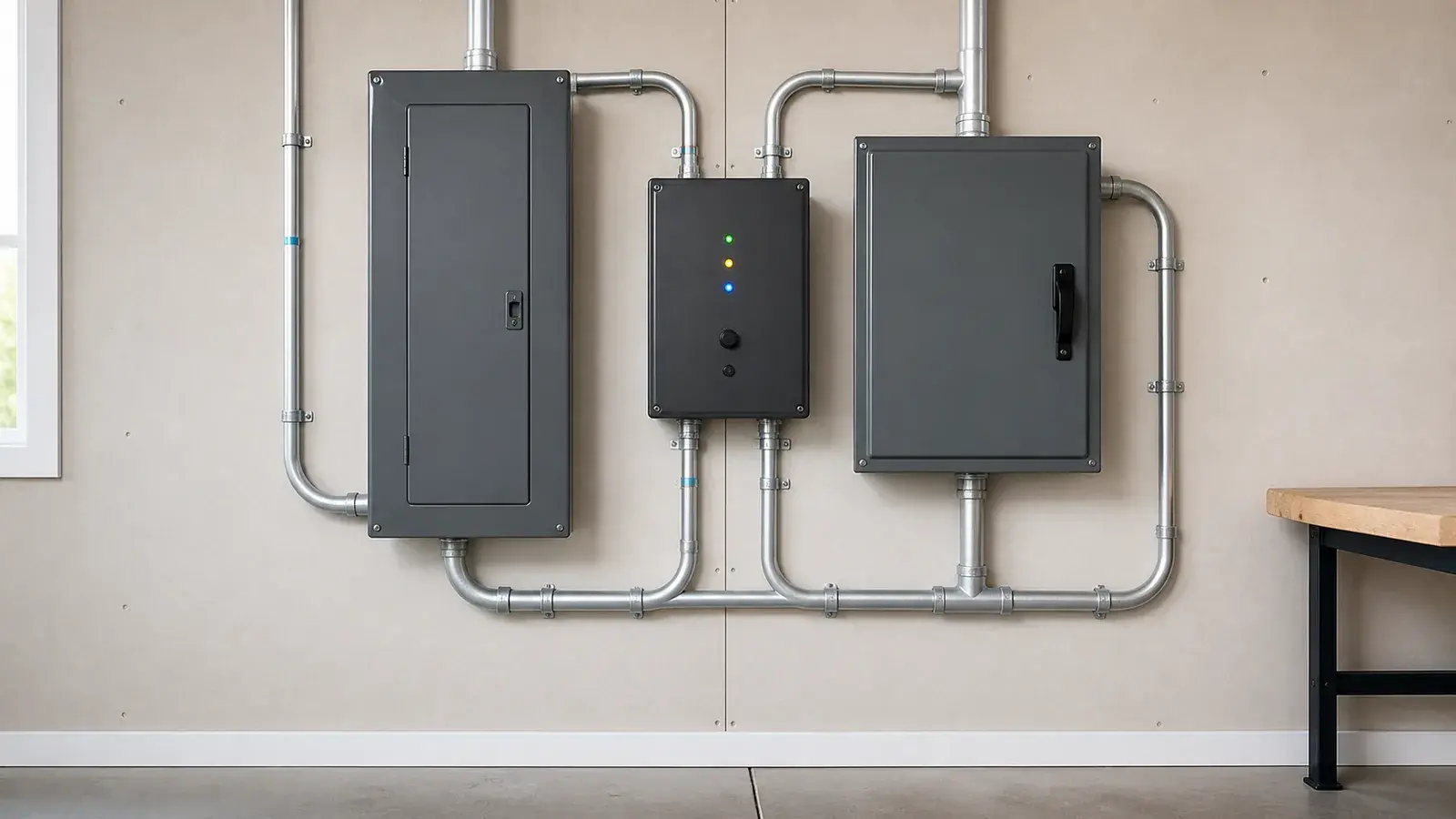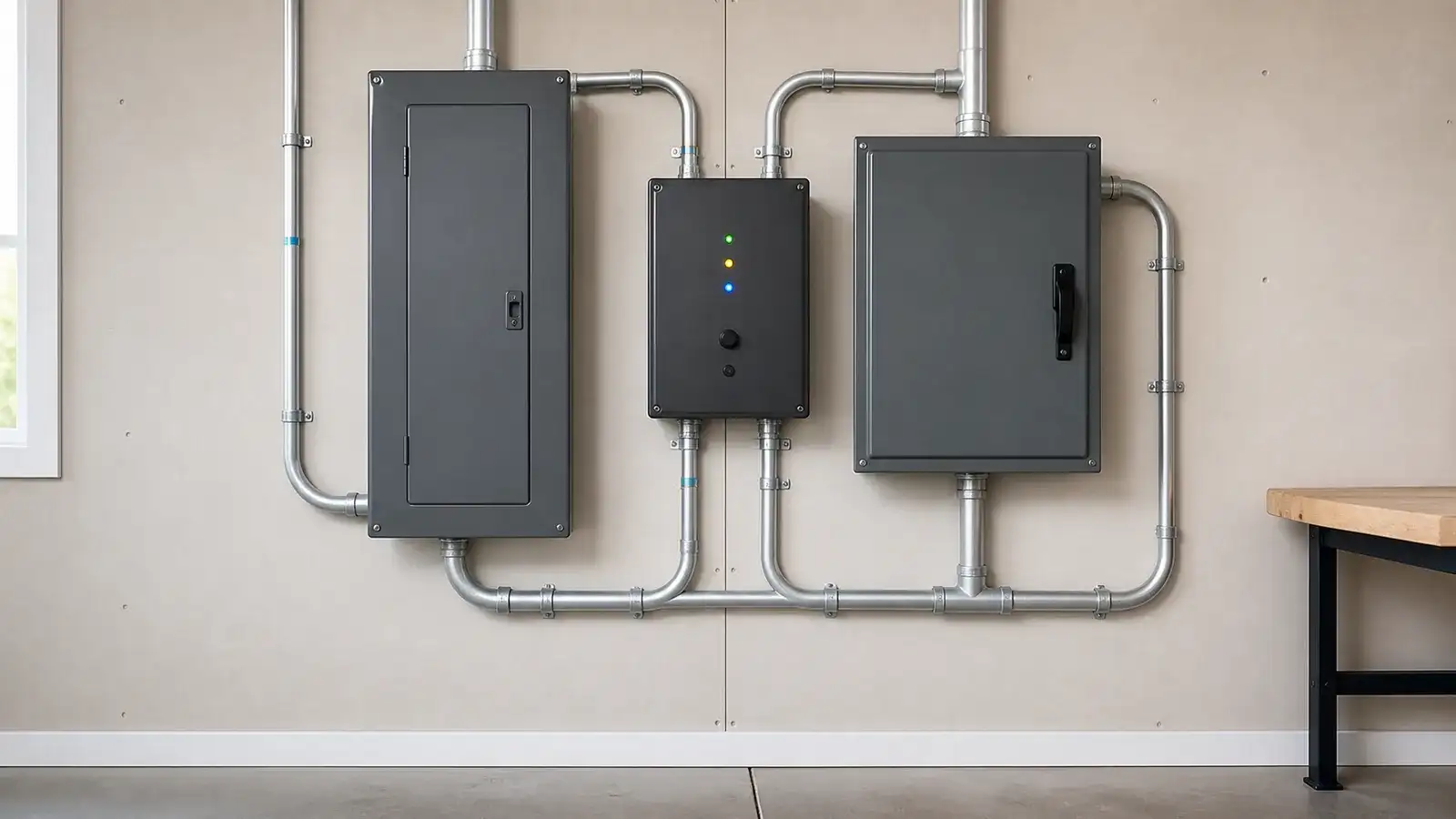

If you replace a panel before choosing solar equipment, the most useful deliverable is an accurate record of the electrical work. A future designer needs to know what exists, what was reserved, and what remains undecided.
Key Takeaways
- Ask for records of the installed equipment, not just the phrase “solar-ready.”
- Separate completed electrical work from assumptions about a future system.
- Confirm the permit authority and serving utility using the actual property.
- Keep permit, inspection, and utility milestones as separate records.
Build the handoff file before the panel job closes
Agree on the documentation in the present scope. You do not need to choose a rooftop layout to ask for the panel model, installed ratings, circuit directory, and records of completed work. A later contractor should be able to distinguish verified information from an informal expectation.
Need a Panel Upgrade?
Outdated or overloaded electrical panels can present safety and capacity concerns. Our team evaluates 200-amp upgrades throughout Northern Virginia and confirms scheduling after reviewing the property. Call (571) 444-6886 to get started.
| Record | What it helps establish |
|---|---|
| Equipment identification | Panel, main device, meter/service equipment, and any existing inverter or storage model |
| Ratings and assessment | Bus rating, main protection, present service assessment, and limitations noted by the electrician |
| Circuit directory and drawings | What each panel supplies and any documented proposed connection arrangement |
| Route record | Locations, accessible paths, concealed-work photos, and details of any installed spare pathway |
| Closeout documents | Scope, completed permits and inspections, equipment instructions, and relevant warranty records |
| Open assumptions | Future equipment, output, connection method, or location that has not been selected or approved |
Request an updated record if the installed equipment differs from the original quote. Keep files together with clear dates; a preconstruction drawing should not be mistaken for the final installation.
State what “prepared” means for this project
A useful scope says what is being provided: a named panel, documented ratings, identified physical space, a suitable reserved route, or a review of a proposed connection. It also says which future decisions could require changes. Reserving space is not the same as designing the future circuit.
For example, if a future inverter and battery have not been chosen, the current record can identify that uncertainty. It should not claim compatibility with every future model or promise that no additional panel work will ever be needed. The busbar calculation article explains why physical room and connection capacity are different.
Separate the current permit from a later solar project
Permit scope depends on the address and work. Fairfax County's residential solar permit page places related equipment within its SOLARR process, while additional work such as a service replacement or heavy-up requires a separate electrical record. That county example is not a universal Northern Virginia checklist.
Record the permit number and final inspection for the work completed now. When solar is actually proposed, the designer must determine the applicable new or revised submissions. Passing a panel inspection does not approve an unspecified rooftop system.
Identify the utility before assigning application work
Use the utility account and exact property address; a city name alone is insufficient. The serving utility's process controls its interconnection review. The Northern Virginia solar permit and net-metering guide covers the broader address-first approval path.
For Dominion customers, Dominion's published process separates the application and contingent approval from post-installation certification and permission to operate. Its review addresses compatibility with the distribution system; it does not replace local code review or approve every equipment-selection decision. A receipt, a passed local inspection, and permission to operate are different milestones.
When the future project is quoted, name the party responsible for each application, correction, inspection, and final utility record. Keep the required authorization before treating the system as approved for grid-connected operation. Do not assume a storage-only installation follows the same path as a qualifying renewable-generation net-metering project.
Prepare a useful request without opening equipment
For the initial discussion, provide your address, closed-panel photos, accessible model labels, existing paperwork, and the work you want done now. Describe future solar or battery equipment as selected, shortlisted, or undecided. Include any previous contractor's proposed drawings so assumptions can be compared.
Leave electrical covers in place and do not reach into equipment for a photo. If a rating is inaccessible, list it as unknown and let the electrician verify it. A good handoff is accurate about missing information.
Close out the present scope honestly
The final folder should show what was installed and inspected, which preparation items were completed, and which future approvals remain outstanding. This gives the next designer a starting point without implying that preparation purchased approval.
Our quoted electrical installations include a five-year workmanship warranty from completion. Parts and equipment carry their manufacturer warranties.
For present panel preparation, request a free project estimate. Staff review your information and discuss scope and timing. Future equipment and approvals remain part of the later project.