
Your electrical panel is the central hub of your home's entire electrical system. It receives power from the utility company and distributes it throughout your home to every outlet, light fixture, and appliance. For many homeowners in Northern Virginia, understanding when and why to upgrade this critical component can mean the difference between a safe, efficient home and one plagued by electrical problems, safety hazards, and limitations on modern conveniences.
Key Takeaways
- Frequent breaker trips, flickering lights, and burning smells are critical warning signs your panel needs an upgrade
- Most Northern Virginia homes benefit from upgrading to 200-amp service, typically $3,500–$7,500 depending on service and access
- Federal Pacific, Zinsco, and Pushmatic panels have documented safety issues and should be replaced immediately
- All panel upgrades in Northern Virginia require permits and must be performed by a licensed electrician
- On-site duration and total project timing depend on existing service conditions, access, permit review, utility coordination, inspection scheduling, and correction items
In this comprehensive guide, the team at AJ Long Electric draws on decades of experience serving Fairfax County, Arlington, Loudoun County, and the greater DMV area to explain everything you need to know about electrical panel upgrades. Whether you're experiencing warning signs, planning a major renovation, or simply want to future-proof your home, this guide will help you make informed decisions.
Understanding Your Electrical Panel
Before diving into upgrades, it's important to understand what your electrical panel actually does. Also known as a breaker box, load center, or fuse box (in older homes), the electrical panel performs several critical functions:
Need a Panel Upgrade?
Outdated or overloaded electrical panels can present safety and capacity concerns. Our team evaluates 200-amp upgrades throughout Northern Virginia and confirms scheduling after reviewing the property. Call (571) 444-6886 to get started.
- Power Distribution: Divides incoming electrical power into separate circuits that serve different areas of your home
- Overcurrent Protection: Contains circuit breakers or fuses that automatically shut off power when a circuit is overloaded or short-circuited
- Main Disconnect: Provides a single point to shut off all power to your home in an emergency
- Ground Fault Protection: Modern panels include protection against dangerous ground faults
The capacity of your panel is measured in amperes (amps). Most modern homes in Northern Virginia have either 100-amp, 150-amp, or 200-amp service. However, many older homes in established neighborhoods like Falls Church, Vienna, and McLean still operate on outdated 60-amp or 100-amp panels that were never designed for today's electrical demands.
Signs You Need an Electrical Panel Upgrade
Recognizing the warning signs of an inadequate or failing electrical panel is crucial for maintaining home safety. Here are the most common indicators that Northern Virginia homeowners should watch for:
1. Frequent Circuit Breaker Trips
If you're constantly walking to your electrical panel to reset tripped breakers, your panel is telling you something important. Occasional trips are normal and actually indicate your safety system is working. However, frequent trips, especially on multiple circuits, suggest your panel cannot handle your home's electrical load. This is particularly common in older Fairfax and Arlington homes where original 100-amp panels are now supporting air conditioning, multiple computers, entertainment systems, and modern appliances.
2. Flickering or Dimming Lights
When your lights flicker or dim as appliances cycle on, such as your air conditioner or refrigerator, it indicates voltage fluctuations that your panel is struggling to manage. While minor dimming can be normal, significant or persistent issues warrant professional evaluation. In the DMV's hot summers, an undersized panel can struggle dramatically when AC units kick on.
3. Burning Smell or Discoloration
This is an emergency situation. Any burning smell emanating from your electrical panel, or visible scorch marks and discoloration on the panel or surrounding wall, indicates overheating that could lead to an electrical fire. If you notice these signs, immediately turn off your main breaker if safe to do so and call a licensed electrician right away. At AJ Long Electric, we offer emergency service for exactly these situations: call us at (571) 444-6886.
Safety Tip: If you smell burning near your electrical panel, do not attempt to open or touch the panel. Turn off the main breaker only if you can do so safely, evacuate the area, and call a licensed electrician immediately. Never attempt to diagnose or repair panel issues yourself.
4. Buzzing or Crackling Sounds
A properly functioning electrical panel operates silently. Buzzing, crackling, or sizzling sounds indicate loose connections, failing breakers, or arcing, all of which are serious fire hazards requiring immediate professional attention.
5. Your Panel Uses Fuses Instead of Breakers
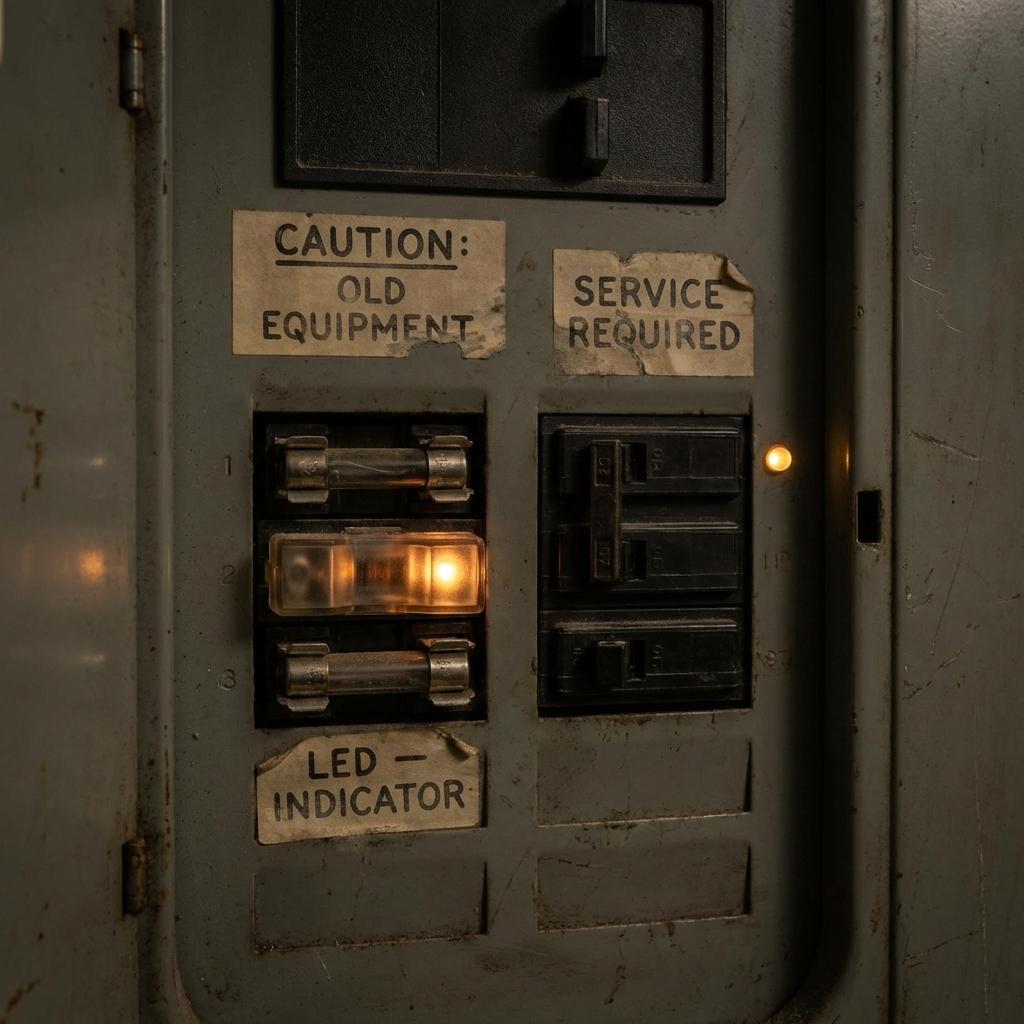
If your home still has a fuse box, it's likely 50+ years old and significantly undersized for modern electrical demands. Fuse panels:
- Typically provide only 30-60 amps of service
- Require physical fuse replacement when overloaded
- Are more prone to improper repairs (such as oversized fuses)
- May make it difficult or expensive to obtain homeowner's insurance
- Cannot support modern appliances, EV chargers, or home additions
6. You Have a Known Problematic Panel Brand
Several electrical panel brands manufactured in the mid-20th century have documented safety issues. If your Northern Virginia home has any of these panels, replacement should be a priority:
- Federal Pacific Electric (FPE) Stab-Lok: Breakers may fail to trip during overloads, creating extreme fire risk
- Zinsco/Sylvania: Breakers can melt to the bus bar, failing to trip and causing fires
- Pushmatic: Difficult to find replacement parts; breakers prone to failure
- Challenger: Some models have documented problems with breaker connections
Many homes in older Northern Virginia neighborhoods like Annandale, Springfield, and Burke were built during the era when these panels were common. If you are unsure what brand of panel you have, request an assessment from AJ Long Electric.
Did You Know: Federal Pacific Electric panels were installed in millions of homes between 1950 and 1980. Independent testing has shown that FPE Stab-Lok breakers fail to trip up to 60% of the time, making them one of the most dangerous panel brands still found in homes today. If you have an FPE panel, do not wait for symptoms to appear before scheduling a replacement.
7. You're Planning Major Electrical Additions
Even if your current panel is functioning well, you may need an upgrade to accommodate:
- Electric vehicle charger installation (typically requires 40-50 dedicated amps)
- Home additions or finished basements
- Hot tub or pool equipment
- Upgraded HVAC systems
- Home workshops with power tools
- Backup power hardware such as a transfer switch for a portable generator or a hardwired battery power station
Types of Electrical Panel Upgrades
Not all panel upgrades are the same. Understanding the different types will help you discuss options with your electrician:
Panel Replacement (Same Amperage)
If your current panel is obsolete or worn out but the existing service capacity is sufficient, a same-amperage replacement may be appropriate. Same-amperage panel work remains within the published $3,500–$7,500 panel range; the final scope depends on service equipment, grounding, access, permitting, and documented extras.
Service Upgrade (Increased Amperage)
The most common upgrade involves increasing your home's electrical service capacity. Typical upgrades include:
- 100 to 200 amps: The most common upgrade, ideal for modern family homes
- 200 to 400 amps: For larger homes or those with significant electrical demands like multiple EV chargers
- 60 to 200 amps: Common in older Northern Virginia homes that skipped the 100-amp era
Service upgrades require coordination with your utility company (Dominion Energy for most of Northern Virginia) and typically cost $3,500–$7,500 for a 200-amp project, depending on the scope of work required.
Heavy-Up Service
A "heavy-up" typically refers to upgrading service-entrance equipment in addition to the panel. A 200-amp project remains within the published $3,500–$7,500 range unless documented extras apply; a 400-amp service is quoted per project.
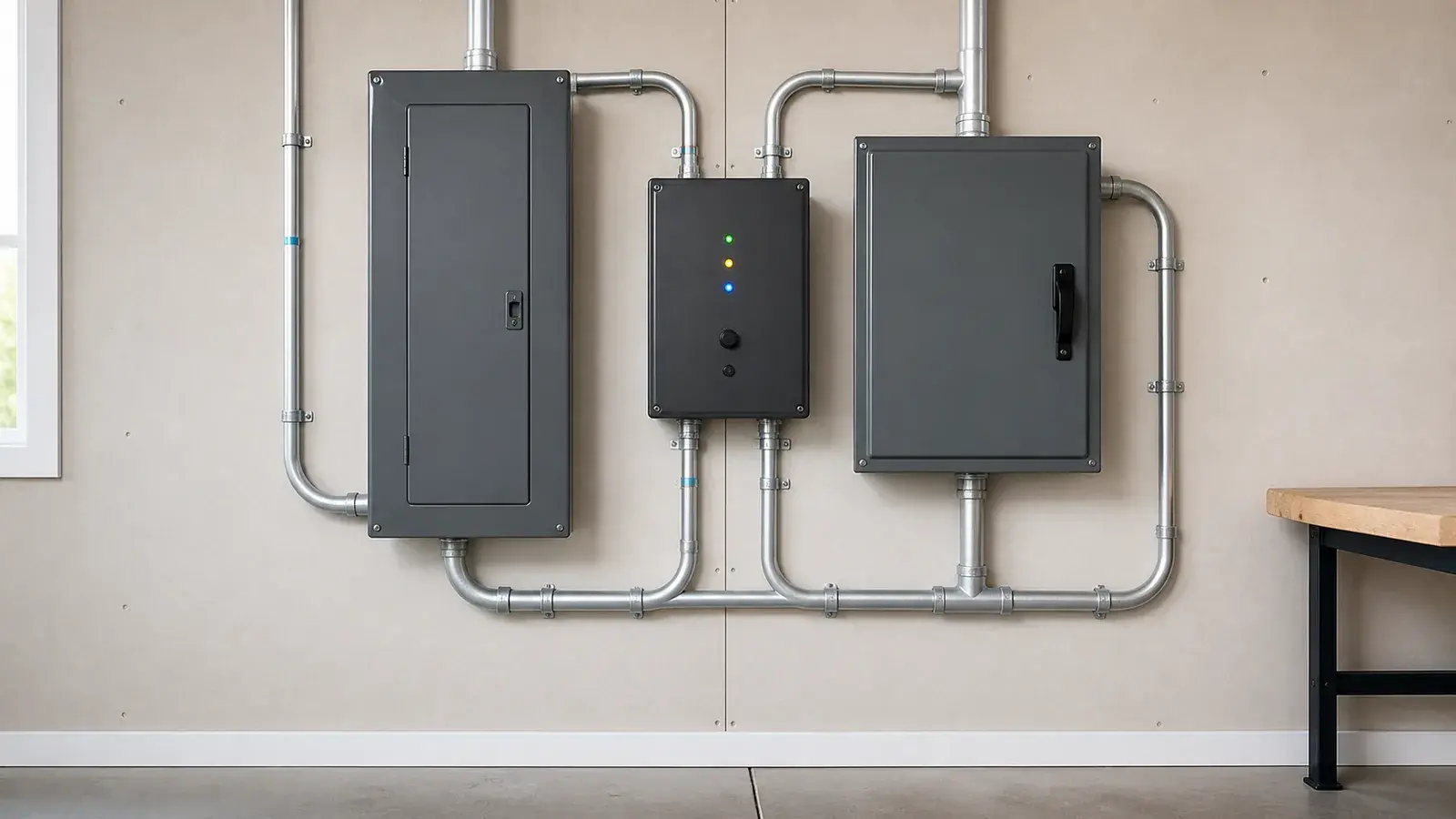
Subpanel Installation
If your main panel is in good condition and has sufficient amperage but lacks available circuit breaker slots, adding a subpanel can be an economical solution. Subpanels are particularly useful for:
- Home additions or detached garages
- Basement or attic conversions
- Workshop or home office electrical needs
Subpanel installation in Northern Virginia typically costs between $800 and $1,800, depending on size and location.
The Electrical Panel Upgrade Process
Understanding what happens during a panel upgrade helps you prepare and know what to expect. Here's the typical process for a service upgrade in Northern Virginia:
Step 1: Professional Assessment
A licensed electrician will evaluate your current panel, assess your home's electrical needs, and provide recommendations. This assessment should include:
- Inspection of current panel condition and brand
- Evaluation of existing wiring condition
- Assessment of current electrical load
- Discussion of future electrical needs
- Review of permit requirements
AJ Long Electric offers a free on-site panel assessment. The assessment documents the existing service, proposed scope, and any permit or utility coordination the project requires.
Step 2: Obtaining Permits
Electrical panel upgrades require permits in all Northern Virginia jurisdictions. The permit process varies by location:
- Fairfax County: Permits obtained through Land Development Services; inspections scheduled through the same office
- Arlington County: Permits through Inspection Services Division; typically faster turnaround than larger jurisdictions
- Loudoun County: Building and Development office handles permits; rural areas may have additional requirements
- Prince William County: Development Services department; similar requirements to Fairfax
- City of Alexandria: Code Administration handles permits; older historic district homes may have additional considerations
Our team prepares the required permit documents and coordinates with the authority having jurisdiction. The permit authority independently controls review, issuance, inspection scheduling, correction notices, and final approval.
Step 3: Utility Coordination
For service upgrades (not simple panel replacements), coordination with Dominion Energy is required. This involves:
- Scheduling temporary service disconnection
- Meter removal during the upgrade
- Possible service line upgrades on their end
- Reconnection after inspection approval
The utility coordination process can add 1-3 weeks to project timelines, so planning ahead is important.
Step 4: Installation Day
A typical panel upgrade takes one full day, though larger projects may require two days. Here's what happens:
- Power Disconnection: Utility disconnects power at the meter (or electrician disconnects at the panel for replacement-only jobs)
- Old Panel Removal: Existing panel, breakers, and associated hardware are carefully removed
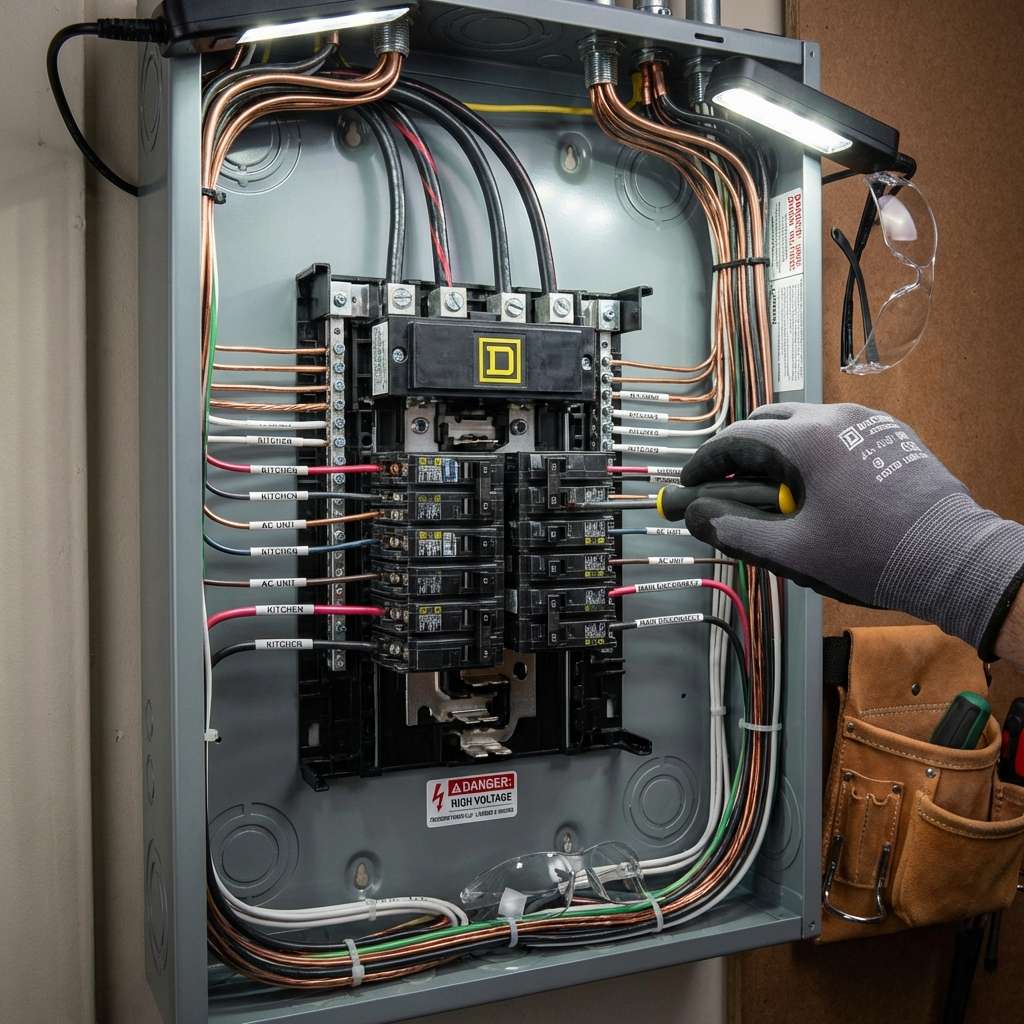
- New Equipment Installation: New panel, breakers, and any required service entrance equipment are installed
- Circuit Reconnection: All existing circuits are reconnected to the new panel
- Testing: Complete testing of all circuits and breakers
- Power Restoration: Utility reconnects power and installs new meter
Plan for your home to be without power for 4-8 hours during the upgrade. Schedule around refrigerated items. For medical equipment, confirm any temporary-power arrangement with the device manufacturer and maintain the emergency plan recommended by the care team; optional backup power does not guarantee uninterrupted operation.
Step 5: Inspection
After installation, a county electrical inspector will verify the work meets code requirements. Common inspection points include:
- Proper panel installation and grounding
- Correct wire sizing and connections
- Appropriate circuit breaker ratings
- Required labeling and documentation
- GFCI and AFCI protection where required
AJ Long Electric coordinates the required inspection after installation. If the inspector issues a correction notice, we review it, identify responsibility under the written scope, complete any correction attributable to our work, and coordinate re-inspection. The authority having jurisdiction makes the final inspection decision.
Electrical Panel Upgrade Costs in Northern Virginia
Understanding the published planning range helps you budget appropriately and evaluate the written scope:
Basic Panel Replacement (Same Amperage)
- Planning Range: $3,500–$7,500
- Includes: New panel, breakers, permits, inspection
- Timeline: 1 day plus permit/inspection scheduling
Service Upgrade: 100 to 200 Amps
- Planning Range: $3,500–$7,500
- Includes: New 200-amp panel, meter base upgrade, service entrance cable, utility coordination, permits, inspection
- Timeline: 2-4 weeks including utility coordination
Service Upgrade: 200 to 400 Amps
- Planning Range: Quoted per project after load, service-equipment, and utility review
- Includes: 400-amp service equipment, transformer coordination (if needed), extensive utility work
- Timeline: 4-8 weeks depending on utility requirements
Factors That Affect Cost
Several factors can increase panel upgrade costs:
- Panel Location: Panels in difficult-to-access locations or those requiring relocation cost more
- Wiring Condition: If existing wiring needs repair or replacement, costs increase
- Home Age: Older homes may have code violations that must be addressed during the upgrade
- Service Entrance Type: Overhead versus underground service affects costs
- Additional Circuits: Adding new circuits during the upgrade is efficient but increases cost
Frequently Asked Questions
How long does an electrical panel upgrade take?
The on-site work window is project-specific. Existing equipment condition, service routing, utility requirements, access, permit review, inspection scheduling, and any correction items determine both the installation duration and total calendar schedule.
Will I need to be home during the upgrade?
Yes, someone over 18 should be present or the property should be accessible. You'll need to be home at the start of the project to provide access and at the end to verify completion and receive documentation.
Will the upgrade affect my homeowner's insurance?
Yes, typically in a positive way. Upgrading from a fuse box or problematic panel brand often results in lower insurance premiums. Some insurance companies require panel upgrades as a condition of coverage for older homes. We provide documentation that you can submit to your insurance company.
Can I upgrade my panel myself?
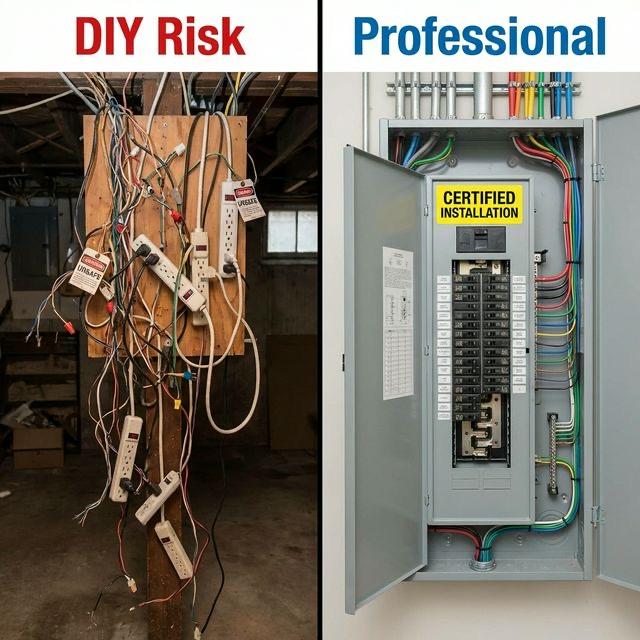
Electrical panel work requires permits and must be performed by a licensed electrician in Virginia. DIY panel work is illegal, extremely dangerous, and will void your homeowner's insurance. The panel carries your home's full electrical load and any mistakes can result in fires or electrocution.
Do I need to upgrade my panel for an EV charger?
It depends on the home's documented load, panel condition, service capacity, available breaker space, and selected charging current. A load calculation and site assessment determine whether the existing service supports the charger, needs load management, or needs an upgrade.
What's the difference between 200-amp and 400-amp service?
For most single-family homes in Northern Virginia, 200-amp service is more than adequate. 400-amp service is typically needed for very large homes (5,000+ square feet), homes with multiple EV chargers, homes with large shops or equipment, or properties with detached buildings requiring significant power.
Why Choose AJ Long Electric for Your Panel Upgrade
When it comes to your home's electrical system, experience and expertise matter. Here's why Northern Virginia homeowners trust AJ Long Electric for panel upgrades:
- Local Expertise: We understand Northern Virginia's specific code requirements, utility procedures, and permit processes
- Licensed and Insured: Our electricians are fully licensed in Virginia and carry comprehensive insurance
- Transparent Pricing: We provide detailed written estimates with no hidden fees or surprise charges
- Quality Materials: We install only premium panels from trusted manufacturers like Square D, Siemens, and Eaton
- Warranty Protection: Our work is backed by a comprehensive warranty in addition to manufacturer warranties
- Permits Handled: We manage the entire permit and inspection process
Schedule an On-Site Panel Assessment
Whether you're experiencing warning signs, planning for future electrical needs, or simply want peace of mind about your home's electrical system, AJ Long Electric is here to help. We serve homeowners throughout Fairfax County, Arlington, Loudoun County, Prince William County, and the entire Northern Virginia region.
Call (571) 444-6886 to schedule an on-site electrical panel assessment at no charge. Our team will evaluate the existing system, discuss your goals, and document the proposed electrical, permit, and utility-coordination scope.