Flickering lights, a breaker that trips every week, a panel door that feels warm to the touch -- each symptom your electrical system shows has a specific meaning. Rather than a checklist, this guide takes a diagnostic approach: what you're seeing, what it usually means in a Northern Virginia home, and how urgently you need to act on it.
Key Takeaways
- Repeated breaker trips on one circuit point to an overloaded or faulty circuit; trips across many circuits point to a panel or capacity problem
- Lights that dim when big appliances start signal voltage sag -- a capacity or connection issue worth a professional look
- A hot panel door, buzzing, or any burning smell means overheating connections: call a licensed electrician the same day
- When more capacity is the fix, a 200-amp panel upgrade runs $3,500-$7,500; the on-site and total schedule depend on service conditions, access, permit, utility, and inspection timing
Is a Tripping Breaker a Circuit Problem or a Panel Problem?
A breaker that trips repeatedly is interrupting power on purpose -- it has detected an overload, a short circuit, a ground fault, or its own internal wear. If the same breaker trips whenever a specific appliance runs, that circuit is overloaded or faulty. If different breakers trip across the house under normal use, your panel is likely running out of capacity for the way you live -- a system-level problem, not a single bad circuit.
Need a Panel Upgrade?
Outdated or overloaded electrical panels can present safety and capacity concerns. Our team evaluates 200-amp upgrades throughout Northern Virginia and confirms scheduling after reviewing the property. Call (571) 444-6886 to get started.
Decoding the Trip Pattern
- Same breaker, same appliance: an overloaded circuit -- too much load sharing one run of wire
- Trips the instant you reset it: a short circuit or ground fault -- stop resetting and call an electrician
- Random trips across several circuits: a panel at or past its capacity, or aging breakers that have become sensitive
- A breaker that feels hot or won't stay reset: a failing breaker or a loose connection at the panel
Why Do My Lights Flicker or Dim When an Appliance Starts?
Lights that dim when the air conditioner, microwave, or dryer kicks on are showing you voltage sag: a big motor draws a surge of current at startup, and a panel without enough headroom lets the whole house feel it. A barely perceptible flicker on AC startup is common. Noticeable, repeated dimming means your service is running near its limit -- or a connection somewhere between the meter and your lights is loose, which is the more dangerous possibility and worth ruling out professionally.
Quick Test: Turn on your air conditioner or microwave and watch the lights in nearby rooms. If they noticeably dim or flicker, your panel is likely struggling with the load. Make a note of which appliances cause this and share that information with your electrician during your assessment -- it helps pinpoint the problem faster.
Why Is My Electrical Panel Warm, Buzzing, or Humming?
A faint hum from a panel under heavy load can be normal, and a single breaker slightly warm to the touch is not unusual. What is never normal: a panel door that feels hot, a persistent loud buzz, or crackling and sizzling sounds. Those point to loose or corroded connections arcing inside the panel -- resistance that turns into heat exactly where you don't want it. Arcing connections degrade quickly and are a leading precursor to panel fires, so treat these symptoms as a same-day call.
What Does a Burning Smell at the Panel Mean?
A fishy, acrid, or burnt-plastic smell near the panel means insulation or a component is overheating right now -- this is the one symptom that is always an emergency. Brown or black scorch marks around breakers or on the panel door tell the same story after the fact. Shut off the main breaker if you can do so safely, and call a licensed electrician immediately rather than waiting to see if it comes back.
One Circuit or the Whole House? How to Narrow It Down
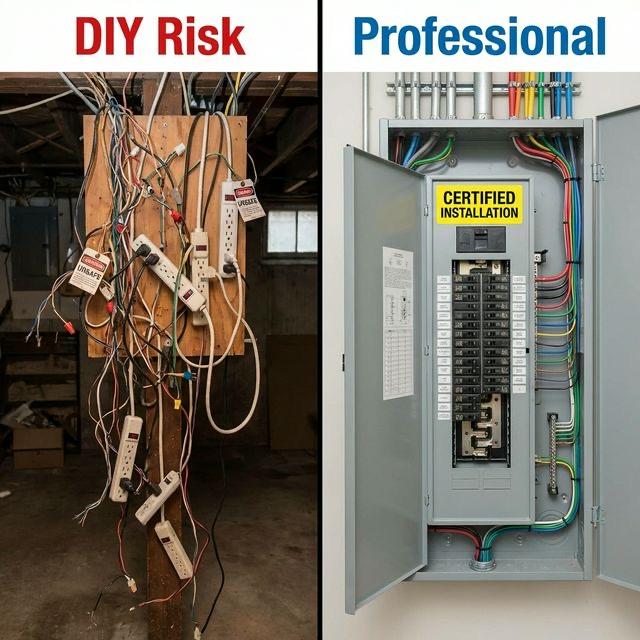
Before you assume the panel is the problem, note where the symptoms live. Trouble confined to one room or one breaker -- an outlet that stopped working, one circuit that trips -- usually means a circuit-level fault: a loose device, damaged wire, or overloaded run. Symptoms that show up everywhere -- house-wide dimming, trips on unrelated circuits, a panel that's warm or noisy -- point at the panel or the service itself. Homes still relying on power strips and extension cords in every room usually have both problems at once: too few circuits fed by too small a panel.
Reading the Panel Itself: Fuses, Federal Pacific, and Zinsco Labels
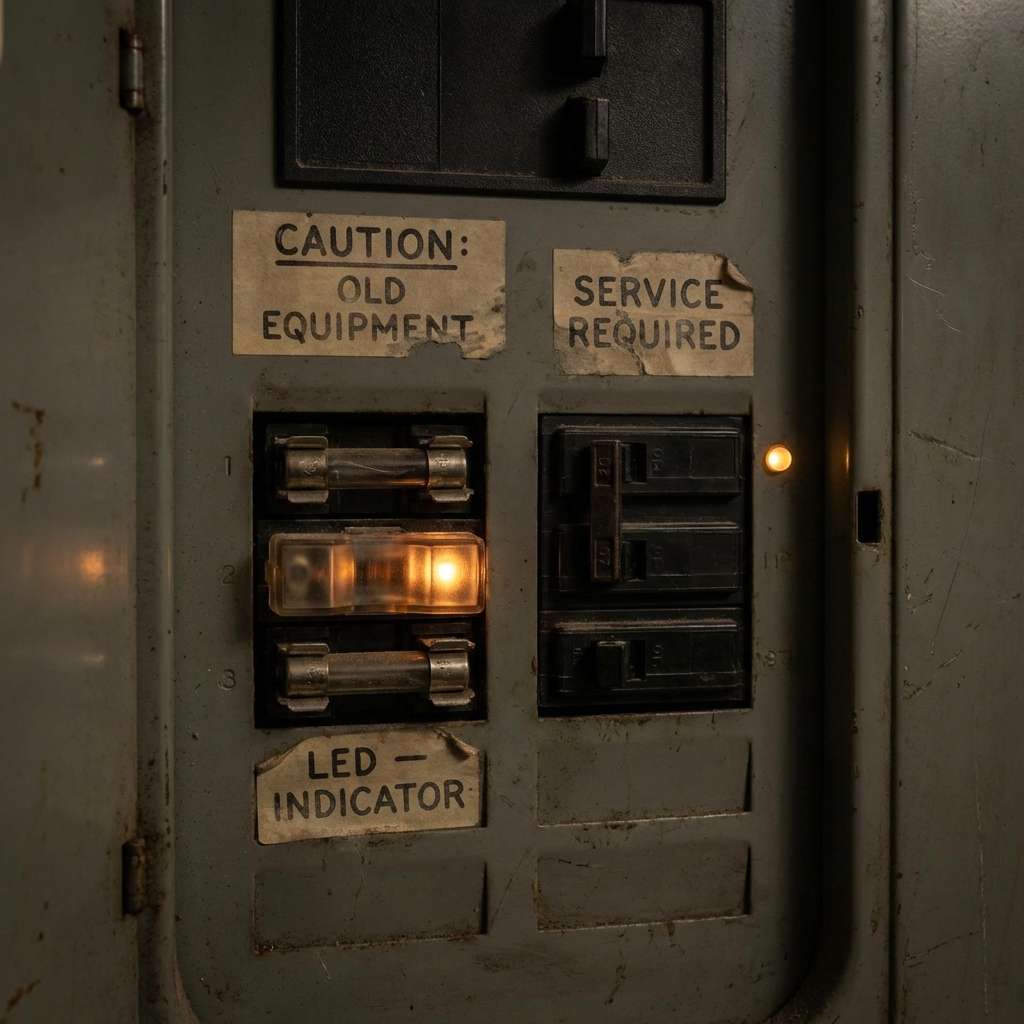
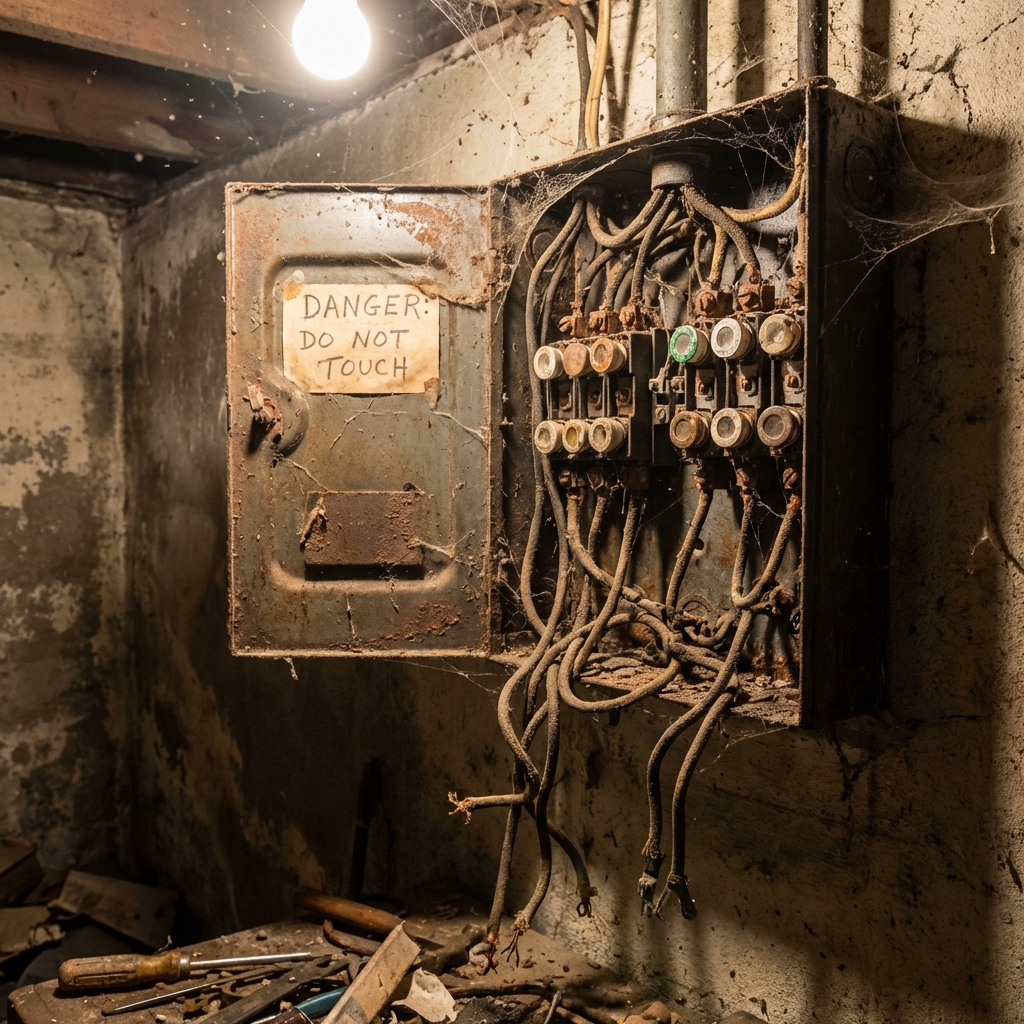
Sometimes the hardware is the symptom. A fuse box instead of breakers dates the system to an era of far smaller electrical loads, and certain breaker panels carry known defects regardless of how they're behaving today:
- Federal Pacific Electric (FPE) panels: Known to fail to trip during overloads
- Zinsco panels: Breakers can melt to the bus bar
- Pushmatic panels: Difficult to find replacement parts
Important: Not sure what brand your electrical panel is? Open the panel door (the outer cover, not the inner dead front) and look for a manufacturer label. If you see the names Federal Pacific, Stab-Lok, Zinsco, or Sylvania, contact a licensed electrician for an evaluation as soon as possible. These panels are considered significant fire hazards by industry experts.
Symptom Triage: Watch, Schedule, or Call Now
- Call now (same day): burning smell, scorch marks, hot panel door, sizzling or crackling, a breaker that trips instantly on reset
- Schedule an assessment (this month): repeated trips across circuits, regular dimming when appliances start, a persistent buzz, an FPE or Zinsco label, any fuse box
- Watch and plan: a single circuit that occasionally trips under a known heavy load, or a panel with no open slots when you're planning an EV charger, hot tub, or HVAC upgrade
What a Panel Upgrade Fixes -- and What It Costs
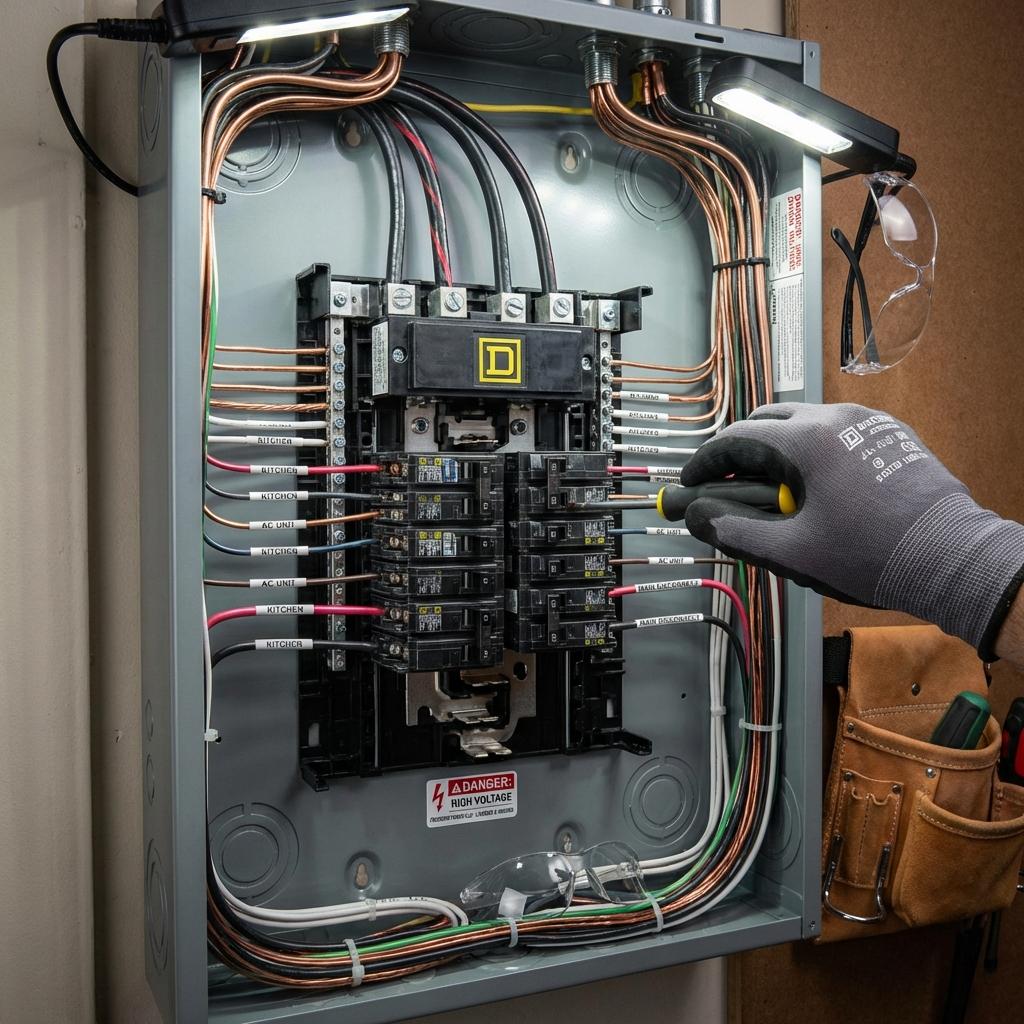
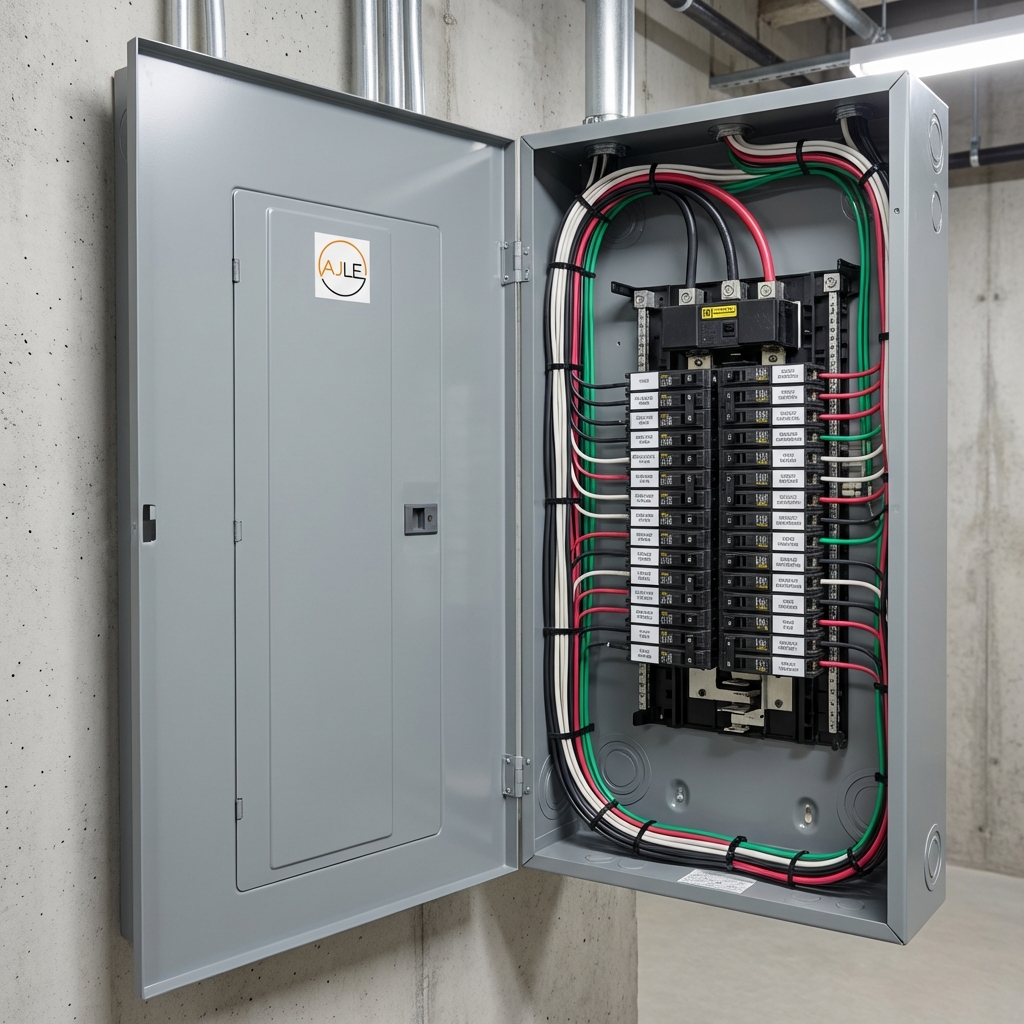
When the diagnosis is insufficient capacity rather than a single bad circuit, the documented scope may call for a panel or service upgrade. A 200-amp panel upgrade in Northern Virginia runs $3,500-$7,500 and includes permit, fireman's disconnect, basic surge protection, and Dominion coordination. Existing equipment condition, routing, access, utility requirements, permit review, inspection scheduling, and correction items determine the project timeline. A load calculation verifies whether the final design adds appropriate headroom for an EV charger or future loads.
- Coordinating with the power company to disconnect service
- Removing the old panel
- Installing the new panel and breakers
- Reconnecting all circuits
- Power company reconnection
- County inspection
Schedule Your Panel Assessment
Not sure what your symptoms add up to? AJ Long Electric offers on-site electrical panel assessments throughout Northern Virginia. Estimates are free. The $99 dispatch fee applies only when we arrive prepared to complete a project, provide the price on site, and you decline the work. It covers travel and preparation. It is waived when you accept the on-site quote and for active members. It is not charged for a scheduled estimate visit. The licensed electrical team documents observed conditions and provides property-specific recommendations.