
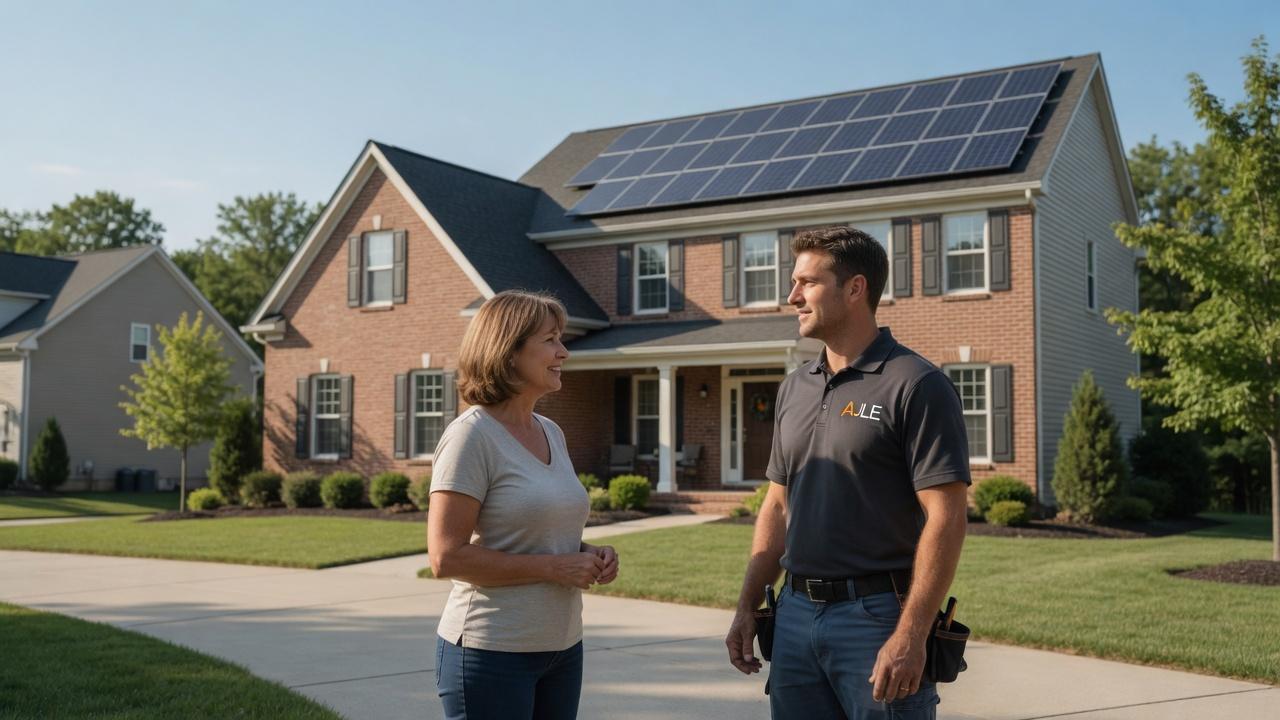
Residential Solar Installation in Northern Virginia
AJ Long Electric installs solar. The array, the interconnection, and the electrical system behind it are one project —...
6 min read
Read 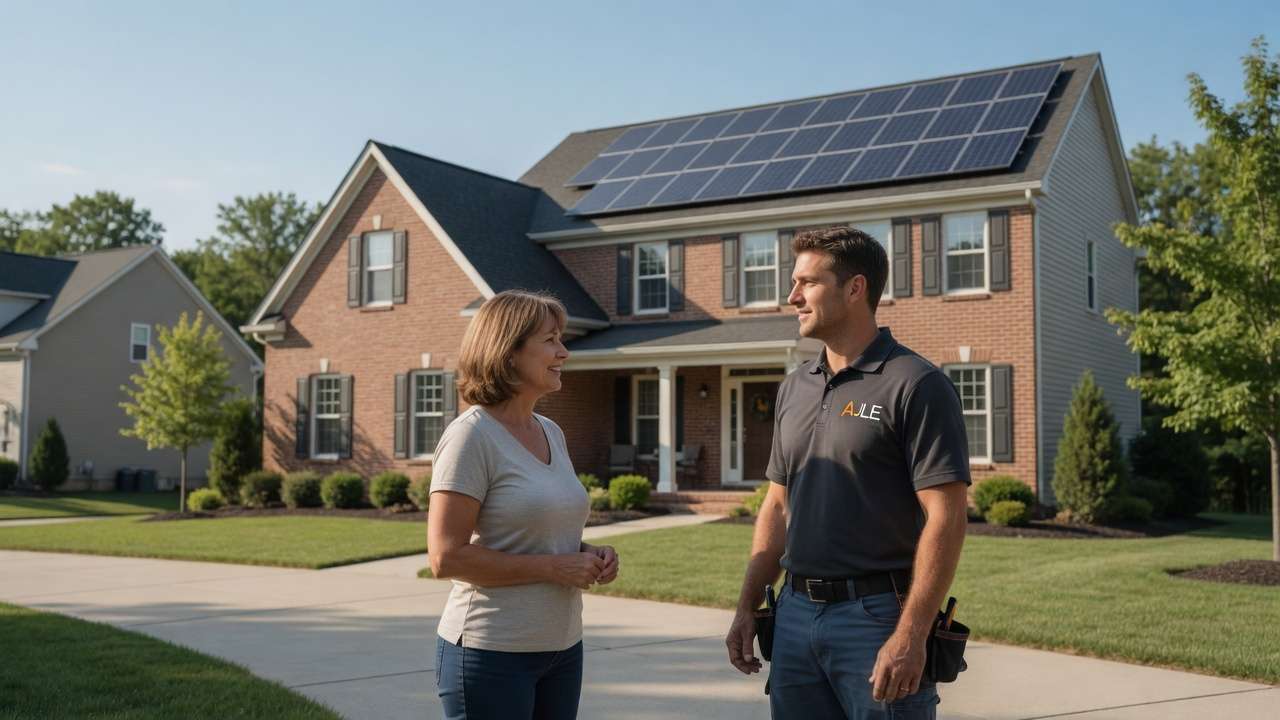
AJ Long Electric provides professional residential solar installation services in Arlington, VA. Our licensed electricians have served Arlington County for over four decades, delivering safe, code-compliant electrical work for homeowners and businesses. With deep experience across every type of residential electrical project, we bring both technical expertise and local knowledge to every job we complete in the Arlington area. In Arlington specifically, we most often work on 1920s-1940s bungalows and post-war Capes, where fused 60A panels and ungrounded two-wire circuits in Lyon Village and Ashton Heights are common — a backdrop that shapes how we approach residential solar installation here.
In neighborhoods like Clarendon, Ballston, Rosslyn, Crystal City, Pentagon City, near landmarks such as The Pentagon, Arlington National Cemetery, Reagan National Airport, we have completed countless residential solar installation projects. Our familiarity with local building codes, inspection requirements, and the common electrical challenges found in Arlington County homes ensures your project is completed correctly the first time. On the ground in Arlington, the issue we run into most is knob-and-tube and two-wire circuits surfacing during Clarendon and Cherrydale renovations. Because the work is permitted through the Arlington County Inspection Services Division, we pull the permit, schedule the inspection, and verify grounding to NEC 250 before we close out — and Arlington's fast 1-2 day permit turnaround keeps Arlington projects on schedule.
Our licensed electricians serving Arlington County
When you choose AJ Long Electric for residential solar installation in Arlington, you are partnering with a team that understands your community. We have been serving Arlington County since 1996, building relationships with homeowners in Clarendon, Ballston, Rosslyn, Crystal City, Pentagon City, and earning a reputation for excellence near The Pentagon, Arlington National Cemetery, Reagan National Airport. Our electricians are familiar with the unique electrical challenges in Arlington, including Knob-and-tube wiring in pre-1940 homes requiring complete rewire, High-rise condominium panel upgrades with space constraints, Historic district compliance for exterior electrical work. This local expertise means faster service, accurate estimates, and installations that meet both your needs and local code requirements.
Licensed & Insured
Since 1996
5-Star Rated
Listed modules, inverters, and interconnection — not a referral to a solar-only shop.
The panel, EV circuit, battery, and array are planned together so the can is not full the day the solar shows up.
A load calculation decides whether the existing service can accept generation plus the house load.
Permit, inspection, and interconnection steps for the serving utility are confirmed before equipment is ordered.
The federal 25D 30% residential credit ended for new expenditures after December 31, 2025. We do not sell a credit we cannot deliver.
AJ Long Electric installs residential solar. The array, the interconnection, and the electrical system behind it are one project: service capacity, busbar rating, grounding, inverter or backfeed connection, and how the system will share a panel with an EV charger or a home battery. We confirm the roof and electrical conditions, write the scope, pull the electrical permit path, and coordinate utility interconnection for the address. Panel upgrades, Level 2 charging, and wall-pack batteries are quoted in the same visit when they belong in the design. Roofing or structural work outside our electrical and array scope is identified in the proposal instead of buried in a later change order. In Arlington, we have seen how knob-and-tube wiring in pre-1940 homes requiring complete rewire affects homeowners. That is why we take the time to assess your entire electrical system and recommend solutions that address both immediate needs and long-term reliability. Every residential solar installation project we complete in Arlington County includes a thorough inspection, detailed documentation, and our commitment to your complete satisfaction.
| Typical cost in Arlington | Quoted per projectArlington's fast 1-2 day permit turnaround keeps Arlington projects on schedule. |
|---|---|
| Typical timeline | Quoted per project after site review |
| Permit authority | Arlington County Inspection Services DivisionWe pull the permit and schedule the Arlington County inspection on your behalf. |
| Applicable code standard | National Electrical Code (NFPA 70), as adopted in VA |
| Most common local condition | Knob-and-tube and two-wire circuits surfacing during Clarendon and Cherrydale renovations. |
Permit fees, scope, and existing-condition surprises affect final pricing. Verify current requirements with the Arlington County Inspection Services Division and review the NFPA 70 (National Electrical Code).
Roof, service size, busbar, existing EV or battery loads, and the interconnection method are documented.
Array, electrical, panel or battery work, and any excluded roofing or structural items are itemized.
Electrical permit and interconnection requirements are confirmed for the address before equipment is ordered.
Approved array and electrical scope is installed to the listed equipment instructions.
We coordinate the electrical inspection and the utility permission-to-operate steps in the defined scope.
Yes. We install residential solar and the electrical interconnection that makes it legal: panel capacity, grounding, inverter or backfeed connection, permit path, and utility coordination for the address. Roofing or structural work outside that scope is called out in the written proposal.
Array pricing is quoted per project after a site and electrical review — roof, service size, inverter type, and whether a panel upgrade or battery is in the same job. A 200-amp panel upgrade that the array requires typically falls in the $3,500-$7,500 band and is itemized separately.
The Section 25D residential clean energy credit ended for new qualifying expenditures after December 31, 2025. AJ Long Electric does not provide tax advice. Confirm any remaining commercial or third-party-owned credit path with a qualified tax professional.
Yes. That is the point. One load calculation, one permit path, one crew that already does the panel and the charger. Solar-ready panel work is the electrical preparation inside that job when the array is staged.
No. This offer is residential. Light-commercial electrical is a separate service and does not include large commercial arrays.
Arlington homes are mostly 1920s-1940s bungalows and post-war Capes, so we frequently encounter fused 60A panels and ungrounded two-wire circuits in Lyon Village and Ashton Heights. The most common situation we address is knob-and-tube and two-wire circuits surfacing during Clarendon and Cherrydale renovations. Permits for this work go through the Arlington County Inspection Services Division, and Arlington's fast 1-2 day permit turnaround keeps Arlington projects on schedule. That local knowledge means AJ Long Electric arrives prepared for the conditions specific to Arlington rather than treating it like any other Arlington County job.
Residential Solar Installation costs in Arlington typically range from Quoted per project depending on scope and complexity. AJ Long Electric provides free written estimates for all residential solar installation projects in Arlington County. Call (571) 444-6886 for an accurate quote specific to your home.
Most residential solar installation projects in Arlington County require an electrical permit from the Arlington County building department. AJ Long Electric handles all permit applications and scheduling of required inspections as part of our service, ensuring your project meets all Virginia electrical codes.
Residential Solar Installation projects in Arlington typically take Quoted per project after site review to complete. Timelines can vary based on the scope of work, permit approval speed in Arlington County, and any unforeseen conditions found in your home's existing electrical system.
AJ Long Electric has served the region since 1996. We are a licensed, insured electrical contractor led by a master electrician, and we define the scope, access assumptions, exclusions, and project-specific coordination before authorized work begins.
Scheduling depends on the current workload and the project scope. Call (571) 444-6886 or request an appointment online and we will confirm the earliest available time for your Arlington address.
Typical Price Range: Quoted per project
Contact us for a free estimate tailored to your Arlington home.
Ready to discuss residential solar installation for your Arlington home? Contact AJ Long Electric today at (571) 444-6886 for a free consultation. We proudly serve all of Arlington County, including the neighborhoods of Clarendon, Ballston, Rosslyn, Crystal City, Pentagon City. Our team is standing by to answer your questions and schedule a convenient appointment.
We also provide professional residential solar installation services in these nearby communities.
Expert Resources
Guides our licensed electricians point residential solar installation customers to most often.
AJ Long Electric installs solar. The array, the interconnection, and the electrical system behind it are one project —...
A solar-ready panel is an electrical condition — documented capacity and backfeed space — not a roof full of modules....
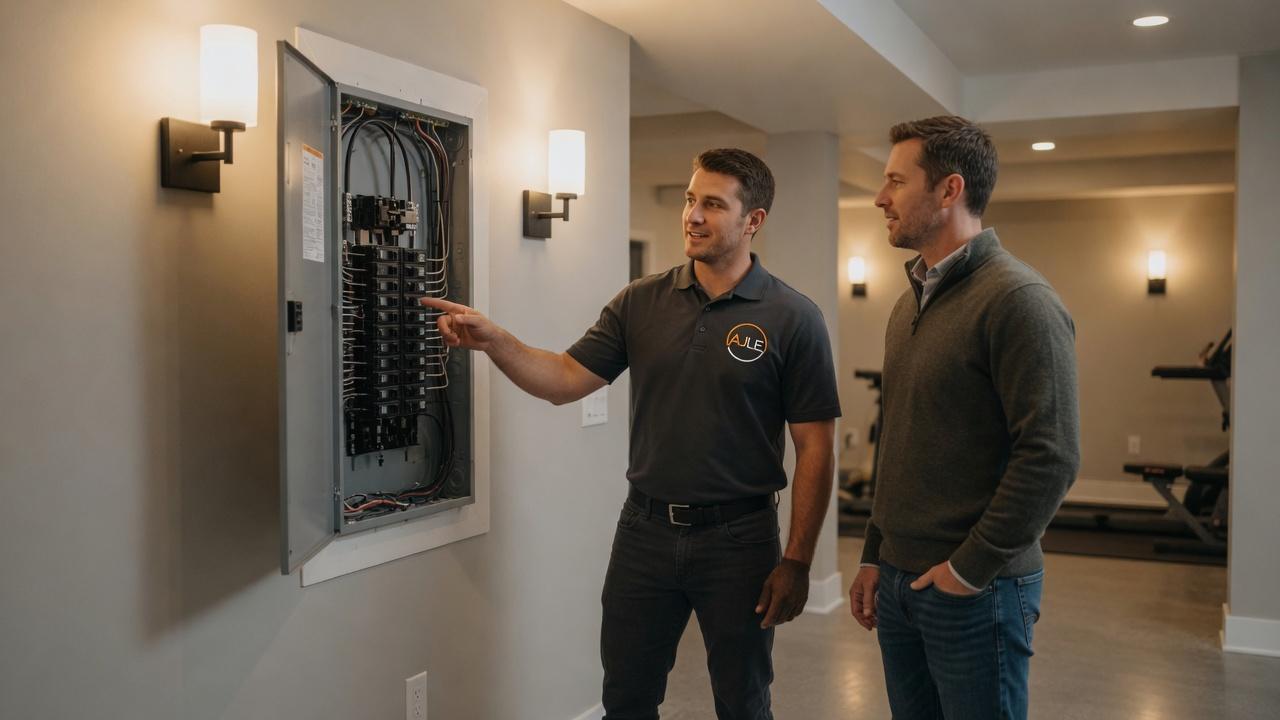
Utility interconnection is paperwork plus a panel that can accept generation. AJ Long Electric does the electrical half...
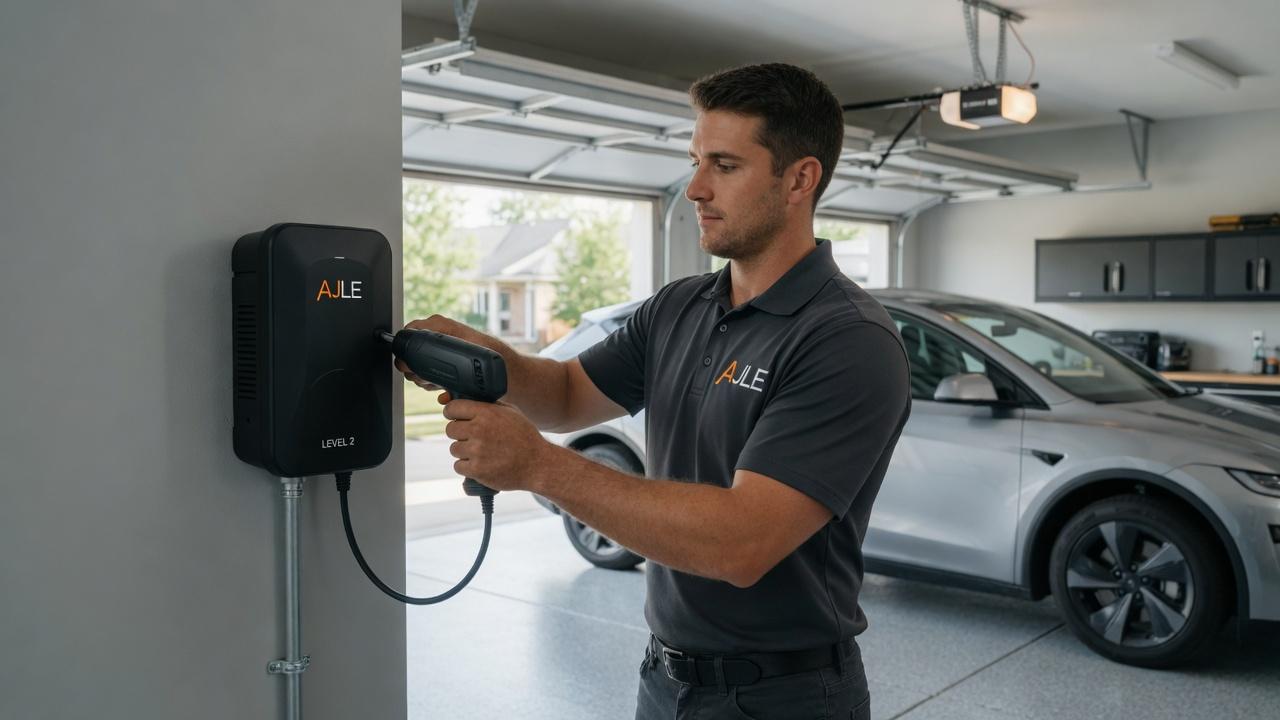
The charger is the easy part. The panel math for a future battery and solar backfeed is what you want decided on the...
Guides
Expert electrical guides to help you make informed decisions.
A solar-ready panel is documented busbar capacity, backfeed space, and grounding — not modules on the roof. Plan it with EV and battery loads so you do not replace the panel twice.
A comprehensive guide to electrical panel upgrades covering signs you need an upgrade, the process, costs, and what to expect.
Listed EcoFlow, Bluetti, and Anker SOLIX wall packs versus a portable generator hookup. What the electrical scope includes, what it costs, and when a smart home panel is worth it.
Navigate the electrical permit process in Northern Virginia with confidence. Learn requirements for Fairfax County, Arlington, Alexandria, and surrounding areas.
Related Services
Explore our other professional electrical services.
Property-specific electrical panel replacement and service-capacity planning, with load calculations, utility coordination, labeling, and permit-path confirmation.
Learn MoreListed home battery and wall-pack installation with panel integration, transfer equipment, circuit selection, and permit-path confirmation.
Learn MoreProperty-specific Level 2 EV charger installation with panel-capacity review, a dedicated circuit, equipment connection, testing, and permit-path confirmation.
Learn MoreSmart panel and smart-breaker installation for circuit-level monitoring, load management, and battery or EV coordination.
Learn More