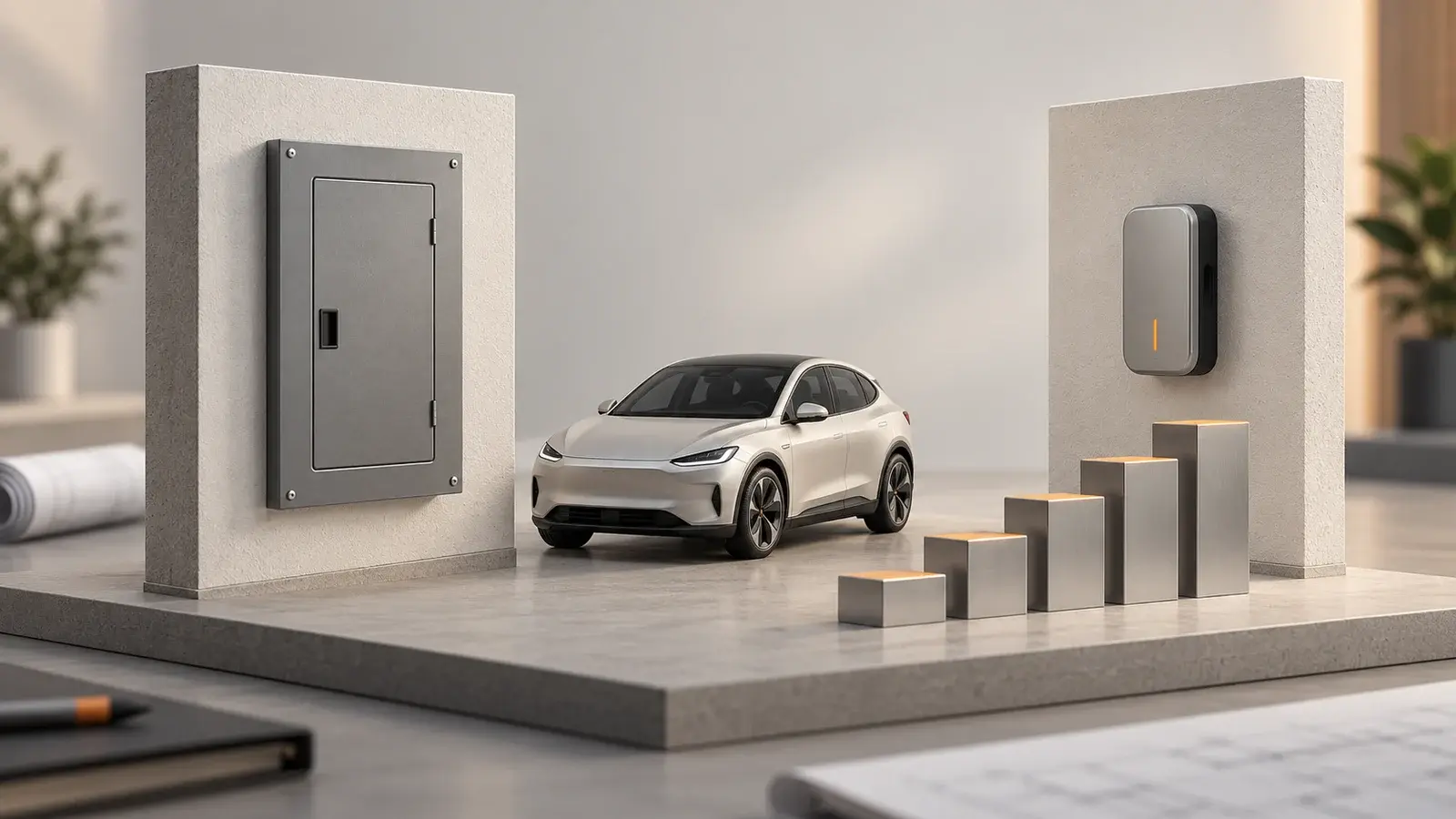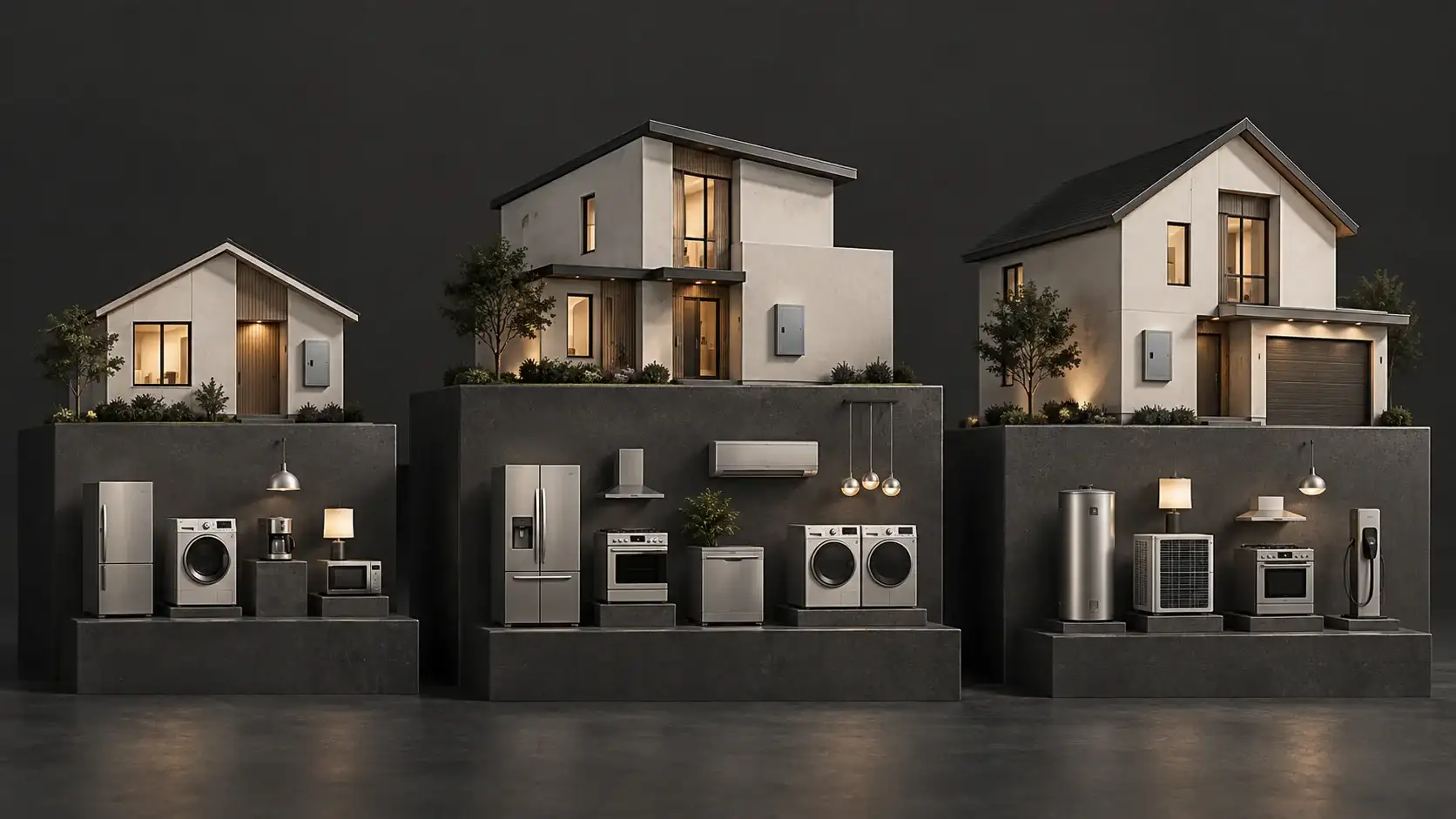

Service amperage describes an electrical supply limit; it is not a home-size rating. Two similar houses can have very different demands because of heating, cooking, water heating, vehicles and how equipment is controlled. Compare 100-, 200- and 400-amp options using those details rather than a square-footage cutoff.
Keep service capacity, panel rating and circuit space separate
The panel’s label, main protective device, service conductors and utility arrangement all matter. A larger number printed on one component does not prove the entire service has that capacity. Multiple panels also do not establish the service rating just by adding the numbers on their breakers.
Circuit positions are another question. A full panel may need a suitable distribution change, while a panel with empty spaces may still have insufficient capacity for a proposed load. An electrician should identify which constraint exists before recommending equipment.
| Service being considered | Useful assessment | Design detail to confirm |
|---|---|---|
| Existing 100 amps | Review actual loads, equipment condition and proposed additions | Charging output and any required load management |
| 200 amps | Check the complete design and room for defined future loads | Capacity for the actual combination of proposed loads |
| 400-amp-class service | Confirm the need, utility arrangement and distribution design | Verified utility supply and service-equipment arrangement |
Build an equipment list before choosing a number
Record existing and proposed heating, water heating, cooking, laundry, vehicle charging, pool or spa equipment and workshop loads. Use model specifications where available. Include auxiliary electric heat and equipment in detached buildings; those can be missed in a room-by-room description.
Need a Panel Upgrade?
Outdated or overloaded electrical panels can present safety and capacity concerns. Our team evaluates 200-amp upgrades throughout Northern Virginia and confirms scheduling after reviewing the property. Call (571) 444-6886 to get started.
Separate committed projects from possibilities. “EV arriving next month” and “maybe a second EV in five years” should both be discussed, but they need not lead to the same immediate scope. Explain your charging hours and driving needs as well as the charger’s advertised maximum output.
A qualified load assessment applies the appropriate method to the property. Adding every breaker rating or dividing a monthly electricity bill by hours is not a substitute. Those shortcuts confuse energy use, protective-device ratings and electrical demand.
When keeping 100 amps may be an option
If the installation is suitable and the approved load assessment supports the proposed equipment, a smaller existing service may remain usable. EV charging can sometimes be designed around a lower fixed output or compatible load management. The choice must still meet the household’s charging needs and installation requirements. See 100-amp vs 200-amp service for the EV charger load math.
That does not mean every 100-amp property can avoid an upgrade. Equipment defects, supply constraints or substantial new loads can make service work appropriate. Ask for the specific finding behind the recommendation.
What to evaluate before moving to 200 or 400 amps
A service upgrade can provide additional capacity, but its scope can extend beyond the indoor panel. Meter equipment, service conductors, grounding, location and utility infrastructure may need review. A 400-amp-class design may distribute power through multiple panels; the exact equipment and permitted loading must be confirmed rather than inferred from a nickname.
Check the serving utility from your account and confirm its requirements early. For local permit context, Fairfax County lists residential service and equipment work in its electrical permit guidance. The process for another jurisdiction may differ.
Compare usable outcomes as well as price
Ask what each proposal supports: the equipment being installed now, agreed future loads, available circuit positions and any operating limits. If a management system is proposed, document its compatible equipment, configured limits and behavior when communication is unavailable. A preferred overnight charging schedule alone is not automatic load control.
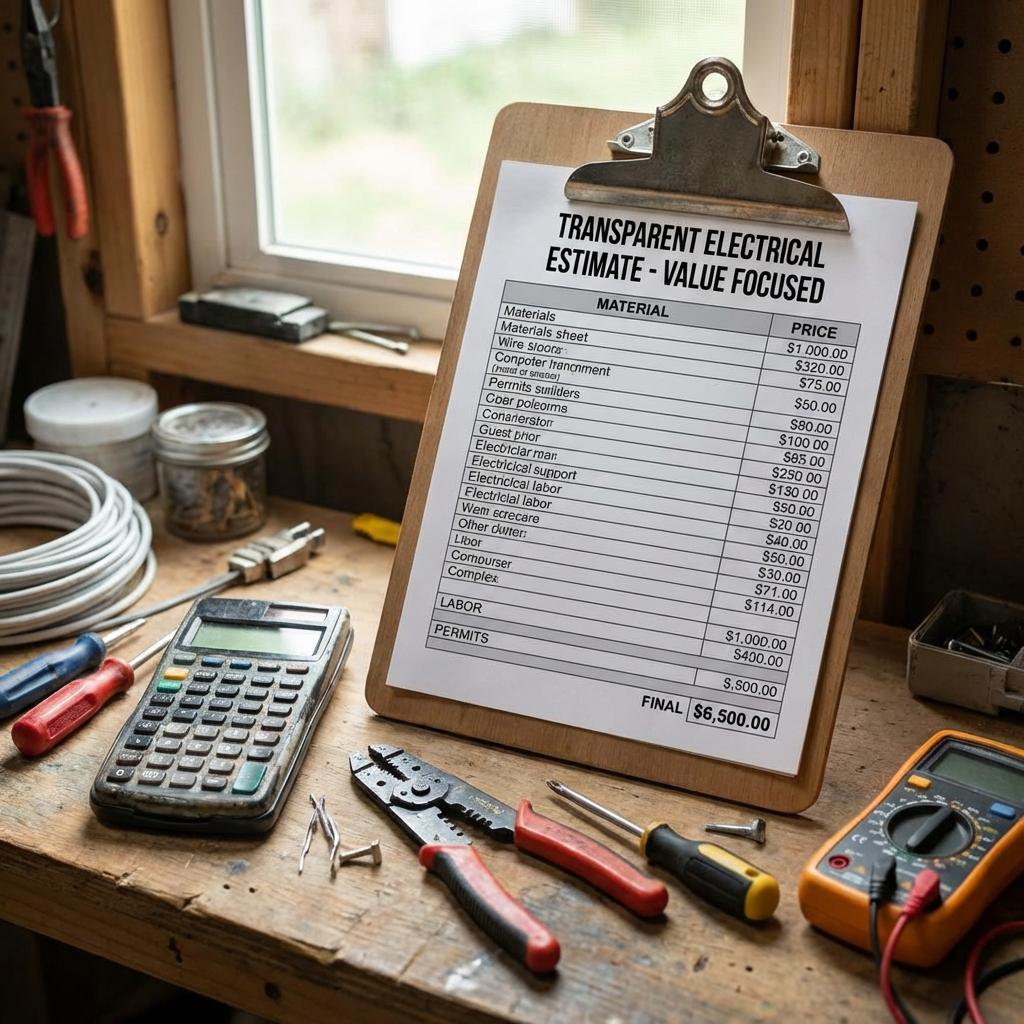
Our public range for a typical 200-amp upgrade is $3,500–$7,500. A 400-amp-class project is quoted individually after the utility and installation scope are known. Avoid comparing a panel-only price with a complete service upgrade.
See what a heavy-up includes and use the two-EV planner to explore daily charging needs. The planner does not determine household electrical capacity. Bring those needs and safe equipment photos to a free project estimate.