
A Level 2 EV charger is a substantial continuous load, so every home-charging design starts with a load calculation and panel review. If a 200-amp upgrade is required, it uses the $3,500–$7,500 public band; the project schedule depends on site, utility, permit, inspection, equipment, and access review.
Key Takeaways
- Level 2 EV charging requires a dedicated 240V circuit sized to the configured EVSE.
- A load calculation determines whether your existing panel can handle the new circuit or needs an upgrade first.
- A Level 2 circuit and hookup is $1,200–$3,500 typical; only long, detached, outdoor, trenched, or otherwise complex routes reach $1,200–$4,500. EVSE hardware is separate.
- If a panel upgrade is needed, a 200-amp upgrade is $3,500–$7,500 and includes the defined permit and coordination scope.
Do You Need an Electrical Panel Upgrade for EV Charging?
You need a panel upgrade for EV charging only when a load calculation shows your service can't absorb a 30-60 amp charging circuit -- most often on 100-amp service, in a physically full panel, or in a two-charger household. A 200-amp panel with spare capacity handles a Level 2 charger without an upgrade, and load management devices can often avoid the upgrade even on smaller services.
Ready to Install a Home EV Charger?
Our licensed electricians evaluate panel capacity, circuit routing, equipment requirements, and permit needs for home EV charging. Call (571) 444-6886 or request an estimate online.
EV Charger Power Requirements
First, let's understand what power EV chargers actually need:
Level 1 Charging (Standard Outlet)
- Uses existing 120V, 15-20 amp outlet
- Provides 3-5 miles of range per hour
- No electrical work needed
- Best for plug-in hybrids or minimal daily driving
Level 2 Charging (Dedicated Circuit)
- Requires 240V circuit
- Common options: 30, 40, 50, or 60 amp circuits
- Provides 15-40 miles of range per hour
- Most popular choice for home charging
- What most EV owners want and need
Common Level 2 Charger Specifications:
| Charger Type | Circuit Required | Range per Hour |
|---|---|---|
| Tesla Wall Connector | 60 amp (for full speed) | 30-44 miles |
| ChargePoint Home Flex | 50 amp | Up to 37 miles |
| Grizzl-E | 40 amp | Up to 30 miles |
| Clipper Creek HCS-40 | 40 amp | 25 miles |
Two-EV Planning: If your household may eventually have two electric vehicles, plan for it now. A 200-amp panel with load management can support two chargers, or you may need 400-amp service for simultaneous full-speed charging.
What Size Electrical Panel Do You Need for an EV Charger?
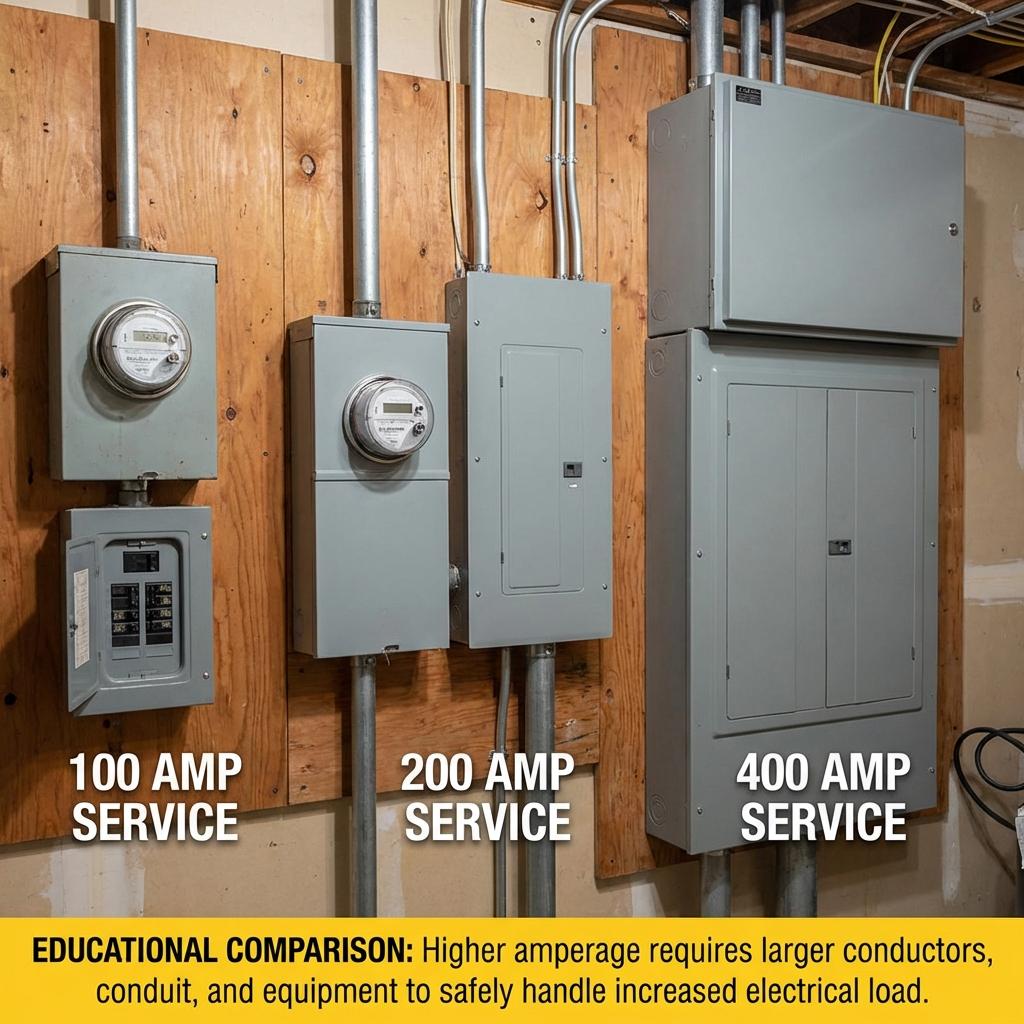
200 amps is the panel size that comfortably supports Level 2 EV charging alongside central air, an electric range, and a dryer. A 100-amp panel can sometimes support a smaller 30-amp charger with load management, but it rarely passes the load calculation for a 50-60 amp circuit. Two EVs charging simultaneously at full speed may call for 400-amp service.
When Panel Upgrade is Required
You Have 100 Amp Service
If your home has 100 amp service (common in homes built before 1990), adding a 50-60 amp EV circuit often requires a service upgrade. Here's why:
- 100 amps provides about 24,000 watts of capacity
- Central air conditioning uses 3,000-5,000 watts
- Electric range uses 8,000-12,000 watts
- Electric dryer uses 4,000-5,000 watts
- General loads use 3,000-5,000 watts
- A 60 amp EV charger adds 14,400 watts
The math simply doesn't work—you'd exceed your capacity if multiple high-draw devices ran simultaneously.
Your Panel is Full
Even with a 200 amp panel, you might have no available spaces for an EV circuit. If every slot is occupied, you'll need either a panel upgrade or a subpanel.
You're Adding Multiple Chargers
Households with two EVs may need 80-120 amps of capacity for charging, which even some 200 amp panels can't accommodate.
When Panel Upgrade is NOT Required
You Have 200 Amp Service with Available Capacity
If your 200 amp panel has space and you're not already near capacity, adding an EV circuit is straightforward. This is the case for many newer homes.
You Choose a Smaller Charger
A 30 amp charger uses significantly less power than a 60 amp charger. While charging is slower, it might work within your existing capacity.
You Implement Load Management
Smart load management devices can allow EV charging on panels that couldn't otherwise support it (more on this below).
Load Management Solutions
Technology offers alternatives to full panel upgrades:
Smart Load Management
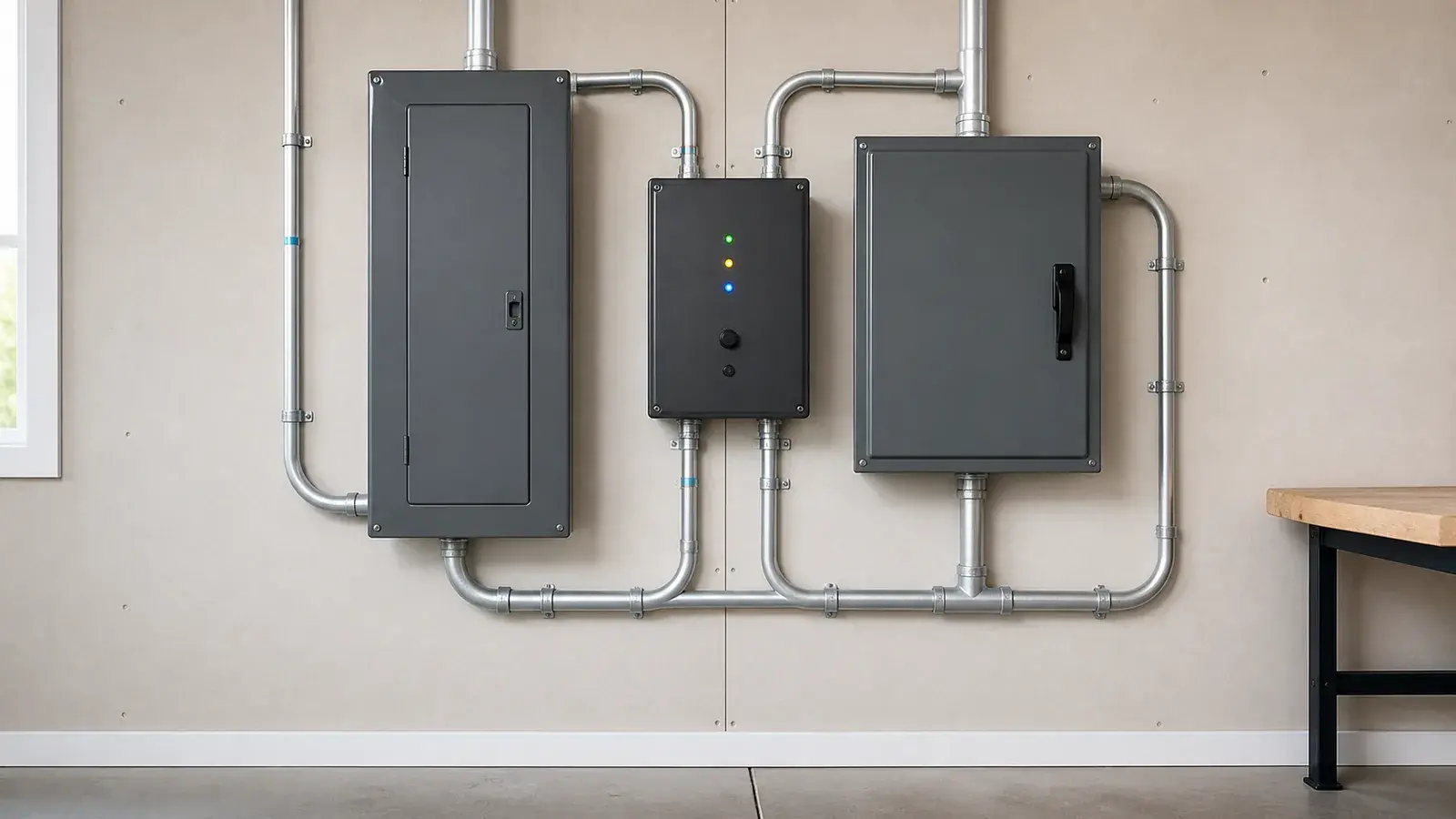
Devices like the DCC-10 or EV-Ready load management systems monitor your home's power usage and adjust EV charging accordingly. When your dryer runs, charging pauses; when it stops, charging resumes.
- Compatible listed equipment and installation are quoted together
- Pros: Avoids panel upgrade cost
- Cons: Charging may pause during high-demand times
Scheduled Charging
Most EVs and smart chargers allow scheduled charging during off-peak hours (overnight), when other household loads are minimal. This doesn't increase capacity but maximizes available power.
Reduced Amperage
Many EV chargers are adjustable. Installing a charger at 32 amps instead of 48 amps requires less capacity while still providing overnight charging capability.
Cost Comparison
Here's how the three approaches to home EV charging compare:
| Option | What's included | Total cost | Best when |
|---|---|---|---|
| EV charger circuit only (no upgrade) | Dedicated 240V circuit and hookup; hardware separate | $1,200–$3,500 typical; $1,200–$4,500 only for long, detached, outdoor, trenched, or otherwise complex routes | You have adequate existing capacity |
| EV charger + load management | Charger circuit plus compatible listed load-management equipment | Quoted with equipment selected | Capacity is limited but a full upgrade may be avoidable |
| Panel upgrade + EV charger | 200A upgrade ($3,500–$7,500) plus the EV circuit and hookup | Quoted as one coordinated project | Service is undersized or the approved design requires an upgrade |
EVSE hardware is separate. Only long, detached, outdoor, trenched, or otherwise complex routes use the $1,200–$4,500 public range.
Coordinate the scopes: Planning a required panel upgrade and EV circuit together may reduce duplicate access or utility coordination. The proposal keeps each scope and equipment responsibility visible; no fixed savings is guaranteed.
Utility Incentives and Programs
Dominion Energy's residential EV offerings change frequently, so treat this as a snapshot as of mid-2026 and confirm current status before counting on savings:
- An EV Charger Rewards program that pays a modest enrollment incentive (around $125) plus small annual credits for letting the utility manage charging times on a qualifying Level 2 smart charger
- Time-of-use rate plans whose outcome depends on the current rate schedule, mileage, vehicle efficiency, charging losses, and charging times
- An income-qualified home charger installation program that has opened and closed enrollment periodically
Check Dominion Energy's current programs before your installation -- offerings and enrollment windows change.
Federal Tax Credits
Section 30C is unavailable for property placed in service after June 30, 2026. For historical eligibility, review current IRS guidance and consult a qualified tax professional. AJ Long Electric does not provide tax advice or guarantee utility-program eligibility or savings.
Planning for the Future
When making decisions about EV charging, think ahead:
- Will you add a second EV?
- Might you upgrade to a longer-range vehicle needing faster charging?
- Are other electrical additions planned (hot tub, addition, etc.)?
- Is your panel already aging or problematic?
If a panel upgrade is required, coordinating it with the EV design may reduce duplicate access or coordination. The written proposal documents each scope; no fixed savings is guaranteed.
Get a Professional Assessment
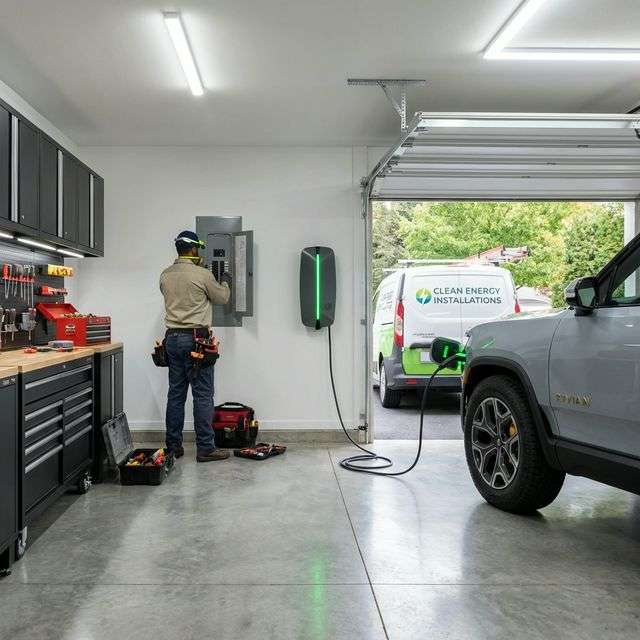
At AJ Long Electric, we specialize in EV charger installations throughout Northern Virginia. Our process:
- Evaluate your current panel and capacity
- Perform a load calculation
- Discuss your charging needs and future plans
- Present all options with transparent pricing
- Handle permits, installation, and inspection
Contact us at (571) 444-6886 to request an EV charger site assessment and project-specific quote. We'll help you determine the best path to home charging for your situation and budget.