
Process, step 5
Solar Installation Day: What to Expect
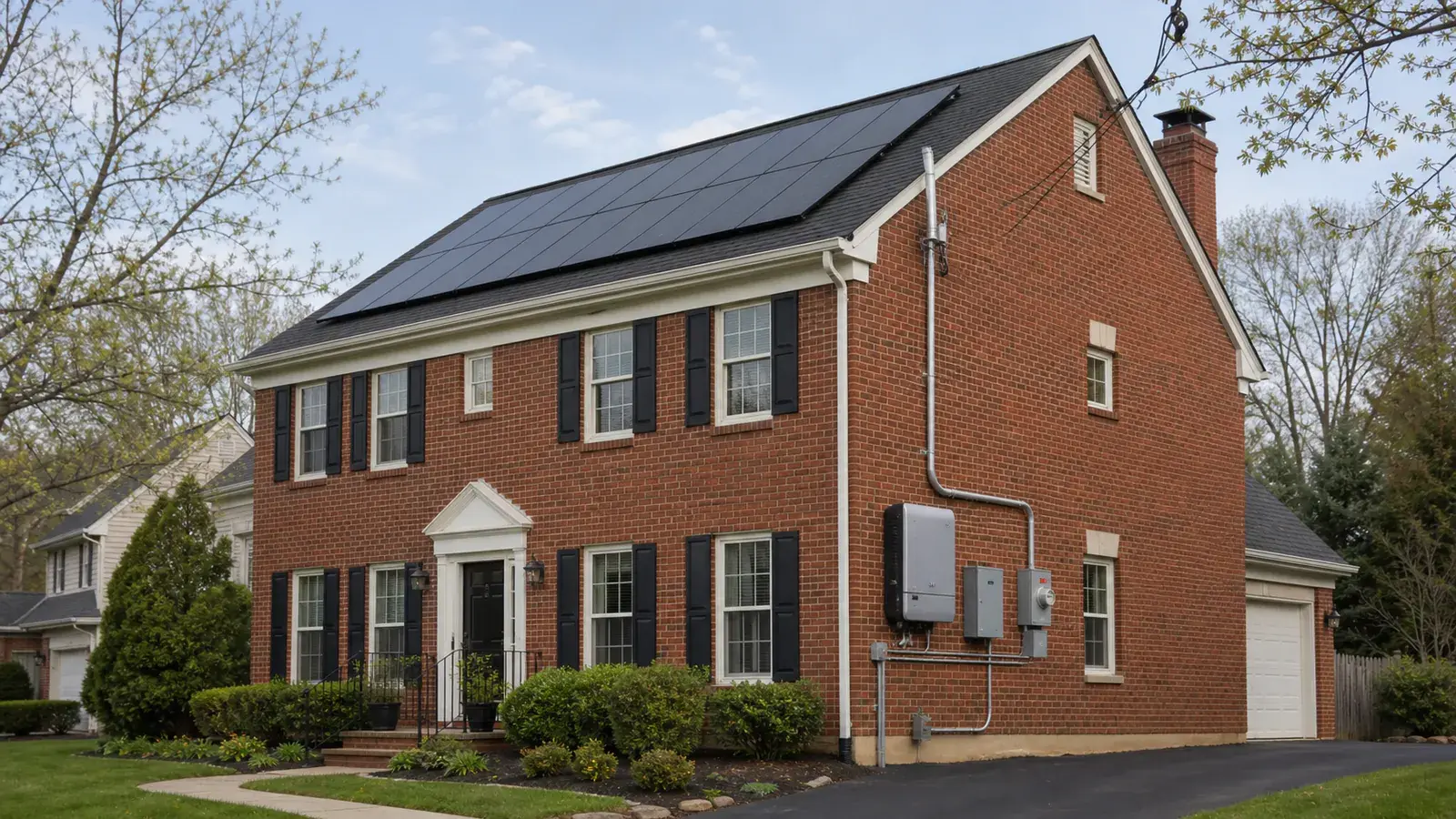
On installation day our own crew mounts the racking, sets the modules, runs conduit to the panel, and lands the connection, with a master electrician on site the whole time. The system is built and tested, then stays off until the county inspection and the utility's permission to operate.
Reviewed 2026-09-24
Google reviews
1,463 across four profiles
Family-owned
Since 1996
Licensed and insured
VA 2705031092
On every install
Master electrician on site
Backed by
Workmanship warranty
Answer first
The short answer
Installation day is the roof work first, then the electrical work: attachments and flashing, rails, modules, conduit, the disconnect, and the connection at your panel. Power is off for part of the day while we work in the panel. At the end, the system is complete but not turned on.
- Everything happens under a permit that is already issued and a Dominion or NOVEC application that is already filed.
- Our crew does the roof and the electrical. Nothing is subcontracted.
- Power goes off only while we work inside the panel, and we tell you before it does.
- The system stays off until the county inspection passes and the utility sends permission to operate.
Before the crew arrives
By installation day the permit is issued and the utility application is in. Virginia's rule requires a residential customer to notify the utility before starting installation, so for a Dominion home we have contingent approval in hand before the first attachment goes on the roof.
We confirm the date, the arrival time, and when the power will be off. You clear a path to the electrical panel and the attic access, move cars away from where the material is staged, and keep pets inside.
The order of work
Every roof is different, but the sequence is not.
- 01
Layout
We mark the approved layout on the roof and find the rafters or trusses the attachments go into.
- 02
Attachments and flashing
Each attachment is fastened into framing and flashed so water sheds around it, the detail the permit drawings show.
- 03
Rails and modules
Rails go on the attachments, then the modules, with microinverters or optimizers mounted as the design calls for.
- 04
Conduit and wiring
Conduit runs from the array to the inverter or combiner and on to the disconnect and the panel, sized and routed as drawn.
- 05
The connection
With the power off, we land the backfed breaker or supply-side connection, bond and ground the system, and install the utility disconnect.
- 06
Labels and testing
Every required label goes on, and we test each circuit before the crew leaves. The system is left off.
Why the electrical half matters most
The roof work is what neighbors see. The electrical work is what the inspector and the utility check: the connection at the panel, the disconnect, the grounding, and the labels. Virginia's interconnection rule has the licensed electrician certify that the disconnect is installed properly and that the system follows the manufacturer's instructions and the National Electrical Code.
A master electrician is on site for every solar project. The person responsible for that certification is on your property while the work is done, not reviewing photos from an office.
The county inspection
In Fairfax County, we request the inspection in PLUS, and a request made before 11:59 p.m. can be scheduled for the next business day. Related inspections are combined into one day, and the county emails a two-hour arrival window that morning with the inspector's name.
We meet the inspector and walk the system with them. What the inspector needs from you is access to the panel and the equipment.
When the crew leaves
The system is complete and switched off. We show you the disconnect, the breaker, and the labels, and set up the monitoring so it is ready when the system turns on.
Two things turn it on: a passed county inspection and the utility's permission to operate. We handle both and tell you the day it is live.
Straight answers
Questions
- Do I need to be home on solar installation day?
- At the start and at the end. We need access to the panel and the attic, and at the end we walk you through the disconnect, breaker, and monitoring.
- Will my power go out during the installation?
- Yes, for part of the day, while we work inside the panel. We tell you when before we shut it off, so you can plan around the refrigerator, work calls, and medical equipment.
- Can I turn the system on when the crew leaves?
- No. It stays off until the county inspection passes and the utility sends permission to operate. Turning it on early can put you in violation of the utility's rules.
- What happens if it rains on installation day?
- Roof work waits for a safe roof. We reschedule the roof portion and keep you updated on the new date.
- Who is on my roof?
- Our own crew. There is no subcontracted installation or electrical, and a master electrician is on site for every solar project.
Sources
- Virginia Administrative Code 20VAC5-315-30, Company notification
- Virginia Administrative Code 20VAC5-315-40, Conditions of interconnection
- Fairfax County Land Development Services, Building and Trade Inspections
- Fairfax County Land Development Services, Solar (SOLARR) Residential
- Dominion Energy Virginia, Net Metering
- NFPA 70, National Electrical Code
Next step
One crew, start to finish
The roof, the panel, the inspection, and the utility paperwork are all ours. Get a free quote for your home.
Solar energy company
AJ Long Electric Solar
AJ Long Electric
7138 Little River Turnpike #305
Annandale, VA 22003
Serving Annandale, Fairfax County, and Northern Virginia.