
Racking and roof attachments
Solar Roof Attachments Built Not to Leak
Leaks come from attachments, not panels. We fasten each attachment into a rafter, flash every penetration, and seal it the way the listed attachment's instructions require. Then we document it in photos before the panels cover it.
Reviewed 2026-09-24
Google reviews
1,463 across four profiles
Family-owned
Since 1996
Licensed and insured
VA 2705031092
On every install
Master electrician on site
Backed by
Workmanship warranty
Answer first
How we keep a solar roof dry
A rooftop array is held on by a few dozen attachments, and each one is a hole in your roof. Leak prevention comes down to three things: hitting the framing, flashing the penetration so water sheds over it, and using a racking system listed as a whole. We also check roof age first, because the best flashing does not fix a roof that needs replacing.
- Attachments located on rafters, not guessed, so the fastener bites framing instead of bare decking.
- A flashing or listed sealing method on every penetration, installed under the shingle course above it.
- Racking listed to UL 2703 for mounting, bonding, and the rooftop fire classification.
- Structural drawings with the Fairfax County permit, and photos of every attachment in your project file.
How an attachment goes in
Leaks at solar attachments usually trace back to one of three shortcuts: a fastener that missed the rafter, a penetration sealed only with caulk, or flashing set on top of the shingles instead of under the course above. Our process closes each of those gaps.
- 01
Find the framing
We confirm rafter or truss spacing in the attic and on the roof before marking the layout, so each attachment lands on framing.
- 02
Drill and seal the pilot hole
Each pilot hole goes into the center of the rafter and gets the sealant the attachment manufacturer specifies before the fastener goes in.
- 03
Flash the penetration
The flashing slides under the shingle course above, so water runs over the attachment instead of into it.
- 04
Photograph before covering
Every attachment is photographed before the rails and panels cover it. The photos go in your project file.
- 05
Bond and inspect
Rails, clamps, and modules are bonded per the racking system's listing, and the county inspects the finished installation.
Why the racking listing matters
UL 2703 is the standard for PV mounting systems, mounting devices, clamps, and ground lugs. UL describes it as covering both roof and ground systems, bonding of metal parts so overcurrent and ground-fault protection can operate, and the fire classification of a rooftop PV system, which looks at the whole installation's resistance to external fire.
Fire classification is evaluated with specific modules and racking together. That is why we pick the panel and the racking as a pair and do not substitute one without checking the listing.
Fairfax County structural review
Fairfax County Land Development Services processes residential rooftop solar as a solar (SOLARR) record, and the submission includes architectural and structural drawings. Those drawings document the array layout and how it attaches to the roof framing, and the county reviews them before the permit is issued.
The solar equipment is entered on that same record. A standalone electrical record is required only when additional electrical work is part of the job, such as replacing the service or a heavy-up. Fairfax County waives its permit fees for solar applications.
Roof age: check it before you drill
Fairfax County's Going Solar guidance says installations can last 20 to 25 years, so your roof should be less than five years old. The Department of Energy gives the same advice in general terms: consider the age of your roof and how long until it needs replacement.
We look at the shingles, the decking from the attic, and any past leak repairs at the roof study. If the roof is near the end of its life, we tell you before you sign, because removing and reinstalling an array later adds cost that a same-year reroof avoids.
Leaks under an existing array
We also service arrays other companies installed, including orphaned systems whose installer has closed. A leak call starts with the attic, where water stains usually point to the attachment above. A master electrician is on site for every solar project, and the same crew that reseals the attachment can check the wiring and the service connection while the panels are off.
Straight answers
Questions
- Do solar panels cause roof leaks?
- Panels do not. Attachments can, when they miss the rafter, rely on caulk alone, or have flashing set on top of the shingles. A flashed attachment fastened into framing sheds water the way the roof itself does.
- How old can my roof be before solar?
- Fairfax County's guidance is a roof less than five years old, because a solar installation lasts 20 to 25 years. We check the roof at the site visit and tell you if it should be replaced first.
- Does Fairfax County require structural drawings for residential solar?
- Yes. The county's residential solar submission includes architectural and structural drawings, and the county waives permit fees for solar applications.
- Can you fix a leak under panels another company installed?
- Yes. We service arrays other companies installed. The $99 dispatch fee applies to a booked service visit, is waived for members, and never applies to an estimate.
Next step
Get your roof checked before anything goes on it
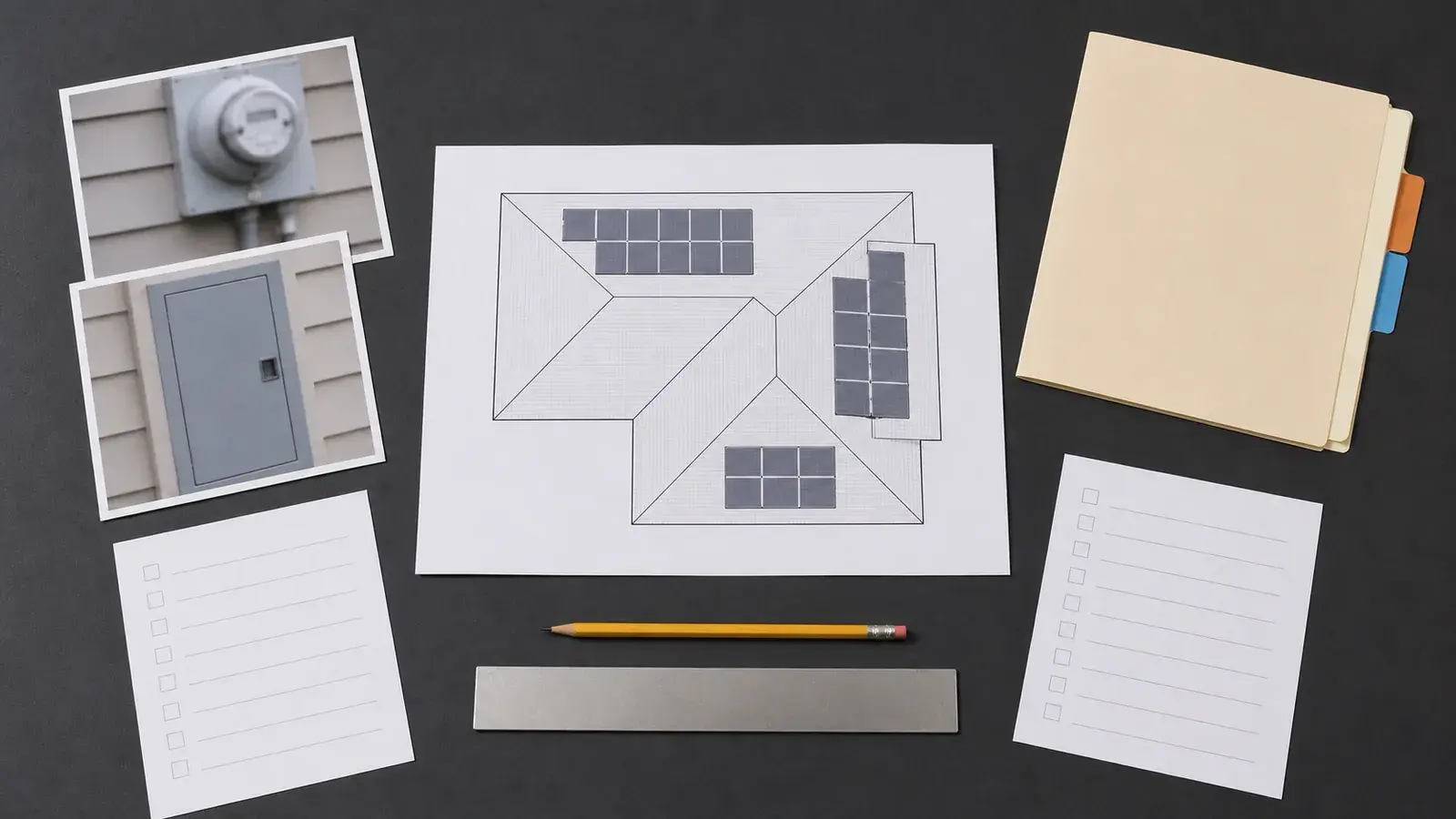
A free roof study looks at the roof's age, the framing from the attic, and the electrical panel, then gives you a written proposal.
Solar energy company
AJ Long Electric Solar
AJ Long Electric
7138 Little River Turnpike #305
Annandale, VA 22003
Serving Annandale, Fairfax County, and Northern Virginia.