
Roof timing
Replace the Roof Before Solar, or Not?
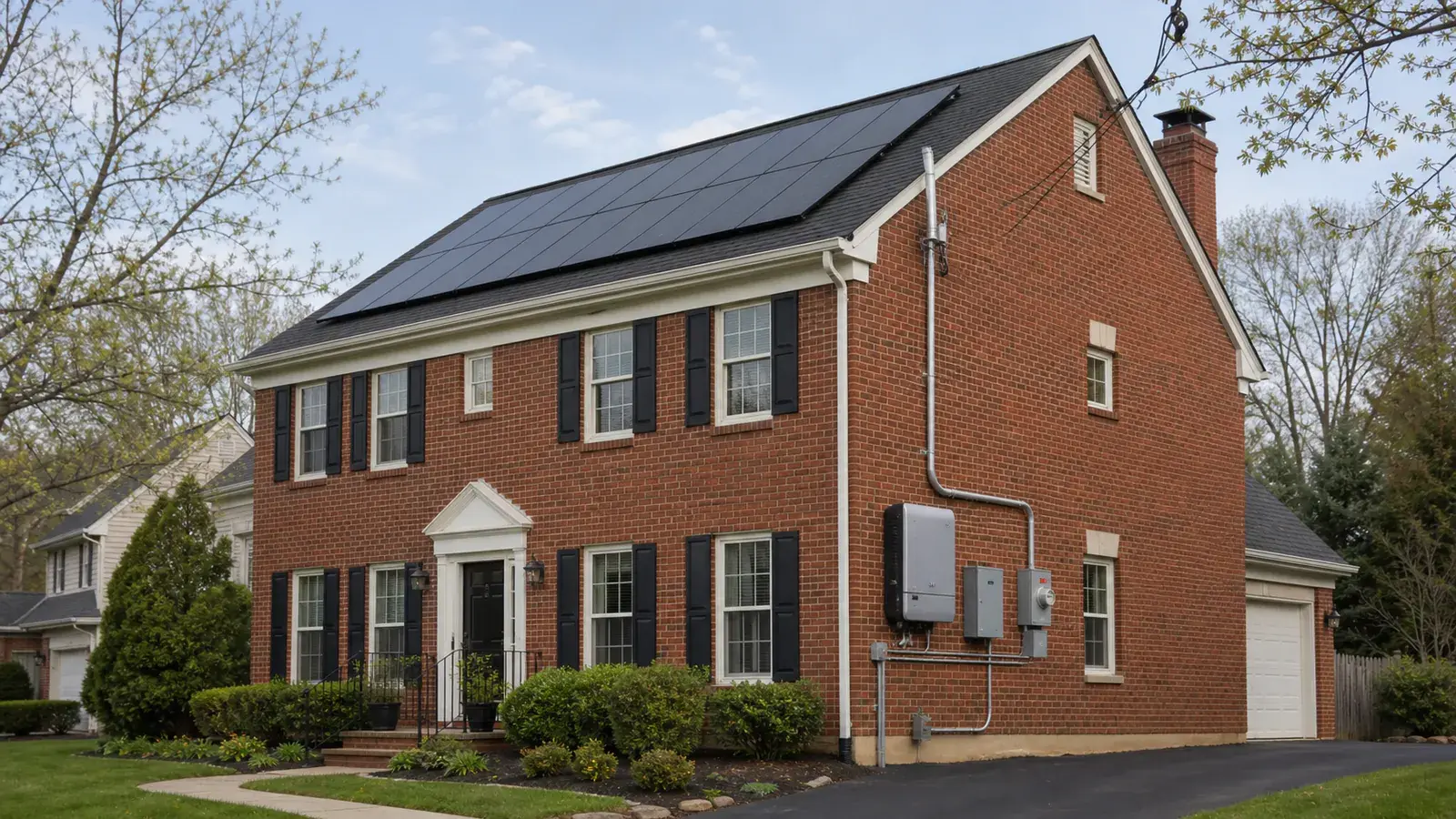
Replace the roof first if it will not last as long as the panels. Otherwise the array has to come off and go back on in the middle of its life, and you pay for that work on top of the new roof. AJ Long Electric does not do roofing; we plan the array with your roofer so the work happens in the right order.
Reviewed 2026-09-24
Google reviews
1,463 across four profiles
Family-owned
Since 1996
Licensed and insured
VA 2705031092
Answer first
Should I replace my roof before going solar?
Yes, if the roof under the array has meaningfully less life left than the panels. Solar panels now operate 25 to 35 years on average, so a shingle roof that is already halfway through its life will almost certainly need replacing while the array is still producing. Replacing it first avoids a later remove-and-reinstall. If the roof is newer or has most of its life ahead, install now.
- Compare the roof's remaining life, from a roofer, with the array's 25 to 35 year life.
- A later removal and reinstall is a real job: disconnect, remove, store, reinstall, re-flash, re-test.
- We do not do roofing. You hire the roofer; we coordinate the dates and the layout.
- A partial reroof of only the array planes is an option, with a visible shingle mismatch as the trade-off.
The timing math
Start with two numbers. The first is the array's life: the Department of Energy cites a Berkeley Lab survey of industry professionals putting the average operating life of a solar panel at 25 to 35 years. The second is the roof's remaining life, which only a roofer looking at your roof can give you.
If the roof's remaining life is close to the array's, install now. If the roof will need replacing in the first half of the array's life, the roof comes first. The gray zone is a roof with 10 to 15 years left: there the question is whether you would rather pay for the roof now or pay for one removal and reinstall later, plus the roof.
DOE's homeowner guide makes the same point in plain words: consider the age of your roof and how long until it will need replacement before you go solar.
What a later remove-and-reinstall involves
Taking an array off a roof and putting it back is not a quick favor. It is a planned job, and it is why the timing decision matters.
- 01
Shut down and disconnect
The system is shut down, the rapid shutdown and disconnects are opened, and the roof wiring is safely disconnected.
- 02
Remove and store
Panels, rails, and wiring come off and are stored on site so nothing is damaged while the roofer works.
- 03
Roofer replaces the roof
The old attachments come out with the old roofing. The roofer's schedule controls this part.
- 04
Reinstall and re-flash
New attachments are set and flashed into the new roofing, the rails and panels go back, and the wiring is reconnected.
- 05
Test and restart
The system is tested and restarted, and production is checked against what it made before.
We do not do roofing
AJ Long Electric installs the array and everything electrical: the racking, the panels, the wiring, the inverter equipment, the panel work, and the connection to Dominion or NOVEC. We do not replace or repair roofs. When a roof needs work, you hire a roofer, and we plan around their schedule.
That split is common and it works well when both trades know the plan. It also keeps responsibilities clear: the roofer stands behind the roof, and we stand behind the array and the attachments we set into it.
Before you hire, check that the roofer holds a Virginia contractor license on DPOR's license lookup, the same place you can check ours.
Coordinating the roofer and the array
The order below keeps the roof and the array from working against each other.
- 01
Design the array first
We lay out the array before the roofer starts, so everyone knows which planes will carry panels and where the conduit will run.
- 02
Share the layout with the roofer
The roofer sees where attachments will go and can tell you whether solar attachments affect the roof warranty and how to keep it in force.
- 03
Roof goes on
The roofer completes the roof. If you are replacing only part of the roof, this is when the choice of planes matters.
- 04
Permit and install
We pull the Fairfax County residential solar permit, plus a separate electrical record if the service is being upgraded, and install on the new roof.
- 05
Inspection and utility approval
The county inspects, the system is certified, and we complete the Dominion or NOVEC interconnection steps.
Partial reroof and other options
Some homeowners replace only the roof planes that will carry panels. It lowers the upfront roofing cost, and it makes sense when the rest of the roof is in better shape. The trade-off is a visible color and wear difference between old and new shingles, and a second roofing job later on the other planes.
If your roof is metal, slate, or tile, the timing question changes. Metal roofs often outlast panels. Slate and tile are long-lived but hard to work around, and some owners reroof only the array area in a different material.
If you already have solar and the roof is due, the array has to come off. We remove and reinstall systems that other companies installed as well as our own.
Straight answers
Questions
- How many years should my roof have left before solar?
- Ideally about as many as the array: 25 to 35 years for the panels. If the roof will need replacing during the first half of the array's life, replace it first. A roofer should give you the remaining-life estimate in writing.
- Does AJ Long Electric replace roofs?
- No. We install the array and all of the electrical work. You hire the roofer, and we coordinate the layout and the schedule with them.
- Can solar panels be removed and put back when I reroof?
- Yes. The system is shut down, removed, stored, and reinstalled on new flashed attachments after the roof is done, then tested. It is real labor, which is why reroofing first is usually the better plan when the roof is near the end of its life.
- Will solar panels void my roof warranty?
- That depends on the roof's warranty terms. Ask your roofer before the install how solar attachments are handled. Sharing our layout with the roofer ahead of time makes that conversation specific.
- Should I replace the whole roof or just the part under the panels?
- Either can work. Replacing only the array planes costs less now but leaves a visible mismatch and a second roofing job later. If the whole roof is near the end, doing it all at once is usually simpler.
Next step
Plan the array around your roof
We look at the roof and the panel, design the array, and share the layout with your roofer so the work happens once, in the right order. Estimates are free.
Solar energy company
AJ Long Electric Solar
AJ Long Electric
7138 Little River Turnpike #305
Annandale, VA 22003
Serving Annandale, Fairfax County, and Northern Virginia.